
The Book of Enoch (1 Enoch)
A Second Temple Jewish apocalypse attributed to Enoch, the seventh from Adam — the fullest ancient witness to the Watchers, the giants, and the named angels of the heavenly court.
Faithful Angels of 1 Enoch
These are the principal faithful angels named in 1 Enoch, especially 1 Enoch 20. They serve God by carrying out judgment, delivering revelation, protecting the righteous, and opposing the rebellion of the Watchers.
Four of them — Michael, Gabriel, Raphael, and Uriel — also occupy important places within Orthodox tradition, while Raguel, Sariel, Remiel, and Phanuel are known primarily from Second Temple Jewish literature.
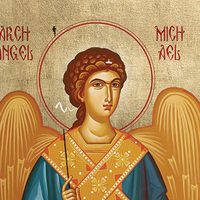 MichaelLeader, protector, and judge of the rebellious angels.
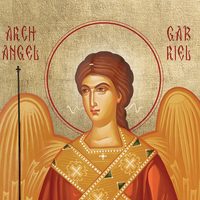 GabrielMessenger and agent of judgment against the giants.
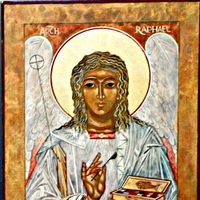 RaphaelThe healing angel who binds Azazel.
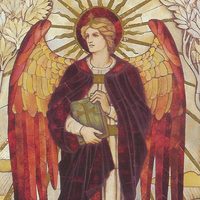 UrielAngelic guide who reveals the heavenly mysteries.RaguelAssociated with justice among the angels.SarielAssociated with instruction and heavenly knowledge.
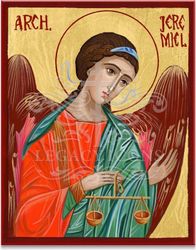 RemielAssociated with hope and the resurrection.PhanuelAssociated with repentance and the presence of God.
The Twenty Leaders of the Watchers
The Watchers (Aramaic ʿirin, “the wakeful ones”; Greek Grigori) are the angels who abandoned their appointed station — descending upon Mount Hermon, taking human wives, teaching humankind forbidden arts, and fathering the giants (1 Enoch 6–8). They differ from the faithful angels not in nature but in will.
The twenty chiefs of their descent are named in 1 Enoch 6:7. Many are little more than names in that list; several are remembered for a specific forbidden art they taught, shown below.
Catalogued for study, never venerated (§9).
SemjazaShemyaza · Shemihazah
1 Enoch 6:3–8 · 9:7 · 10:11–13
Semjaza is the chief leader of the two hundred Watchers who descend upon Mount Hermon. Fearing that the others might abandon their plan to take human wives, he persuades them to swear a mutual oath binding them all to the rebellion. Although Azazel later becomes the most infamous of the fallen angels, Semjaza serves as the principal organizer of the revolt.
Unlike several other Watchers, Semjaza is not associated with teaching a specific forbidden art. Instead, he is remembered as the leader who initiated the collective rebellion against God's command.
- Leader of the Watchers
- The oath on Mount Hermon
- Father of many giants (Nephilim)
ArakielAraqiel
1 Enoch 6:7 · 8:3
Arakiel is one of the twenty leaders of the Watchers. According to 1 Enoch he taught humanity the “signs of the earth,” generally understood as knowledge relating to geography, geology, agriculture, or the earthly sciences. Ancient interpreters differ on whether this knowledge was inherently evil or became corrupt because it was revealed outside God's appointed order.
- The signs of the earth
RameelRamiel
1 Enoch 6:7
Rameel appears among the original leaders of the Watchers but receives no further description in the surviving text of 1 Enoch. No specific forbidden knowledge is attributed to him.
KokabielKokabel — “Star of God”
1 Enoch 6:7 · 8:3
Kokabiel's name is commonly interpreted as “Star of God.” He is said to have instructed humanity in the constellations and the movements of the stars. Although astronomy itself is presented positively elsewhere in 1 Enoch, Kokabiel's unauthorized disclosure of heavenly mysteries forms part of the corruption introduced by the Watchers.
- The constellations
- Stellar knowledge
TamielKasdaye in some traditions
1 Enoch 6:7
Tamiel is listed among the twenty Watcher leaders but is not assigned a specific teaching in the Ethiopic text. Some later traditions associate him with hidden knowledge, though these identifications vary among manuscripts and should not be treated as certain.
Ramiel
1 Enoch 6:7
Ramiel is another of the named leaders. Depending on the manuscript tradition, Ramiel may represent the same figure as Rameel or a separate individual. No particular corruption is assigned to him in the surviving text.
Danel
1 Enoch 6:7
Danel is one of the original leaders of the Watchers. Apart from his inclusion in the list, the text provides no further information concerning his activities or teachings.
EzeqeelEzekiel
1 Enoch 6:7
Ezeqeel appears only in the list of Watcher leaders. The surviving manuscripts preserve no additional narrative regarding him.
BaraqielBaraqel
1 Enoch 6:7 · 8:3
Baraqiel taught astrology, according to 1 Enoch. His instruction represents another example of heavenly knowledge revealed outside God's appointed order.
- Astrology
AsaelAsa'el
1 Enoch 6:7
Asael appears among the Watcher leaders and is distinct from Azazel in most Ethiopic manuscripts, although some textual traditions confuse the two names. No individual teaching is assigned to Asael.
ArmarosAmaros
1 Enoch 6:7 · 8:3
Armaros taught the “resolving of enchantments,” generally understood as magical arts or the breaking of spells. His name is closely associated with forbidden magical practices.
- Enchantments
- Magical arts
Batarel
1 Enoch 6:7
Batarel is one of the twenty leaders of the Watchers. No additional details survive concerning his actions.
Ananel
1 Enoch 6:7
Ananel appears only in the list of the Watchers. No individual role is preserved.
Zaqiel
1 Enoch 6:7
Zaqiel is listed among the Watchers but is not given any further narrative.
Samsapeel
1 Enoch 6:7
Samsapeel is one of the leaders of the rebellion. Later Jewish traditions occasionally expand upon his role, but 1 Enoch itself provides no further details.
Satarel
1 Enoch 6:7
Satarel appears only in the list of Watcher leaders. No particular corruption is attributed to him.
Turel
1 Enoch 6:7
Turel is mentioned only by name among the twenty leaders.
Yomiel
1 Enoch 6:7
Yomiel is another of the listed leaders for whom the surviving text preserves no further information.
Sariel (Watcher tradition)
1 Enoch 6:7
Some manuscript traditions include Sariel among the Watchers, while others instead list him among the faithful archangels in 1 Enoch 20. Because of this variation, scholars generally regard Sariel's identity in the Watcher list as textually uncertain.
Other Prominent Fallen Angels
These figures receive far more attention in the narrative than most of the twenty leaders — several for the specific arts they taught, and one for the emphasis placed on his imprisonment.
Azazel
1 Enoch 8:1–2 · 9:6 · 10:4–8 · 13–14 · 54:5–6
Azazel is the most prominent of the fallen Watchers after Semjaza. He teaches humanity the manufacture of swords, knives, shields, and armor, together with cosmetics, jewelry, precious stones, and other arts that contribute to violence and moral corruption — so much so that “the whole earth has been corrupted” through what he made known (1 Enoch 10:8).
Fate. Bound hand and foot by the archangel Raphael and cast into the desert chasm of Dudael, covered with rough stones until the Day of Judgment (1 Enoch 10:4–8).
- Weapons
- Warfare
- Armor
- Jewelry
- Cosmetics
- Metalworking
Gadreel
1 Enoch 69:6–7
Gadreel appears in one of the later sections of 1 Enoch. He is blamed for leading Eve astray and for introducing the instruments of war and death to humanity. Unlike the leaders listed in chapter 6, Gadreel is introduced later as an important participant in humanity's corruption.
- Weapons of war
- Murder
- Deception
Penemue
1 Enoch 69:8–11
Penemue teaches humanity writing, ink, and paper, together with forms of secret knowledge that lead people away from righteousness. The text does not condemn literacy itself, but portrays the unauthorized transmission of heavenly mysteries as spiritually dangerous.
- Writing
- Ink and paper
- Secret knowledge
KasdejaKasbeel
1 Enoch 69:12–14
Kasdeja teaches destructive forms of magic, poisons, abortions, and harmful spiritual practices. His instruction is presented as among the most corrupting influences introduced by the fallen angels.
- Sorcery
- Poisons
- Harmful magic
- Abortive potions
JeqonYeqon
1 Enoch 69:4–5
Jeqon is remembered as the angel who persuaded the Watchers to bind themselves with an oath before descending to earth. His role emphasizes deliberate rebellion rather than the teaching of forbidden knowledge.
- Persuading the Watchers to swear the oath
- Encouraging the collective rebellion
Giants / Nephilim
In 1 Enoch the giants are the violent offspring of the Watchers and human women. They devastate the earth and become a central reason for the divine judgment of the Flood — and, once destroyed, the origin of the evil spirits that afflict the world (last below).
The Giants
1 Enoch 7:2–6 · 9:9 · 10:9–15 · 15:8–12
The giants — often identified with the Nephilim — are the hybrid offspring born from the union of the Watchers and human women. According to 1 Enoch they grew to extraordinary size and strength, consuming enormous quantities of food until the earth could no longer sustain them. When natural resources failed, they began devouring animals and eventually turned their violence against humanity itself.
They are portrayed not merely as physically powerful beings but as symbols of unchecked violence and corruption. Their destruction becomes one of the chief reasons God sends the Flood — the archangel Gabriel is specifically commanded to incite conflict among them so that they destroy one another before the Flood arrives (1 Enoch 10:9). Unlike the mythological giants of other cultures, the Enochic giants are not an independent race but the direct offspring of angelic rebellion.
- Hybrid offspring of angels and humans
- Extraordinary size and strength
- Violence and bloodshed
- Judgment before the Flood
- Destruction by divine decree
Nephilim
Genesis 6:1–4 · 1 Enoch 7 · 1 Enoch 15
The term Nephilim originates in Genesis 6:4, where it describes mysterious mighty beings who lived before the Flood. Although Genesis provides very little detail, 1 Enoch greatly expands the narrative by identifying the Nephilim as the children of the Watchers and human women.
In later Jewish literature, including 1 Enoch, the terms Nephilim, giants, and related designations sometimes overlap, though the terminology is not always used consistently. Within Orthodox Christianity, Genesis remains the canonical source, while 1 Enoch represents an important example of how Jews of the Second Temple period interpreted the brief biblical account.
- Expansion of Genesis 6
- Pre-Flood corruption
- Angelic rebellion
- Divine judgment
ElioudElioudai
Later manuscripts of 1 Enoch · Book of Giants traditions
The Elioud are mentioned in some manuscript traditions and related Enochic literature as a later generation descended from the original giants. Ancient interpreters differ regarding their exact relationship to the Nephilim — some understand them as a second generation of giant offspring, while others use the term simply as another designation for the giants themselves.
Because the textual evidence varies, modern scholars generally treat the Elioud as part of the broader Enochic giant tradition rather than as a clearly defined separate race. The name appears more frequently in later Enochic traditions than in the earliest surviving portions of the Book of the Watchers.
- Later giant tradition
- Possible second generation
- Manuscript variation
- Enochic interpretation
Evil Spirits from the Giants
1 Enoch 15:8–12 · 16:1
One of the most influential teachings of 1 Enoch is its explanation for the origin of evil spirits. After the destruction of the giants their physical bodies perish, but their spirits remain upon the earth.
According to the text, these become wandering evil spirits that oppress humanity, tempt people into sin, spread violence, and bring disease and suffering. Unlike the fallen Watchers, who are imprisoned awaiting the final judgment, the spirits of the giants continue to operate in the world until the consummation of history. This teaching profoundly influenced later Jewish demonology and appears to provide background for New Testament language concerning unclean spirits, although the New Testament never explicitly adopts the entire Enochic explanation.
- Origin of demons in Enochic tradition
- Wandering spirits
- Temptation
- Spiritual warfare
- Influence on later Jewish thought
Figures from the Book of Giants
The following figures belong primarily to the Book of Giants — a separate Jewish work closely related to 1 Enoch that survives in fragments among the Dead Sea Scrolls and in later Manichaean manuscripts. Although they do not appear prominently in 1 Enoch itself, they belong to the same literary tradition and expand the story of the giant offspring of the Watchers.
OhyahOhya
Book of Giants (Dead Sea Scrolls)
Ohyah is one of the principal giant leaders, commonly described as a son of the Watcher Semjaza. He experiences terrifying dreams foretelling the destruction of the giants and seeks their interpretation.
Unable to understand these visions, Ohyah takes part in sending Mahaway to Enoch, hoping the patriarch can explain God's coming judgment. His fear contrasts sharply with the earlier arrogance of the giants and introduces the theme of unavoidable divine justice.
- Dreams
- Divine judgment
- Son of Semjaza
- Fear of destruction
HahyahHahya
Book of Giants
Hahyah is usually identified as the brother of Ohyah and another son of Semjaza. Like his brother, he witnesses prophetic dreams announcing the destruction of the giants. Although only fragments survive, Hahyah appears among the giant leaders who seek answers from Enoch after recognizing that judgment is approaching.
- Brother of Ohyah
- Prophetic dreams
- Coming judgment
MahawayMahawai
Book of Giants
Mahaway serves as a messenger among the giants. After Ohyah and Hahyah receive troubling dreams, Mahaway undertakes a remarkable journey to seek Enoch and obtain an interpretation. He functions as an intermediary between the condemned giants and the righteous patriarch, and Enoch's response offers no hope of escape — confirming that God's judgment against the giants and the Watchers cannot be overturned. Mahaway is one of the best-developed characters in the surviving Book of Giants.
- Messenger
- Journey to Enoch
- Interpretation of dreams
- Announcement of judgment
Gilgamesh
Book of Giants
The appearance of Gilgamesh shows how ancient Jewish writers incorporated well-known Mesopotamian heroic traditions into their own literature. Rather than the legendary king celebrated in Mesopotamian epic, the Book of Giants includes him among the giant figures awaiting divine judgment — an illustration of the interaction between biblical traditions and the broader literary world of the ancient Near East.
- Ancient hero
- Mesopotamian influence
- Giant tradition
- Divine judgment
HumbabaHuwawa
Book of Giants
Humbaba, also known as Huwawa, is another famous figure borrowed from Mesopotamian literature. Like Gilgamesh, he appears within the Book of Giants tradition rather than in the canonical biblical account or the text of 1 Enoch itself. His inclusion demonstrates how Second Temple Jewish writers adapted familiar legendary figures into an Enochic framework centered on divine judgment and the consequences of angelic rebellion.
- Mesopotamian legendary figure
- Book of Giants
- Enochic adaptation
- Ancient Near Eastern influence
Imprisoned Heavenly Beings
Following the rebellion of the Watchers, God pronounces judgment upon the fallen angels. Rather than being immediately destroyed, many are bound in places of darkness beneath the earth or in the wilderness until the final judgment. Throughout 1 Enoch the patriarch is shown visions of these places of imprisonment, where rebellious heavenly beings await God's appointed time. The book repeatedly emphasizes that divine judgment is both immediate and future — the Watchers are already restrained, yet their final punishment will come only at the end of the age.
| Being | Current state | References |
|---|---|---|
| Semjaza and the Watchers | Bound beneath the earth awaiting judgment | 1 Enoch 10; 18; 21 |
| Azazel | Bound in Dudael by Raphael | 1 Enoch 10 |
| The seven bound stars | Imprisoned until ten thousand ages are completed | 1 Enoch 18; 21 |
| Spirits of the giants | Active on earth as evil spirits | 1 Enoch 15 |
| The human dead | Await the resurrection in Sheol | 1 Enoch 22 |
The Bound Watchers
1 Enoch 10:11–15 · 18:11–16 · 21:1–10
After the rebellion, God commands the faithful angels to bind the Watchers beneath the earth until the Day of Judgment. The leaders of the revolt are chained in darkness, where they remain imprisoned while awaiting their final sentence. Enoch later sees this place of confinement during his heavenly journey — a deep abyss filled with darkness and fiery punishment, prepared for those who abandoned their proper dwelling.
- Bound in chains
- Confined beneath the earth
- Await the final judgment
The Seven Stars Bound in Heaven
1 Enoch 18:13–16 · 21:1–6
During one of his visions Enoch encounters seven stars that have been bound together because they failed to fulfill the command God had given them. The interpreting angel explains that these stars represent heavenly beings who transgressed their appointed order; they remain imprisoned until ten thousand ages have been completed. Their exact identity is debated — some interpreters understand them as a separate class of rebellious powers, others identify them symbolically with some of the fallen Watchers.
- Bound heavenly beings
- Await the completion of ten thousand ages
- Punished for disobedience
The Stars that Left Their Order
1 Enoch 86–88 (Dream Visions)
The Dream Visions portray the rebellious angels symbolically as stars falling from heaven. These stars descend to earth, mingle with humanity, and contribute to the corruption that leads to the Flood. The imagery later influenced Jewish and Christian symbolism in which stars frequently represent angelic beings.
Spirits Awaiting Judgment
1 Enoch 22
Enoch is shown four hollow places within a great mountain where the spirits of the dead await the resurrection and the final judgment. These are human souls, not fallen angels — the compartments separate the righteous from various classes of the wicked. It is included here to be distinguished from the prison of the Watchers, with which it is easily confused, though both involve a temporary confinement before the Last Judgment.
About the bookReadHide
1 Enoch, also called the Book of Enoch, is a Second Temple Jewish apocalyptic work attributed pseudonymously to the patriarch Enoch, the seventh generation from Adam. In Genesis, Enoch is briefly described as a righteous man who “walked with God” and was taken by God rather than dying in the ordinary way (Genesis 5:21–24). 1 Enoch expands this brief biblical notice into a large collection of visions, heavenly journeys, angelic revelations, judgments, and eschatological prophecies.
The book is especially important for the study of early Jewish angelology. It contains detailed traditions about the Watchers, the fallen angels who transgressed the divine order; the giants or Nephilim, their violent offspring; and several named faithful angels, including Michael, Gabriel, Raphael, Uriel, Raguel, Sariel, Remiel, and Phanuel. These traditions shaped later Jewish and Christian thought about angels, demons, judgment, and the heavenly court.
Within Eastern Orthodox Christianity, 1 Enoch is not canonical Scripture but ancient Jewish religious literature — though it was widely known in the early Church and remains canonical only in the Ethiopian and Eritrean Orthodox Tewahedo tradition. This page presents it as a historically influential witness that helps explain the background of some biblical and early-Christian language, while clearly distinguishing it from Holy Scripture and Orthodox liturgical doctrine. Its canonical standing and its echo in the New Testament are treated in the sections below.
The book in depth12ShowHide
Authorship & Date
1 Enoch is pseudepigraphal — written under the name of an ancient biblical figure. The historical patriarch did not write the book in its final form; modern scholarship generally understands 1 Enoch as a composite collection of several Enochic writings produced over time.
The oldest portions, especially the Book of the Watchers and parts of the Astronomical Book, are commonly dated to the third or early second century BC. Aramaic fragments of Enochic material were found among the Dead Sea Scrolls at Qumran, showing that these traditions circulated before Christianity. The Book of Parables is usually dated later, with scholarly debate placing it somewhere from the late first century BC to the first century AD.
The book survives completely in Geʽez, the classical liturgical language of Ethiopia; fragments also survive in Aramaic, Greek, and Latin.
Canonicity & Orthodox Reception
In mainstream Eastern Orthodox tradition, 1 Enoch is not part of the biblical canon. The Byzantine Orthodox tradition received it primarily as apocryphal or pseudepigraphal literature, and it should not be cited as Scripture except when discussing the Ethiopian and Eritrean Orthodox biblical traditions specifically.
At the same time, 1 Enoch is not irrelevant to Orthodox study. It preserves early Jewish traditions that were known in the world of the New Testament, and several early Christian writers knew or discussed them — the Epistle of Jude even quotes a prophecy attributed to Enoch (treated under Influence on the New Testament, below). Some Fathers valued parts of the tradition, while others rejected the book's authority or warned against treating it as Scripture.
In summary — Second Temple Jewish literature; non-canonical in the Byzantine Orthodox tradition; canonical in the Ethiopian and Eritrean Orthodox Tewahedo tradition; historically influential for early Jewish and Christian angelology.
Structure of the Book
1 Enoch is usually divided into five major sections, each originally an independent Enochic writing.
| Section | Chapters | Main content |
|---|---|---|
| Book of the Watchers | 1–36 | Fall of the Watchers, the giants, judgment, and Enoch's heavenly journeys |
| Book of Parables (Similitudes) | 37–71 | Judgment, the righteous, and the “Son of Man” figure |
| Astronomical Book (Book of Luminaries) | 72–82 | The heavenly bodies, the calendar, and cosmic order |
| Dream Visions | 83–90 | Symbolic visions of world history and Israel |
| Epistle of Enoch | 91–108 | Warnings, judgment, righteousness, and final destiny |
The Book of the Watchers
The Book of the Watchers is the first and most influential section of 1 Enoch. It explains the rebellion of certain angels called Watchers, who descend to earth, take human wives, and beget violent giants — events presented as a major cause of the corruption before the Flood.
It is the section that names the principal angelic figures — the faithful angels who bring the matter before God and are sent to execute judgment, and the rebellious Watchers judged for the transgression. Each of them, along with the giants they fathered, is catalogued in the directories further down this page.
The Book of Parables
The Book of Parables, also called the Similitudes of Enoch, contains visions of judgment, the vindication of the righteous, and a prominent heavenly figure often called the Son of Man, the Chosen One, or the Righteous One. This section has drawn attention because of its possible relationship to New Testament “Son of Man” language, although scholars debate the exact nature and direction of that influence.
For Orthodox use this section should be read carefully. It is historically important for understanding Jewish apocalyptic expectations near the time of Christ, but it is not a doctrinal source equal to the Gospels or the Church's liturgical confession of Christ.
The Astronomical Book
The Astronomical Book, or Book of the Heavenly Luminaries, describes the movements of the sun, moon, stars, winds, and seasons, and the calendar, presenting the cosmos as ordered by God and governed according to heavenly laws.
It is important for understanding the ancient Jewish concern with sacred time, calendars, feasts, and cosmic order, and it shows that Enochic literature was concerned not only with fallen angels but also with the lawful structure of creation.
The Dream Visions
The Dream Visions section contains symbolic visions of world history. One famous vision — the “Animal Apocalypse” — presents human beings and nations through animal imagery, retelling history from Adam and Noah through Israel's trials and into the eschatological judgment.
This section includes further references to the fall of the angels, the Flood, the judgment of wicked powers, and the restoration of the righteous, connecting the angelic rebellion to a broader vision of salvation history.
The Epistle of Enoch
The Epistle of Enoch contains exhortations, warnings, woes against sinners, encouragement for the righteous, and teaching about the final judgment, strongly contrasting the destiny of the righteous with that of the wicked.
It is useful for understanding the moral and apocalyptic tone of 1 Enoch; its emphasis on judgment, righteousness, and perseverance helps explain why early Jews and some early Christians found the book compelling.
Major Themes
Across its five books, 1 Enoch returns to a consistent set of concerns.
| Theme | Description |
|---|---|
| Angelic rebellion | The Watchers abandon their appointed place and corrupt humanity. |
| Divine judgment | God judges angels, giants, rulers, sinners, and oppressive powers. |
| Heavenly order | The cosmos, angels, stars, and seasons are governed by divine command. |
| Revelation | Enoch receives hidden knowledge through visions and angelic guides. |
| Righteousness | The righteous suffer for a time but are ultimately vindicated. |
| Demonic origins | Evil spirits are connected with the destroyed giants in later Enochic tradition. |
| Eschatology | The book looks toward the final judgment, restoration, and the triumph of God's justice. |
Influence on the New Testament
The clearest New Testament connection is Jude 14–15, which quotes a prophecy attributed to Enoch that closely parallels 1 Enoch 1:9. Jude's use of Enoch shows that Enochic tradition was known in early Christian circles, but it does not by itself make the whole book canonical for the Church.
Other possible thematic connections include angelic judgment, the imprisonment of rebellious spirits, heavenly books, the final judgment, and “Son of Man” imagery. These are best presented as literary and historical parallels rather than as proof that the New Testament depends on 1 Enoch in every case.
Reception by the Church Fathers
Early Christian reception of 1 Enoch was mixed. Some early writers knew and used Enochic traditions positively — Tertullian defended the book's value — while others were more cautious. Origen knew of Enochic material but did not treat it as universally accepted Scripture, and later writers such as Augustine rejected its canonical authority, partly because it was not received in the Jewish canon known to the Church.
By the Byzantine period, 1 Enoch was largely outside the received biblical canon, though excerpts and traditions survived through quotations, chronography, and later scholarship.
Influence on Later Tradition
1 Enoch influenced later Jewish, Christian, and Islamic-era angelological imagination, especially through its accounts of named angels, fallen Watchers, giants, heavenly journeys, and the final judgment. In Christian art and literature, Enochic themes contributed to broader traditions about rebellious angels, demonic corruption, and the heavenly court.
In modern times, 1 Enoch is studied in biblical scholarship, Second Temple Jewish studies, Dead Sea Scrolls research, and Orthodox discussions of ancient angelology. For this database its value is mainly historical and contextual — it helps explain the background of several named angelic figures while preserving a clear boundary between Scripture, Orthodox liturgical tradition, and non-canonical ancient literature.
SourcesShowHide
- R.H. Charles, trans., The Book of Enoch (Oxford, 1917) — public domain
- George W.E. Nickelsburg & James C. VanderKam, 1 Enoch — A Complete Translation (cited for scholarship, not reproduced)
- The Book of Giants (Dead Sea Scrolls — 4Q203, 4Q530–533 and related fragments)
- Jude 14–15; 2 Peter 2:4 (Holy Scripture)
- Catalogued for study; requires clergy/source review before any devotional use