Throughout the Orthodox Christian life, icons are given to mark the milestones. Whether you are celebrating a birth, a baptism, a marriage, or another turning point, an icon is a lasting reminder that Christ and His saints accompany us through every stage of life.
A place to start
Finding the right icon
Choose the occasion or the person — and see what is usually given, and what is better left to their godparent.
Choosing for
By occasion
For a person
A child is born
Birth & a New Baby
A child is usually baptized some weeks after birth, so these icons are given to the household as much as to the infant — the furnishing of the room the child will wake up in. Most new parents have no icons for a nursery and no time to find any, which makes this a practical gift as well as a prayerful one. Usually given in the weeks after the birth, or at the churching on the fortieth day, and hung low, at the height of a child who will soon be standing.
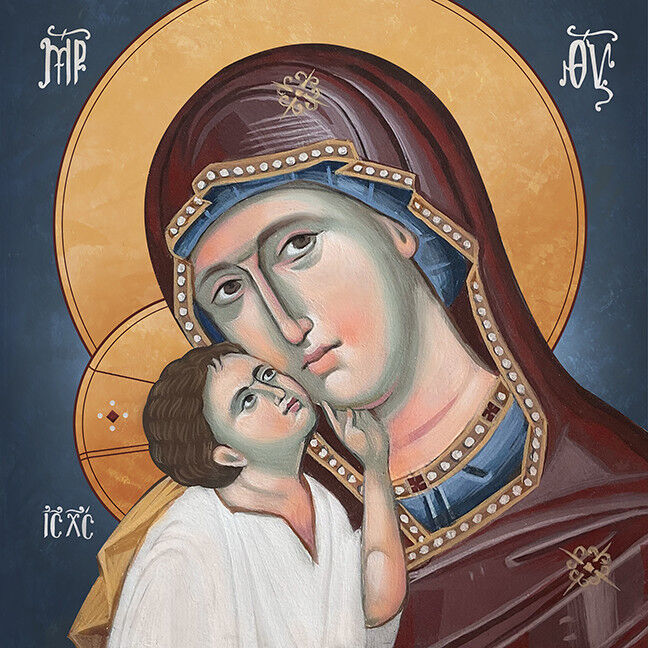
The Theotokos with the Christ ChildMost traditional
The most given icon at a birth, and the most obvious: a mother holding her son. A new mother recognizes herself in it immediately, and it places this particular child in the arms of the one who bore God.
The Church teaches that each of the faithful is given an angel to guard them. An icon of the Guardian Angel over a crib is a gift to the parents as much as the child — a visible answer to the fear every parent lies awake with.
Christ Blessing the ChildrenMost traditional
"Suffer the little children to come unto me." An icon of the scene is chosen for a nursery because it is the one place in the Gospel where children are the subject and not the interruption.
The family's patron saintRegional custom
Whichever saint the household already keeps — the Slava saint, the parish patron, a grandmother's saint. It quietly tells a child they were born into something that started before them.
Especially Serbian (the Slava saint) and Russian practice.
The child's future patron saintModern suggestion
Given when the name is settled before the baptism. Worth a word of caution: names sometimes change between the birth and the font, so many families wait — the patron icon is properly a baptism gift.
Born of water and the Spirit
Baptism & Chrismation
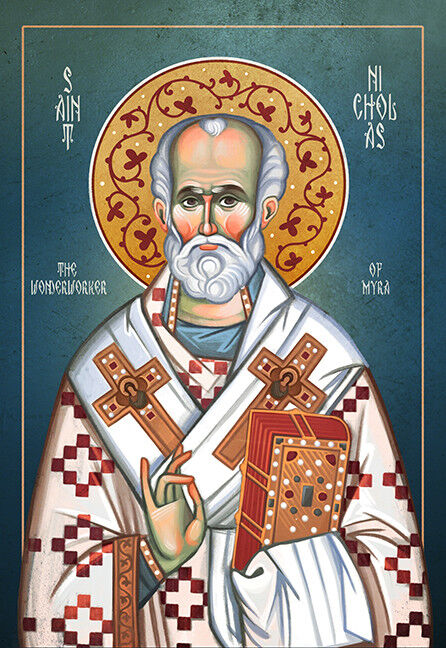
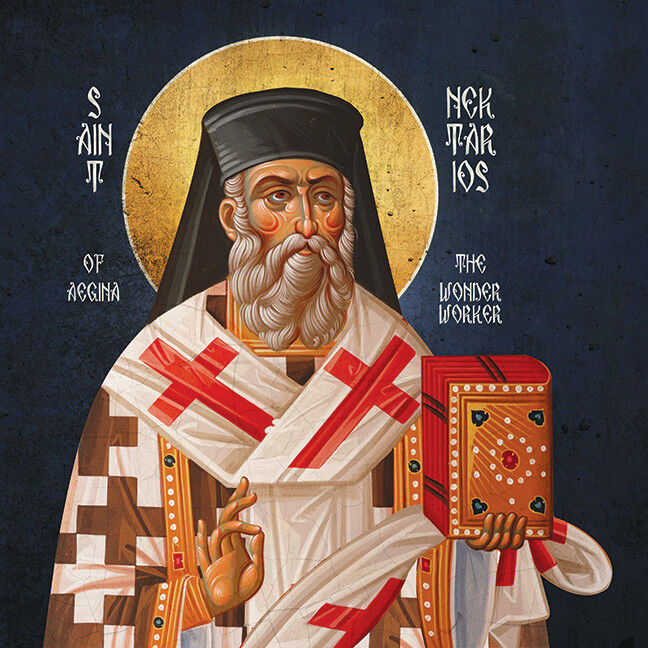
If you take one thing from this page, take this: the most traditional Orthodox baptism gift is an icon of the patron saint of the person being baptized — the saint whose name they receive at the font. Not a regional custom or a nice idea; it runs through the Greek, Russian, Serbian, Romanian, Antiochian, Georgian, and Bulgarian traditions alike, and it is the gift a godparent is expected to bring. Everything else here is secondary. It is presented at the baptism or the meal after, and it is the one gift an Orthodox family will notice if it is missing.
The saint whose name is given at the font. From this day the person has a name in the Church and a particular friend in heaven, and the icon is how that friendship gets a face. It goes to the person, not the parents, and it usually follows them for life — to a dorm room, a marriage, a deathbed. If you give one gift, give this.
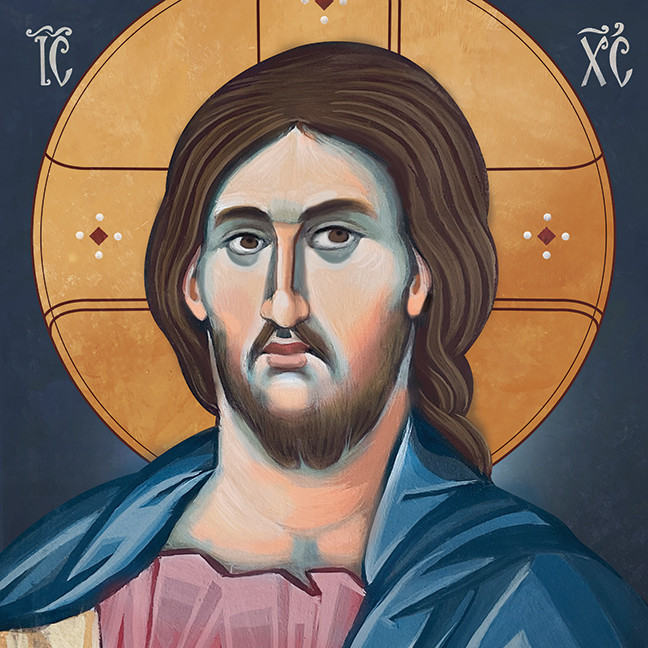
ChristMost traditional
Given so that the patron saint is not the whole of a young Christian's prayer. The saint intercedes; Christ saves. An icon corner that has only saints in it has quietly gone wrong, and starting with Christ prevents that from the first day.
The TheotokosMost traditional
The companion to the icon of Christ, and with it the beginning of an icon corner. A newly baptized adult convert with no icons at all is best served by this pair before anything else.
Given at baptism because it is at baptism that the Church prays for the angel who will accompany this Christian. A common and much-loved gift for a child.
The Baptism of Christ (Theophany)Most traditional
The icon of the very thing that just happened. It is the most fitting icon of the day and one of the least given — a good choice when the patron icon is already covered by the godparent.
A baptismal crossMost traditional
Not an icon, but given at the same moment and by the same person. In most traditions the godparent provides the cross the newly baptized is clothed with, along with the baptismal garment.
A prayer ropeMost traditional
A gift for an adult convert or an older child — something to do with the hands when words run out. Give a short one; a hundred-knot rope is a burden to a beginner, and a thirty-three-knot rope is a friend.
A children's prayer bookModern suggestion
For a child, or for the parents who will be praying with them. Illustrated Orthodox prayer books for children are a genuinely modern product, and a good one — but check the iconography before buying.
The feast of your saint
Name Day
A name day is the feast of the saint whose name you bear. In Greece, Serbia, Russia, Romania, Bulgaria, and much of the Orthodox world it is kept more warmly than a birthday, and for a reason worth explaining to converts: a birthday commemorates an accident of biology, a name day a person in heaven who is praying for you. The greeting in Greek is chrónia pollá — many years. The gift, given on the saint's feast, deepens the connection to that saint, and often becomes the personal icon someone keeps closest.
The name-day gift. If the recipient has never owned an icon of their own saint, this is the obvious and best choice — and surprisingly often, they don't.
A larger icon of the patron saintModern suggestion
For someone who already has a small one. A name day is the natural occasion to upgrade from a paper print to something that will hold a room, and the old one moves to a bedside or a car.
A hand-painted iconMost traditional
Written by an iconographer in the traditional manner, often to order and often taking months. The gift of a lifetime for a significant name day — and worth commissioning early.
Beeswax candlesMost traditional
Burned before the icon on the feast. Ordinary, consumable, and exactly right — the sort of gift that gets used rather than displayed.
IncenseRegional custom
A small, welcome gift for a household that censes its icon corner. Names of the resins vary by tradition; when in doubt, ask what their parish uses.
Common in Greek, Athonite, and Slavic households.
A prayer ropeMost traditional
Given on a name day as easily as at a baptism, and always welcome — they wear out, get lost, and get given away.
The saint's life, or their own writingsModern suggestion
For a saint who left writings, the name day is the moment to give them. Reading your own saint is a different experience from reading about them.
A new household
Marriage
The Orthodox marriage service crowns a bride and groom as the founders of something new — a small church. So the icons given at a wedding are not ornaments for a couple; they are the furnishing of a household's prayer. In many traditions the couple is blessed with a pair, Christ and the Theotokos, which then becomes the centre of the icon corner in the home they are about to make — usually the two icons a family points to when they say where they started. The most consequential gift at the wedding, and it costs less than the flowers.
Christ PantocratorMost traditional
The groom is traditionally blessed with the icon of Christ. It is the first of the two icons the new household will keep at its centre.
The TheotokosMost traditional
The bride is traditionally blessed with the icon of the Theotokos. The two icons are a pair and belong together — they should be chosen together, in the same hand and the same size, and they will hang side by side for the rest of the marriage.
The Wedding at CanaMost traditional
Christ's first sign, worked at a wedding, and read at Orthodox weddings ever since. A fitting icon for a dining room, and a reminder that Christ's first miracle was to keep a party going.
The parents of the Theotokos, who waited years in barrenness and reproach before Anna conceived. Given to couples hoping for children, and especially to those who have been waiting and grieving.
A prince and the healer he married against his court's wishes; they took monastic vows late and, by tradition, died on the same day. The Russian icon of married love.
Russian tradition — their feast is widely kept as a day of family and marriage.
A married pair of the Nicomedian persecution: Adrian, a pagan official, was converted by the courage of the Christians he was sentenced to guard, and Natalia encouraged her husband to his martyrdom rather than lose him to apostasy. Given to couples who expect their marriage to cost them something.
The tentmaking couple of the Book of Acts who worked beside the Apostle Paul, taught Apollos, and kept a church in their own house. The scriptural picture of a marriage that is useful to the Church — and the patrons of anyone whose home is where the hospitality happens.
A house becomes a home
Housewarming
When Orthodox Christians move, the first question is not where the sofa goes but where the icon corner goes — traditionally on an eastern wall, since we pray toward the east. A house is normally blessed by the parish priest with holy water, and the icons are what the blessing gathers around, so they are best given before the blessing, while the walls are still bare. More than a nice gesture: they are the thing the new home is organized around.
Christ PantocratorMost traditional
Where an Orthodox home begins. If the household has nothing else, it has this.
The TheotokosMost traditional
The companion to Christ at the centre of the corner. Christ and the Theotokos together are the irreducible minimum of an Orthodox home — not because a rule says so, but because that is what every Orthodox home has.
The three angels at Abraham's table under the oak at Mamre — the Old Testament icon of the Trinity, and an icon about a household receiving guests who turn out to be God. The natural icon for a dining room.
Kept near the entrance in many households, for those going out and coming back.
The parish patronRegional custom
The saint of the temple the household will now be walking to. A thoughtful gift for someone who has moved to a new city and does not yet know anyone — it is a welcome from the parish as much as from you.
Common wherever a parish has a strong patronal identity.
The family's patron saintRegional custom
For Serbian households, the Slava icon has pride of place and is visible to everyone who walks in. Elsewhere, whichever saint the family already keeps.
Serbian (the Slava icon) and Slavic practice.
Wisdom & vocation
Graduation
Be clear about this one: graduation is a modern civic milestone, not a feast of the Church, and there is no ancient custom of giving icons for it. What is ancient is the Church's concern with wisdom — the difference between knowing a great deal and knowing what to do — and the moment a young person becomes responsible for their own prayer. A graduation icon is a modern gift for a real transition, best given with that honesty rather than dressed up as a tradition, and best chosen small and durable enough to survive a dorm room.
The saint they already have, in a form that will survive a dorm room. Many young adults have never owned an icon that was theirs rather than their parents'.
Basil the Great, Gregory the Theologian, and John Chrysostom — jointly commemorated, and honored as patrons of Orthodox learning. In Greece their feast is kept as a school and university feast, which makes this the closest thing to a traditional graduation icon.
Greek practice keeps January 30 as the feast of letters and education.
By her life, a young woman of formidable learning who out-argued the philosophers sent to break her. Given to students, and a particularly good icon for a young woman going into academic work.
One of only three saints the Church calls the Theologian. For the graduate whose questions have outgrown easy answers.
Work as a calling
Professional & Vocational Gifts
The saints were not professional religious. They were physicians, soldiers, farmers, shepherds, merchants, judges, hymn-writers, and craftsmen, and the Church remembers what they did for a living because the work itself was part of how they were saved. So an icon for a new job, a promotion, or a retirement says the work is not separate from the faith. The buttons below run a live search of the database rather than repeating a list that would go stale — every saint they find is one whose recorded life supports the vocation.
The Nativity of Christ is preceded by a forty-day fast and is a feast of the Incarnation rather than a festival of gift-giving; the presents are a custom that has grown around it, not the point of it. Where gifts are exchanged, an icon keeps the feast about its subject. Timing varies: in Greek tradition gifts attach as often to St Basil on January 1 as to December 25, or run through the twelve days to Theophany.
The Nativity of ChristMost traditional
The icon of the feast — the cave, the manger, the star, the angels, the magi, and the ox and the ass. Brought out for the season in many households and kept on the analogion or the icon corner through the twelve days.
ChristMost traditional
For someone with no icons at all, Christmas is as good an occasion as any to give the first one.
The TheotokosMost traditional
The feast is hers as well as His — the Nativity is the moment the Incarnation becomes visible, and she is how. The companion gift to an icon of Christ.
The family's patron saintRegional custom
Given at Christmas in households that gather then and at no other time of year — which, honestly, is most of them.
A feast-day icon for the analogionModern suggestion
Some families keep a small stand and rotate the icon of whichever feast is being celebrated. Starting someone off with the Nativity is a good way in.
The Feast of Feasts
Pascha
Pascha is not a gift-giving feast the way Christmas has become; the traditional exchange is the red egg and the Paschal greeting — Christ is risen! Indeed He is risen! An icon given at Pascha is a modern extension of the custom rather than the custom itself. That said, the icon of the Resurrection is the central icon of the Christian faith and belongs in every icon corner permanently, not seasonally — a household without one is missing the point of the whole calendar.
The Resurrection (the Descent into Hades)Most traditional
The Orthodox icon of the Resurrection is not an empty tomb — it is Christ standing on the shattered gates of Hades, hauling Adam and Eve up out of their graves by the wrist. Worth explaining when you give it, because it startles people who expect a sunrise. It is the answer to death, drawn.
The women who came to the tomb at dawn with spices to anoint a corpse and were the first to be told otherwise. The icon of faithfulness that keeps showing up even when it thinks the story is over.
ChristMost traditional
The Paschal season is a natural time to give the first icon of Christ to someone newly received into the Church, since many adult converts are baptized at Pascha.
Healing of soul and body
Illness & Recovery
The Church has never treated prayer and medicine as rivals. Several of her most loved saints were physicians by trade, and they are called the Anargyroi — the unmercenaries, the silverless — because they refused payment for their care. An icon given to someone ill is not an alternative to treatment and not a promise of a cure; it puts a face to the prayer of a household that has run out of things it can do, and asks for what the Church actually asks — healing of soul and body, in that order. Give it, and let the person keep their doctor.
A young physician of Nicomedia who treated the poor without charge and was martyred under Diocletian. The most invoked healing saint in the Orthodox world; his icon shows him holding a medicine box and a spoon rather than a sword.
Twin physicians who took no money — the archetypal unmercenaries. Note there are several pairs of the same name in the calendar; the pair of Asia, sons of Theodota, are the ones usually meant.
A surgeon and an archbishop in the Soviet Union who operated by day and was imprisoned and exiled for his faith — he wrote a standard text on purulent surgery and served in vestments over his scrubs. Glorified in 1996. The icon for the modern sick, and for surgeons.
Widely invoked in cases of cancer. Give this one with care and without promises: it is given in hope, and the person receiving it usually knows the odds better than you do.
Especially Greek practice.
The hope of the Resurrection
Comfort & Grief
Orthodox Christianity does not meet death with reassurance that it is natural or a part of life. It calls death an enemy and an outrage, and then says it has been defeated — a harder and better thing to give a grieving person than sympathy. The Church keeps praying for the departed at the memorials on the third, ninth, and fortieth days, so an icon given to the bereaved is a gift with a practice attached. There is no hurry: the fortieth day is a kinder time to give one than the third, when the household is drowning in casseroles.
The Resurrection (the Descent into Hades)Most traditional
Christ trampling the gates of hell and pulling the dead out by the wrist. This is the Orthodox answer to a grave, and there is no gentler way to say it. Given to a household in mourning, it is not a platitude — it is a claim.
ChristMost traditional
For the household to pray before — for the departed, and for themselves. Grief needs somewhere to stand, and the icon of Christ is where.
The Theotokos "Joy of All Who Sorrow"Regional custom
An icon of the Mother of God surrounded by the sick, the poor, and the afflicted, with angels attending them. Named for exactly this, and given for exactly this.
Russian tradition, where the icon and its feast are widely kept.
Given to the bereaved, and often to a widow or widower living alone for the first time in decades.
The patron saint of the departedRegional custom
For a household that wants to keep praying with the person's name in front of them. Some families keep this icon out through the forty days of memorials and then place it in the corner permanently.
Set apart for service
Ordination & Monastic Profession
Ordination and monastic tonsure are not promotions. Both are a handing-over of a life, marked by the community that formed the person and is now sending them. Gifts here tend toward the practical and the liturgical, and an icon given at an ordination or tonsure is usually one that will be prayed before daily for the next forty years — so choose something that will bear that much looking at, for the cell, the office, or the altar where the daily prayers are actually said.
Christ the High PriestMost traditional
Christ vested as a bishop, enthroned. The icon of the priesthood itself, and a reminder to a new priest that the priesthood is not his — he is lending his hands to someone else's.
The author of the Liturgy served on most Sundays of the year, and a bishop who was exiled twice for saying what he thought to the powerful. The patron of preachers, and a warning as much as a comfort.
Author of the Liturgy served ten times a year, of the monastic rule much of Orthodox monasticism still follows, and of a hospital complex so large it was called a new city. For a clergyman whose work will be as much administrative as liturgical.
The reluctant bishop who kept fleeing his office to go and pray, and who was, by his own account, no good at church politics. Loved by clergy who feel the same.
Their own saint, whose name they will keep — or, for a monastic, the new saint whose name they are given at the tonsure. For a tonsure, the icon of the new patron is a particularly fitting gift, and one the person cannot buy for themselves in advance.
A Child
Hang them low. A child venerates the icon they can reach, and ignores the one they cannot see.
A convert, a soldier, a nurse, a widow, someone who came back after years away — the Church has a saint for it, and the point of the gift is that you noticed.
Beeswax candles or incenseMost traditional
Small, consumable, and impossible to get wrong for a household that already prays.
Someone Who Is Sick
Give it without promises. They know the odds better than you do, and an icon is not a charm.