
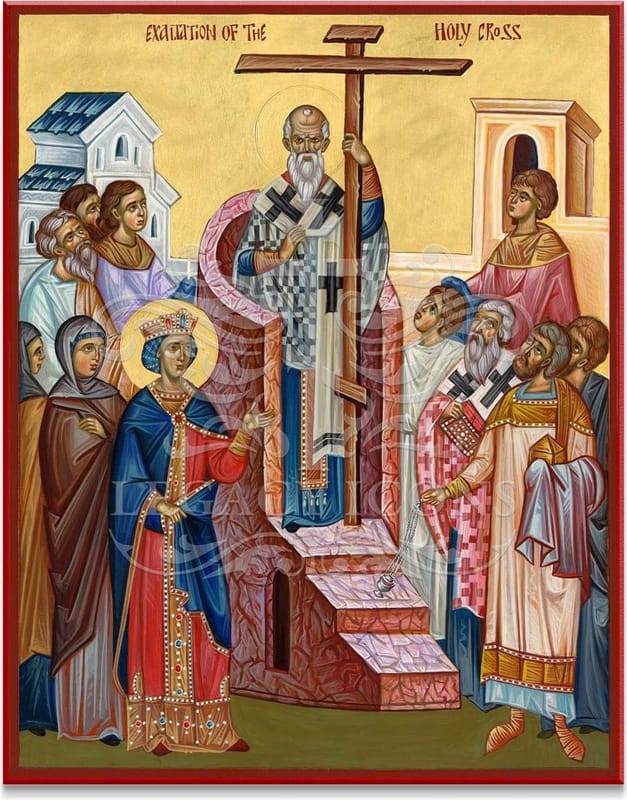
Exaltation of the Holy Cross
Also known as: Universal Exaltation of the Precious and Life-Giving Cross, Elevation of the Cross
Sep 14· Fixed date
Commemorates the finding of the True Cross in Jerusalem by the Empress Helen and its solemn elevation before the people, together with its later recovery from Persia. The Cross is lifted up and venerated as the instrument of salvation.
Depictions & Icons
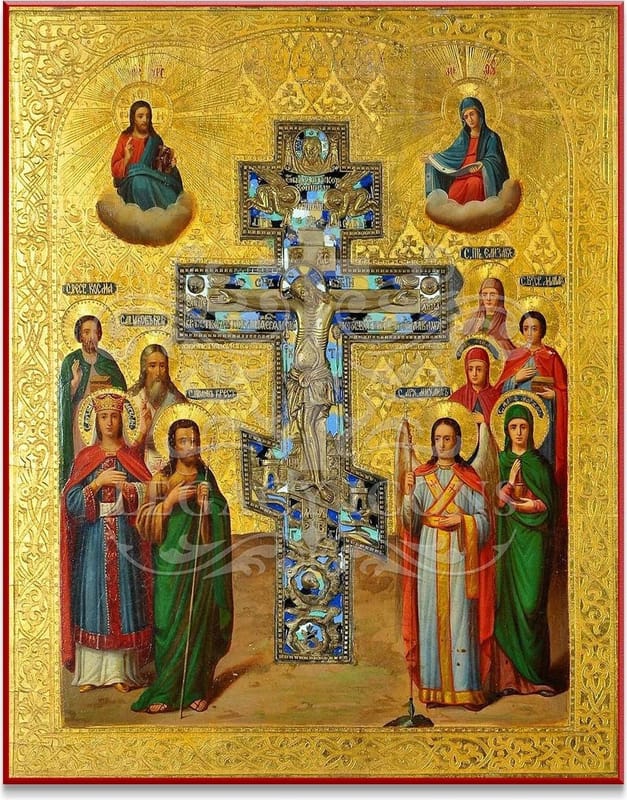
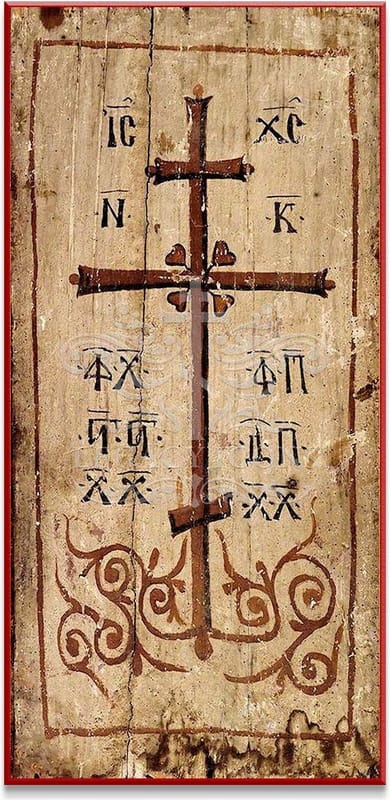
How the Church has written this feast — festal icons across the centuries.
Overview
The Exaltation of the Holy Cross is one of the Great Feasts of the Orthodox liturgical year, kept on September 14 (New Calendar). It commemorates the finding of the True Cross in Jerusalem by the Empress Helen, mother of the Emperor Constantine the Great, and its solemn elevation before the assembled people, together with the Cross's later recovery from Persian captivity in the seventh century.
The heart of the feast is the lifting up — the "exaltation" — of the Cross, which the clergy elevate before the faithful so that it may be venerated as the instrument of salvation. In many places the cross is adorned with basil and raised while the people repeatedly sing "Lord, have mercy."
Although it is a Great Feast, September 14 is kept as a day of strict fasting throughout Orthodoxy, in honor of the Cross and of the Lord's Passion. The feast has a forefeast on September 13 and an eight-day afterfeast concluding with its apodosis on September 21, during which the Cross remains in the center of the church for veneration.
Timeline
c. 326 AD — Finding of the True Cross
The Empress Helen, on pilgrimage to Palestine (326–328), directs excavations at Golgotha; with Bishop Macarius of Jerusalem the True Cross is identified through the healing of a mortally ill woman.
September 14, 335 — Dedication of the Constantinian churches
The basilica over the Holy Sepulchre is consecrated in Jerusalem; the day after the dedication the Cross is shown to the people for veneration.
614 — Capture of the Cross by Persia
Sasanian forces under Shahrbaraz seize Jerusalem, damage the Church of the Holy Sepulchre, and carry the True Cross to Ctesiphon under Khosrau II.
627 — Battle of Nineveh
The Emperor Heraclius defeats the Persians, opening the way to the relic's recovery.
March 21, 629 or 630 — Return of the Cross to Jerusalem
After the Persian collapse, Heraclius restores the True Cross in triumph to Jerusalem; the recovery is joined to the feast.
787 — Second Council of Nicaea
The council affirms that veneration of the Cross differs from the worship (latria) due to the divine nature alone.
History
The feast draws together three historical events. The first is the finding of the True Cross by the Empress Helen, mother of Constantine the Great. According to tradition, pagan Roman emperors had sought to obliterate the holy places of Christ's Passion and Resurrection: the Emperor Hadrian (117–138) ordered that Golgotha and the Lord's Sepulchre be buried and a temple to the goddess Venus raised over the site. Helen, in her old age of about eighty, made a pilgrimage to Palestine in the years 326–328, ordered the demolition of the pagan temple, and directed excavations at the site.
Late fourth-century historians such as Gelasius of Caesarea and Rufinus record that three crosses were discovered at the place of the crucifixion. To identify the Lord's Cross, and with the aid of Bishop Macarius of Jerusalem, a woman near death was brought and made to touch each cross; her sudden healing at the touch of the third cross led Helen to declare it the True Cross. The Emperor Constantine ordered the site uncovered and a church built upon it, and the Church of the Holy Sepulchre rose over the tomb.
The second event is the dedication of the Constantinian churches built over the Holy Sepulchre and Mount Calvary, whose consecration took place on September 14, 335. On the day following the dedication of the basilica, the clergy revealed the Cross to the people for public veneration — the origin of the feast's central act. The observance is among the earliest of Christianity's fixed commemorations: the Ancient Georgian Chantbook records its keeping in Jerusalem by the mid-sixth century, and in the West it was chiefly observed at Rome before the close of the seventh century.
The third event is the recovery of the Cross from Persia. In 614 the Sasanian forces of the Emperor Khosrau II, under the general Shahrbaraz, captured Jerusalem, damaged the Church of the Holy Sepulchre, and carried the True Cross away as a trophy to Ctesiphon, deporting the Patriarch Zacharias with many others. After years of setback the Byzantine Emperor Heraclius launched a counteroffensive in 622, achieving a decisive victory at the Battle of Nineveh in 627. Following the collapse of Persian power, the new ruler restored the relic, and Heraclius returned the Cross in triumph to Jerusalem, an event tradition places on March 21 of 629 or 630. The elevation of the Cross associated with Heraclius, honored also at Hagia Sophia in Constantinople, is joined to the feast.
So central is the Exaltation that other commemorations yield to it: the repose of Saint John Chrysostom, which fell on September 14 in the year 407, was transferred to November 13 on account of the feast's preeminence.
Meaning
Through this feast the Church proclaims the Cross not as an instrument of shame but as the instrument of salvation, lifted up and venerated as the throne of the Lord's victory. The act of exaltation — raising the Cross before the people — makes visible the truth that in the Cross death is trampled down and the way of life is opened.
The feast also teaches the proper honor due to the Cross. The Second Council of Nicaea (787) drew a careful distinction between the veneration offered to the Cross and its images and the worship (latria) that belongs to the divine nature alone; the faithful venerate the Cross while directing worship to God. The reverence shown to the wood is honor paid to Him who was crucified upon it.
In its keeping the feast unites royalty and repentance: the Cross is adorned as the sign of the King, yet September 14 is a day of strict fasting even amid a Great Feast, so that joy in the victory of the Cross is joined to sorrow for the Passion and to the ascetic sharing in it. The recovery of the relic from Persia further reads the whole span of history — loss, longing, and return — as gathered up under the sign of the Cross.
Iconography
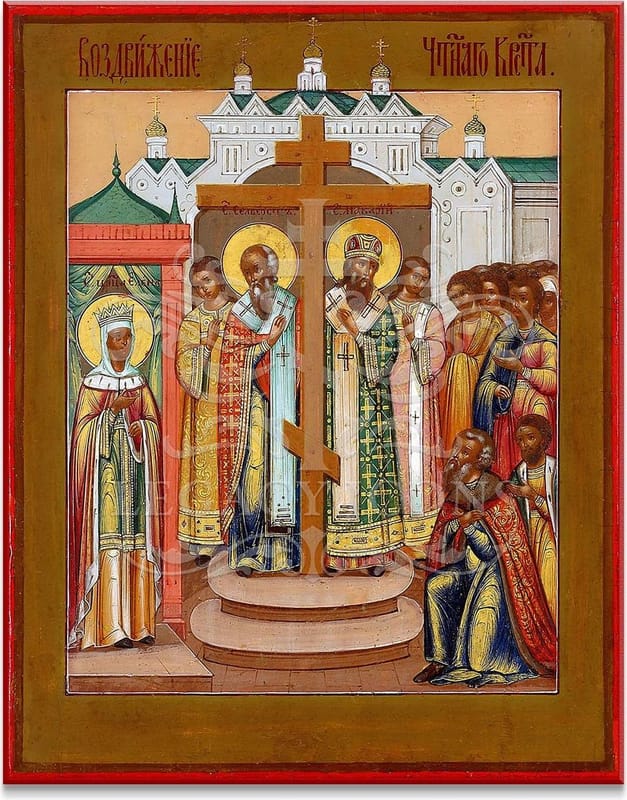
The festal icon centers on the elevation of the Cross. Bishop Macarius of Jerusalem is typically shown raising the Cross upon an ambo or platform, upheld by clergy, while the assembled people bow in veneration; the Empress Helen and the Emperor Constantine are often depicted flanking the scene as the imperial patrons of the finding. The composition presents the very act the feast enacts liturgically — the Cross lifted up before the faithful as the instrument of salvation.
Hymnography
The services of the feast — vespers and matins with their distinctive readings — are built around the theme of the Cross as the sign of victory and the instrument of the Lord's Passion. The hymns exalt the Cross that is lifted up, joining the note of triumph in the Resurrection to the memory of the crucifixion, and frame the veneration offered to the wood as honor paid to the crucified Lord.
Fasting in Practice
Although the Exaltation is a Great Feast, the Church's practice is to keep September 14 as a day of strict fasting, in honor of the Cross and of the Lord's Passion. In this discipline the day sets aside meat, dairy, and fish. The fast expresses that the joy of the feast is inseparable from a share in the suffering it commemorates. Typikon prescriptions and local usage may vary; the faithful are guided by their own parish and priest.
Customs & Traditions
The solemn elevation of a cross, in many places adorned with basil, by the clergy, accompanied by the repeated singing of "Lord, have mercy."
Veneration of the Cross by the faithful, who bow before it as they enter and leave the church throughout the eight-day afterfeast.
The keeping of a strict fast on the feast, even though it falls among the Great Feasts.
In the Armenian tradition, adorning the processional cross with basil, signifying royalty, and sanctifying with it the four corners of the church.
Ideas for Celebrating This Feast
Ways to honor the Cross at home on this strict-fast feast.
- Keep the day as a strict fast, as on Great and Holy Friday — one of the few strict-fast feasts — and talk with children about fasting on a day of triumph.
- Decorate a cross in your icon corner with basil and flowers, echoing the church custom of surrounding the elevated Cross with fragrant basil.
- If your parish gives out blessed basil, bring a sprig home; plant basil in a pot beforehand so children connect the herb to the feast.
- Venerate the cross together with a bow or prostration, and help the little ones make the sign of the cross reverently.
- Tell the story of St Helen finding the True Cross in Jerusalem, and let children decorate a simple craft cross.
- Read the feast's Gospel and sing the troparion of the Cross as a family.
- Place flowers before your home cross for the day as a small act of honor.
Ideas gathered and adapted from Orthodox family resources — OrthodoxWiki. These are optional, inviting ideas, not liturgical requirements.
Fasting is described here at the season-summary level and differs by jurisdiction and person — please consult your parish priest about how to keep the fasts.