
Sunday of the Myrrhbearing Women
Also known as: Sunday of the Myrrhbearers, Third Sunday of Pascha
P+14· Movable · Paschal cycle
The third Sunday of Pascha honors the women who came at dawn bearing myrrh to anoint the Lord's body and were the first to learn of His rising (Mark 15:43-16:8), together with the righteous Joseph of Arimathea and Nicodemus who took Him down from the Cross and buried Him.
Depictions & Icons
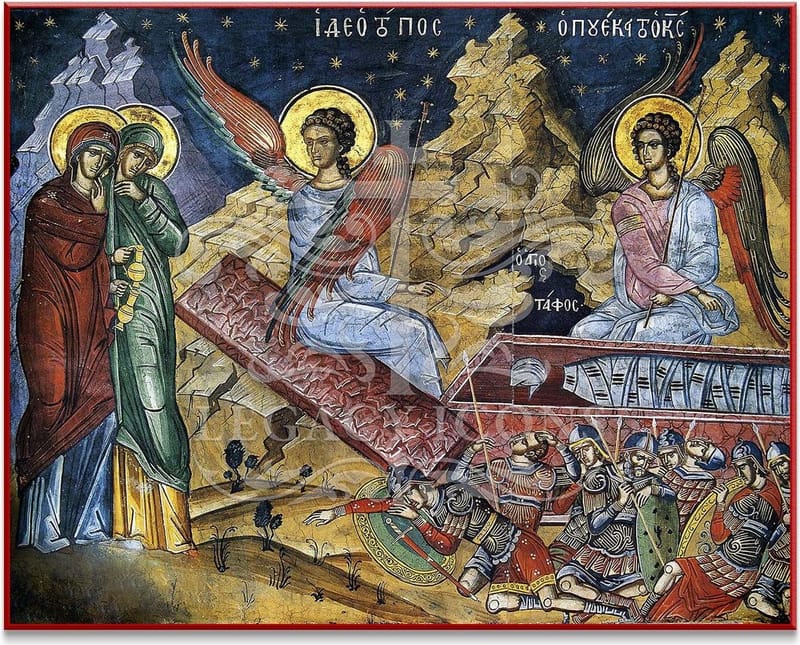
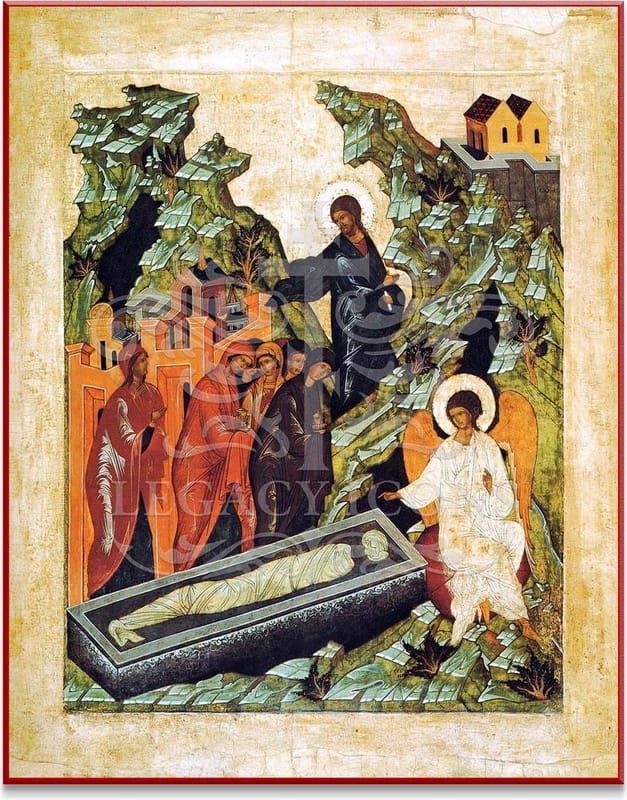
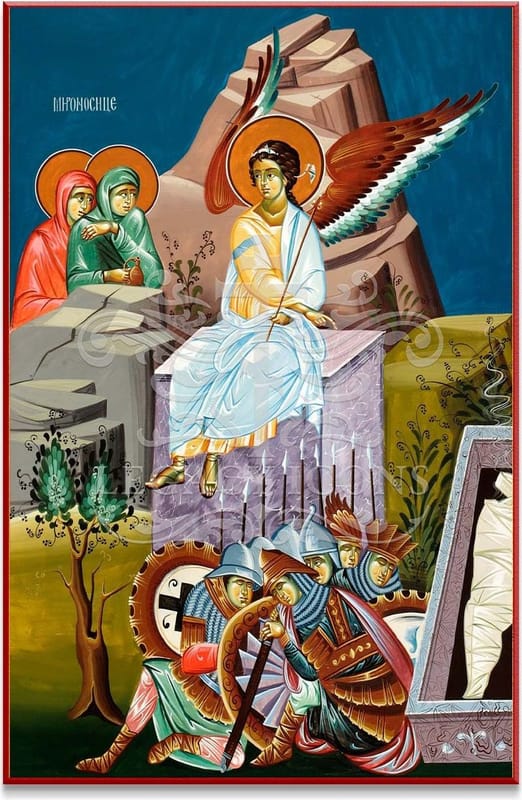
How the Church has written this feast — festal icons across the centuries.
Overview
The Sunday of the Myrrhbearing Women is the third Sunday of Pascha in the Eastern Orthodox and Greek Catholic Churches, falling two weeks after the feast of the Resurrection. It commemorates the women who came at dawn on the first day of the week bearing myrrh to anoint the body of the Lord and instead became the first to learn that He had risen. Alongside the women the day honors the righteous Joseph of Arimathea and Nicodemus, who took the body of Christ down from the Cross and buried it.
The commemoration gathers the figures who remained close to Christ through His burial and were the earliest witnesses to the empty tomb. Tradition lists among the myrrhbearers Mary Magdalene, Mary the mother of James and Joses, Mary the wife of Cleopas, Martha and Mary of Bethany, Joanna the wife of Chuza (a steward of Herod Antipas), Salome the mother of James and John, Susanna, and other unnamed women. Because they were sent to carry the news of the Resurrection to the Apostles, the Church remembers them as, in effect, the apostles to the Apostles.
The Sunday opens a week likewise named for the Myrrhbearers, during which its principal hymns are repeated at the services. As a Sunday within the Paschal season it carries both the joy of the Resurrection and the memory of the burial that preceded it, joining the noble ministry of Joseph and Nicodemus to the faithfulness of the women at the tomb.
History
The commemoration is rooted in the Gospel accounts of the burial of Christ and the discovery of the empty tomb, which appear across all four Gospels (Matthew 27:55–61 and 28:1–10; Mark 15:40–16:11; Luke 23:50–24:10; John 19:38–20:18). The women had followed Jesus during His earthly ministry in Galilee, providing for Him and His followers out of their own means, and they remained faithful through the most dangerous hours of His arrest and execution, standing by the Cross and accompanying Him to His burial.
Joseph of Arimathea, described in the Gospels as a disciple of Jesus but secretly, obtained the Lord's body from Pontius Pilate and laid it in his own new tomb. Nicodemus, a Pharisee who had first come to Jesus by night, later assisted Joseph in preparing the body with myrrh and aloes before burial. Their acts of burial are joined on this Sunday to the women's return at dawn, when they found the tomb empty and were commissioned to announce the Resurrection to the Apostles.
The day acquired its own liturgical shape within the Pentecostarion, the book of the Paschal season. Certain hymns proper to Holy Saturday are repeated on this Sunday, among them the Troparion beginning 'The noble Joseph…', to which a line commemorating the Resurrection is added, and the Doxastikon 'Joseph together with Nicodemus…'. The following week is designated the Week of the Myrrhbearers, during which the Troparion is repeated daily at the Canonical Hours and the Divine Liturgy, and the Doxastikon is sung at Vespers on Wednesday and Friday evenings.
Many of the individual myrrhbearers also hold their own feast days in the Menaion, the Church's fixed liturgical calendar, so that the Sunday gathers into a single Paschal observance figures who are also honored separately through the year. The commemoration has continued to draw wider recognition: in 2022 the Episcopal Church added Joanna, Mary, and Salome as the myrrhbearing women to its own calendar with a feast day on August 3.
Meaning
The Sunday sets before the Church the faithfulness of those who did not abandon Christ in His death. The women came to the tomb to perform a work of love — the anointing of a body they believed to be dead — and their devotion, offered without expectation of the Resurrection, became the occasion of their being the first to receive its news. Their faithfulness through the danger of the Passion is held up as the pattern by which love precedes and prepares for the encounter with the risen Lord.
The women were commissioned as witnesses, sent to announce the Resurrection to the Apostles, and so the Church remembers them as the apostles to the Apostles. For this reason the myrrhbearers, and especially Mary Magdalene, are sometimes called equal to the Apostles. That women were the first witnesses of the empty tomb has been understood as underscoring the truthfulness of the testimony, since such witnesses ran counter to the expectations of the surrounding culture; the Gospel writers repeatedly make the women the subject of verbs of seeing, presenting them plainly as eyewitnesses.
In Joseph of Arimathea and Nicodemus the day honors a discipleship that had been secret and became bold at the hour of the Cross. Both had followed Jesus quietly, and both stepped forward to claim and bury His body when His public disciples had scattered — an act of courage and reverence that the Church joins to the women's ministry as together forming the human care given to the Lord between His death and His rising.
Iconography
Eastern Orthodox icons of the feast typically depict three of the Marys at the center, flanked by two angels, with the Holy Sepulchre in the foreground together with the winding sheet and the napkin left behind. Mary Magdalene also appears prominently in individual icons as a myrrhbearer. Among the notable historical depictions are the 'White Angel' fresco of the Mileševa monastery (about 1235) and an eighteenth-century Russian icon from Kizhi.
Hymnography
The Sunday repeats several hymns proper to Holy Saturday. Foremost is the Troparion beginning 'The noble Joseph…', which recalls Joseph of Arimathea taking down the body of Christ and laying it in the tomb, and to which a line commemorating the Resurrection is added for the Paschal season. The Doxastikon 'Joseph together with Nicodemus…' is likewise sung. During the following Week of the Myrrhbearers the Troparion is repeated daily at the Canonical Hours and the Divine Liturgy, and the Doxastikon is sung at Vespers on Wednesday and Friday evenings.
Throughout the Sundays of Pascha a special hymn called the Hypakoë is chanted at Matins and the Midnight Office. The term is connected with the sense of being sent, referring to the myrrhbearing women who were sent to announce the Resurrection to the Apostles. Numerous further hymns of the Octoechos and the Pentecostarion celebrate the roles of these figures in the accounts of the Passion and the Resurrection.
Customs & Traditions
In many places the day is kept as a day of honor for Orthodox women.
Several Orthodox cathedrals and churches bear the name of the Myrrhbearers and keep this Sunday as their patronal feast.
Scripture
- Mark 16:9–20 — The Matins Gospel of the Sunday.
- Acts 6:1–7 — The appointed Epistle.
- Mark 15:43–16:8 — The Gospel read at the Divine Liturgy, recounting the burial by Joseph and the women at the empty tomb.
- Matthew 27:55–61 — The women at the Cross and the burial.
- Matthew 28:1–10 — The women at the empty tomb.
- Mark 15:40–16:11 — The women, the burial, and the Resurrection announcement.
- Luke 23:50–24:10 — Joseph of Arimathea and the women at the tomb.
- John 19:38–20:18 — Joseph and Nicodemus at the burial; Mary Magdalene at the tomb.