
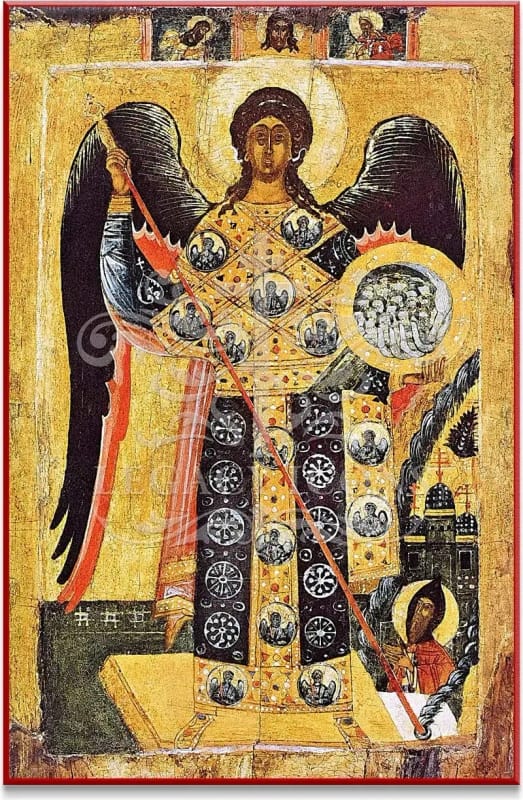
Commemoration of the Miracle of the Archangel Michael at Chonae
Also known as: Miracle at Chonae, Miracle at Colossae
Sep 6· Fixed date
Recalls the miracle at Chonae (Colossae) in Phrygia, where the Archangel Michael saved a healing spring-shrine and its devout guardian Archippus by opening a channel in the rock, turning aside a flood that pagans had loosed to destroy the holy place.
Depictions & Icons
How the Church has written this feast — festal icons across the centuries.
Overview
The Commemoration of the Miracle of the Archangel Michael at Chonae is a fixed feast of the Orthodox calendar observed on September 6.
History
Tradition sets the event at a church in Phrygia, not far from Hierapolis, at a place called Cheretopos, built over a miraculous spring. According to the account preserved in the Orthodox synaxarion, a resident of Laodicea raised the sanctuary in thanksgiving to God for the healing of his mute daughter, which he attributed to the intercession of the Archangel Michael. Eastern Orthodox tradition further holds that the Apostle John, preaching in the region, had foretold the appearance of Michael there, and that a healing spring rose at the site soon after the Apostle departed.
The shrine gained a caretaker in a young man named Archippus. Tradition relates that at the age of ten he came to pray at the church of the Archangel Michael and remained to serve it, living a strict and ascetic life given over to fasting and prayer. He is carried in the saints' calendar as Archippus of Hierapolis.
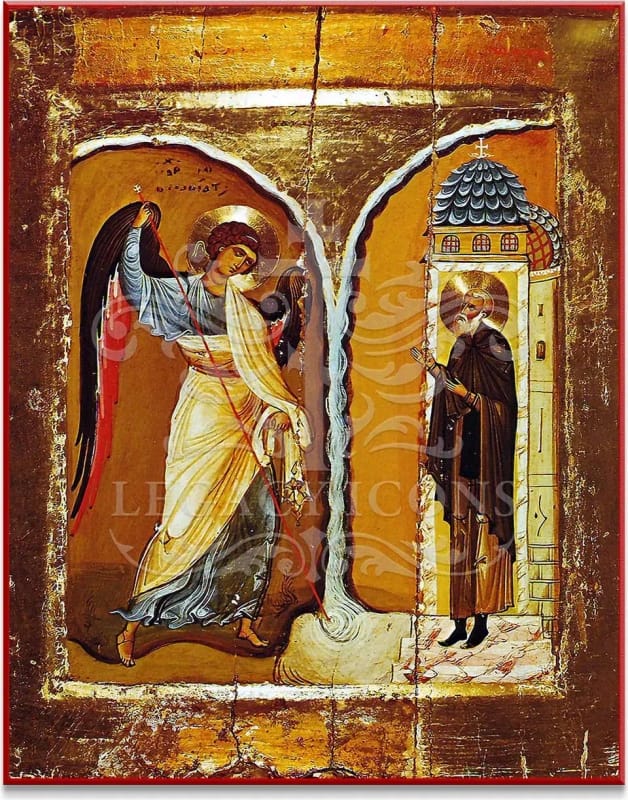
The central event is the deliverance of the church from an attempt to destroy it. According to tradition, non-Christians of the area, described as envious of the spring's curative powers, sought to obliterate the sanctuary by turning the waters of nearby mountain rivers against it. The Archangel intervened by opening a wide fissure in the rock with his staff and commanding the rushing water to plunge into it, so that the flood was turned aside and the church saved. From the Greek word meaning 'to plunge,' referring to the waters' diversion into the earth, the city came to be identified as Chonae.
During the Byzantine period Chonae developed into an important religious center. The Byzantines built the Church of the Archangel Michael there — described as one of the largest churches in the region — and the site became a major pilgrimage destination honoring the Archangel. The shrine suffered significant damage in 1070, when Seljuk forces sacked the city and desecrated the church. The therapeutic reputation of the waters nonetheless persisted through later history. The Eastern Orthodox Church fixed the liturgical commemoration of the miracle on September 6; Greek tradition places the apparition itself around the middle of the first century.
Meaning
The feast presents the Archangel Michael as protector of holy places and of the faithful, and as a mediator whose intercession secures both healing and deliverance. His name, from the Hebrew meaning 'Who is like God?', expresses the confession that undergirds his role as champion of God's people against every hostile power. Scripture names him in the books of Daniel, Jude, and Revelation, where he appears as the leader of the heavenly host.
In the account of Chonae the Church reads a sign of divine care exercised through angelic ministry. The waters loosed to destroy the sanctuary are turned by the Archangel into a channel he himself opens, and the spring is thereafter regarded as sanctified — a place where the mercy shown in the healing of the Laodicean's daughter continues in the healing associated with its waters. The threat of destruction becomes the occasion of a lasting blessing.
The Chonae shrine held a formative place in Eastern Christian devotion to the angels. Texts from the fifth to seventh centuries that recount the miracle helped shape how the faithful were taught to approach angelic intermediaries in prayer, and the site became foundational for the understanding of angelic intercession across Byzantine Christianity. The feast thus carries not only the memory of a single deliverance but a wider teaching on how the bodiless powers serve God in the care of his people.
Iconography
The miracle was depicted in Byzantine art. A twelfth-century icon from the Monastery of St. Catherine on Sinai shows the apparition of the Archangel Michael at the springs of Colossae, and the Menologion of Basil II, produced around the year 1000, also preserves a visual representation of the event.
Customs & Traditions
The waters associated with the shrine were long regarded as therapeutic; the curative reputation of the site persisted through history, with the spring near the former shrine still considered healing by locals.