
Theophany
Also known as: Epiphany, Baptism of the Lord, Holy Theophany
Jan 6· Fixed date
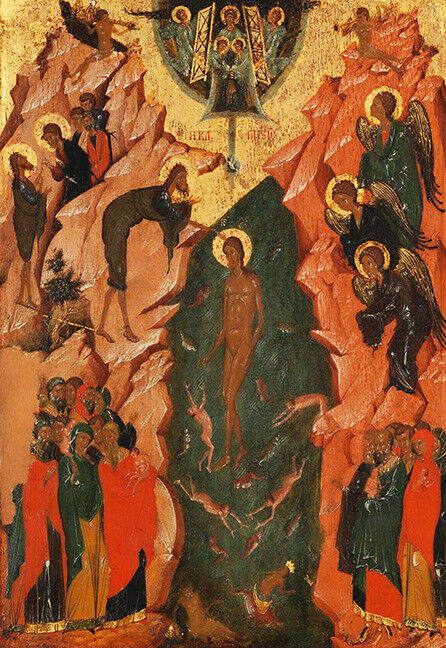
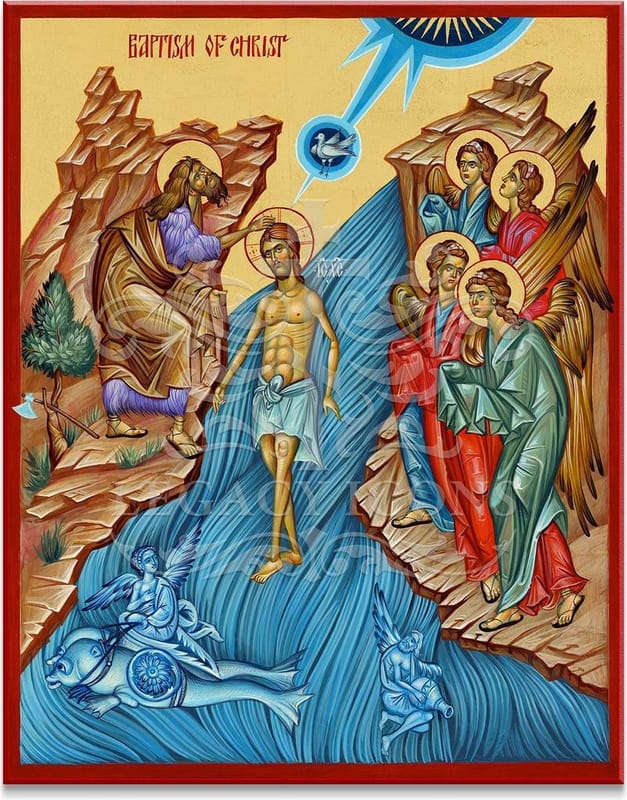
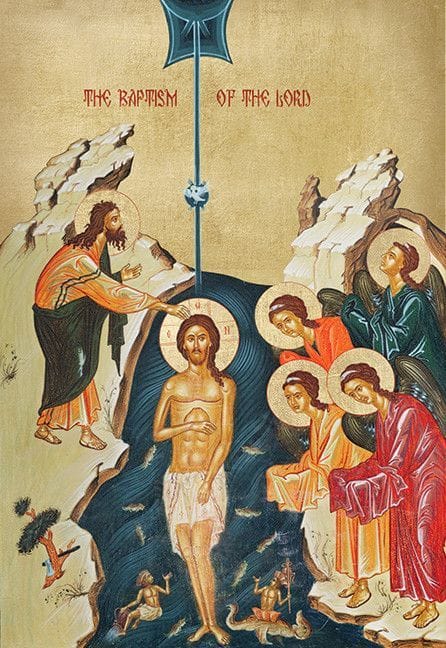
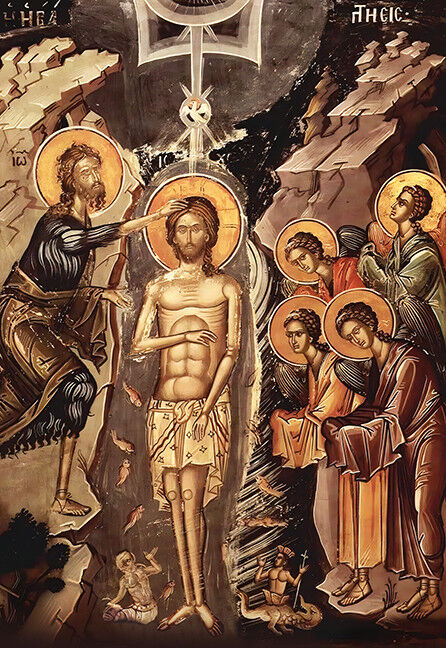
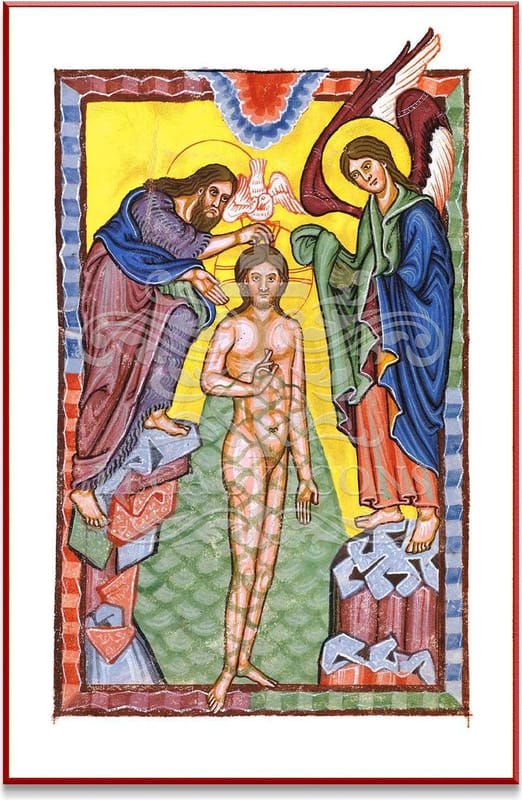
The baptism of Christ in the Jordan by John the Forerunner, at which the voice of the Father and the descent of the Spirit as a dove revealed the Holy Trinity. "Theophany" means the shining-forth of God.
Depictions & Icons
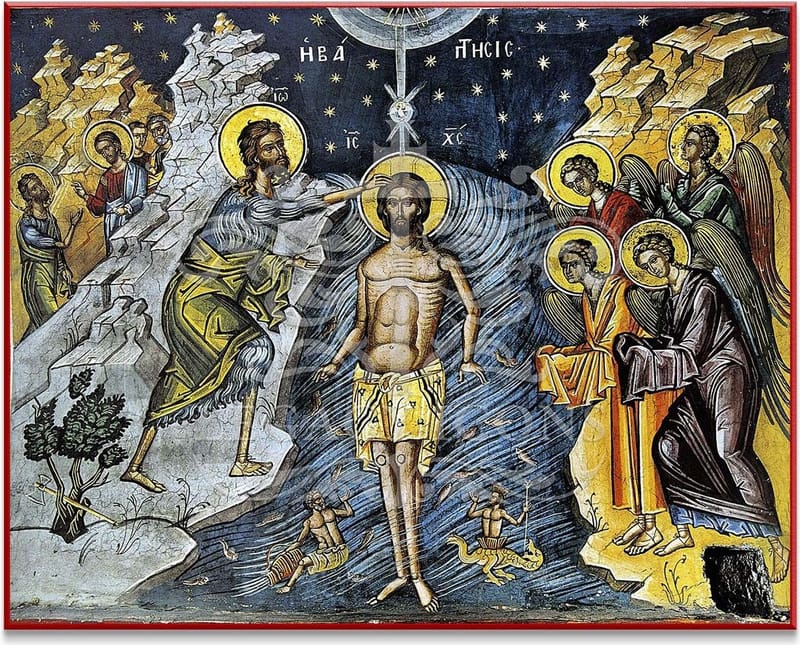
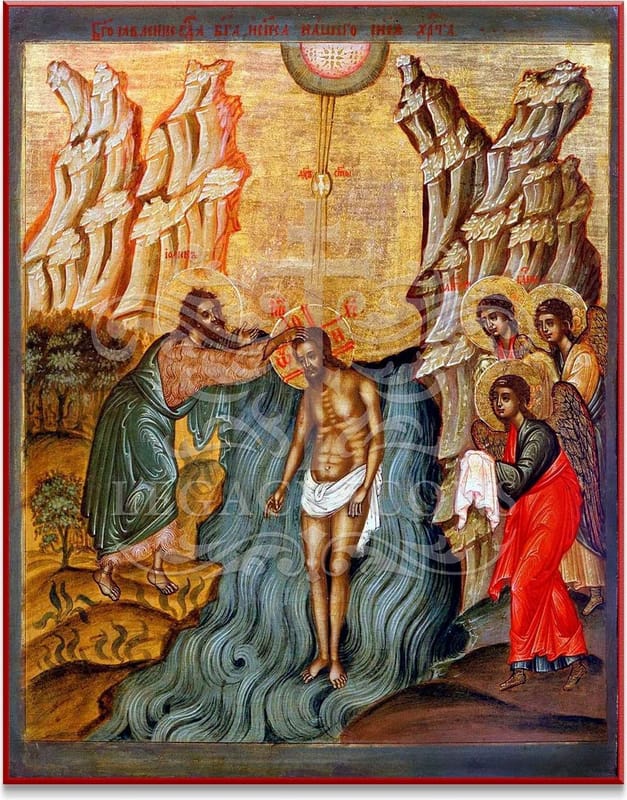
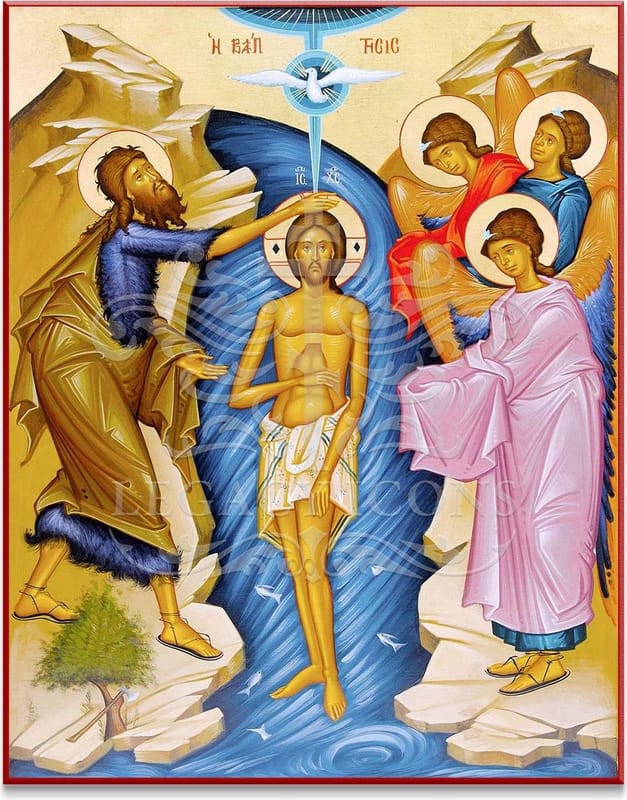
How the Church has written this feast — festal icons across the centuries.
Overview
Theophany is a Great Feast of the Orthodox Church, dedicated to the Lord and celebrated on January 6, that commemorates the baptism of Jesus Christ in the Jordan River by John the Forerunner. The name "Theophany" means the shining-forth, or manifestation, of God: at Christ's baptism the voice of the Father was heard from heaven speaking of the Son, and the Holy Spirit descended upon Him in the form of a dove, so that the Holy Trinity was revealed to the world.
The feast is preceded by a Forefeast beginning on January 2 and by its Eve, or Paramony, on January 5, which is kept as a day of strict fasting. The feast day itself is fast-free, and all foods are permitted even when it falls on a Wednesday or Friday. Theophany is followed by an eight-day Afterfeast, with its Apodosis (leave-taking) on January 14.
Because it reveals God as one in three Persons and because catechumens were once baptized at its services, the feast is also called the Day of Illumination and the Feast of Lights. Its most distinctive rite is the Great Blessing of Waters, served both on the Eve and on the feast day, from which the faithful carry home sanctified Theophany water for use throughout the year.
Timeline
c. 200 — Earliest reference (Clement of Alexandria)
The Stromata of Clement of Alexandria gives the earliest certain reference to the feast, mentioning celebration of the day of Christ's baptism with a night of readings, dated to either January 6 or 10.
4th century — Gregory of Nazianzus preaches on the feast
Gregory of Nazianzus preaches on January 6 and 7, his sermons confirming that the Birth of Christ and the leading of the Magi had already been celebrated, with the commemoration of the Baptism taking place at that time.
History
The feast of Theophany originated in the Eastern Church. Its earliest certain reference appears in the Stromata of Clement of Alexandria, around the year 200, where Clement mentions followers of Basilides celebrating the day of Christ's baptism and keeping the previous night in readings, a date given as either January 6 or 10. In these earliest witnesses the Baptism appears to have been the primary event commemorated, though the vague term Epiphany — meaning manifestation — eventually came to encompass several events. Second-century testimony from Clement documents its celebration with vigils, and the feast's origins were traced by the Church to Apostolic times, being mentioned in the Apostolic Constitutions (Book V:13), which name the Baptism specifically.
Originally Christians kept a single unified feast that gathered together Christ's birth, the visit of the Magi, His circumcision, His presentation in the temple, and His baptism — all understood as manifestations of God becoming man. In the fourth century Gregory of Nazianzus preached on January 6 and 7 in a way that confirms the Birth of Christ and the leading of the Magi by a star had already been celebrated, with the commemoration of the Baptism taking place at that time. At Jerusalem, pilgrimage accounts show the feast carried a strong Nativity emphasis because of Bethlehem's nearness, with elaborate octave celebrations of processions and services at multiple holy sites. In time Western Christianity separated these events, while the Armenian Apostolic Church has kept the ancient practice of observing January 6 as both nativity and baptism.
From the fourth through the ninth centuries the great Church Fathers — among them Gregory the Theologian, John Chrysostom, and John of Damascus — commented extensively on the meaning of Theophany, and the ancient Church baptized its catechumens at the Vespers of the feast, which is one reason the day came to be called the Feast of Lights. The feast is celebrated on January 6 according to the calendar used by each Orthodox church; those following the Julian calendar observe it on the Gregorian January 19.
Meaning
The central meaning of the feast is the revelation of the Holy Trinity. Christ's baptism was one of the occasions on which all three Persons of the Trinity were manifested at once: the Father speaking from heaven concerning the Son, the Son being baptized in the river, and the Holy Spirit descending in the form of a dove. In this the feast proclaims the Church's faith in the most sublime mystery, incomprehensible to human intellect, of one God in three Persons.
According to the Church's understanding, Christ was baptized not for any personal cleansing, since He was without sin, but to bury human sin in the waters, to fulfill the Law, to manifest the mystery of the Trinity, to sanctify the nature of water, and to give humanity an example of baptism. Orthodox theology also sees Christ's baptism as the first step toward the Crucifixion, and the hymns of Theophany are drawn into parallel with those sung on Good Friday.
The feast's revelation of God gives it its names: the Day of Illumination and the Feast of Lights. The Church teaches that the water blessed at the feast is transformed by the blessing and acquires incorruptibility, so that the sanctified Theophany water becomes a bearer of grace carried into the homes and lives of the faithful through the year.
Hymnography
The services of the feast combine Vespers with the Divine Liturgy of St. Basil the Great on the Eve, and the vigil is composed of Great Compline and Matins. During the Liturgy of the Eve fifteen Old Testament lections that foreshadow the Baptism of Christ are read. On the feast the Divine Liturgy substitutes a baptismal hymn drawn from Scripture for the customary Trisagion, and the standard antiphons are replaced with psalms of glorification and praise — reflecting the feast's character as a day of illumination and its ancient association with the baptism of catechumens.
Fasting in Practice
The Eve of the feast, January 5 (the Paramony), is kept as a day of strict fasting, and on it the Royal Hours are served, followed by the Divine Liturgy of St. Basil combined with Vespers. The feast day itself, however, is fast-free: all foods are permitted, even when Theophany falls on a Wednesday or Friday. During the eight-day Afterfeast that follows, the normal fasting laws are suspended. Typikon practice varies by jurisdiction; the faithful should consult their priest.
Customs & Traditions
The Great Blessing of Waters, served both on the Eve and on the feast day, traditionally at a river, lake, or sea, or other body of living water.
The plunging of the cross into the water: in Greek practice the priest casts the cross into the water and volunteers attempt to retrieve it, the recovered cross bringing a special blessing to the swimmer and their household.
In Russia's harsh winters a hole is cut through the ice and the priest dips the cross three times rather than casting it.
The faithful carry home the blessed Theophany water for use throughout the year.
Following the feast, priests visit parishioners' homes to bless them with the Theophany water, ideally before the start of Great Lent.
Ideas for Celebrating This Feast
Ways to keep the feast of the Lord's Baptism and the blessing of the waters at home.
- Bring home a bottle of blessed Theophany water; drink a little on an empty stomach through the season and keep the rest in the icon corner for the year.
- Reverently sprinkle each room and the thresholds and windows of your home with the holy water as a family blessing.
- Prepare for the priest's house blessing: tidy up, open the door of every room, and turn on the lights before he arrives.
- Let a child lead the house-blessing procession with a candle, going room to room — a memorable way to offer the whole home to God.
- Reassure children (and yourself) that the blessing is God's welcome and grace, not an inspection — the home is blessed in whatever condition it is in.
- Read the account of Christ's baptism in the Jordan and sing the troparion of Theophany at the icon corner.
- Walk to a nearby river, lake, or stream and talk about how Christ sanctified all water — and all creation — by entering the Jordan.
Ideas gathered and adapted from Orthodox family resources — Charlotte Riggle, OCA. These are optional, inviting ideas, not liturgical requirements.
Scripture
- Matthew 3:13-17 — The baptism of Christ in the Jordan by John the Forerunner.
- Mark 1:9-11 — The baptism of Christ and the descent of the Spirit.
- Luke 3:21-22 — The heavens opened and the Spirit descended in bodily form as a dove.
Fasting is described here at the season-summary level and differs by jurisdiction and person — please consult your parish priest about how to keep the fasts.