
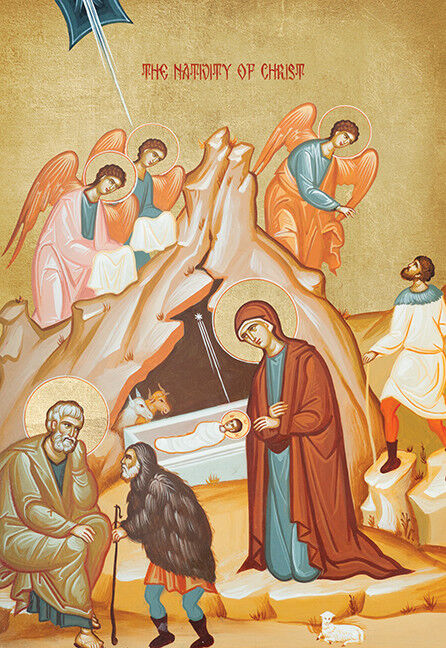
Nativity of Christ
Also known as: Nativity of the Lord, Christmas, Nativity in the Flesh of Our Lord
Dec 25· Fixed date
The birth of Jesus Christ in the flesh in Bethlehem of the Virgin Mary, God taking on human nature for the salvation of the world. It is called by the Church the "mother of all feasts."
Depictions & Icons
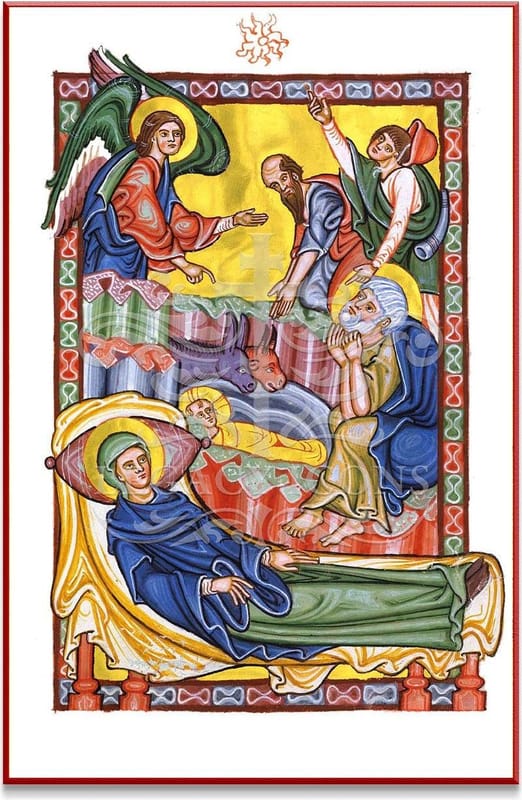
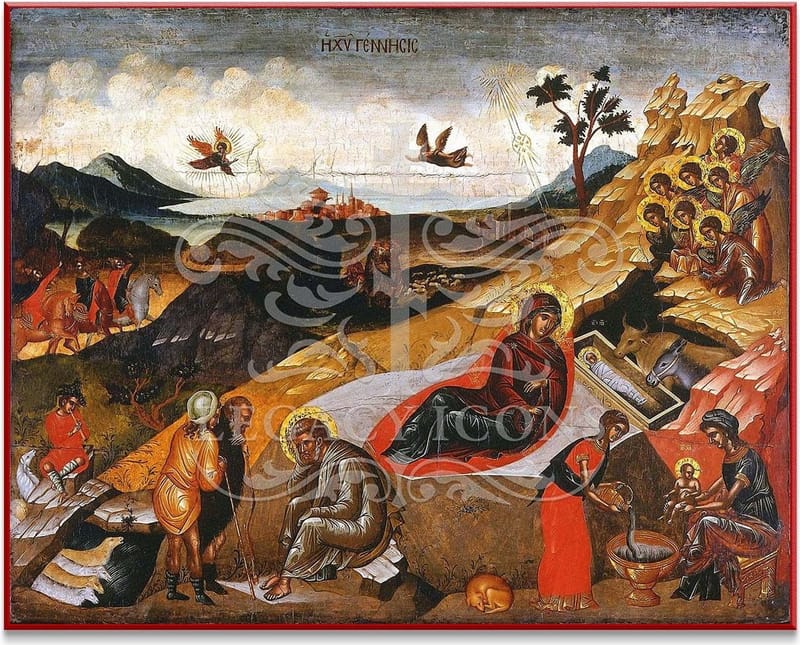
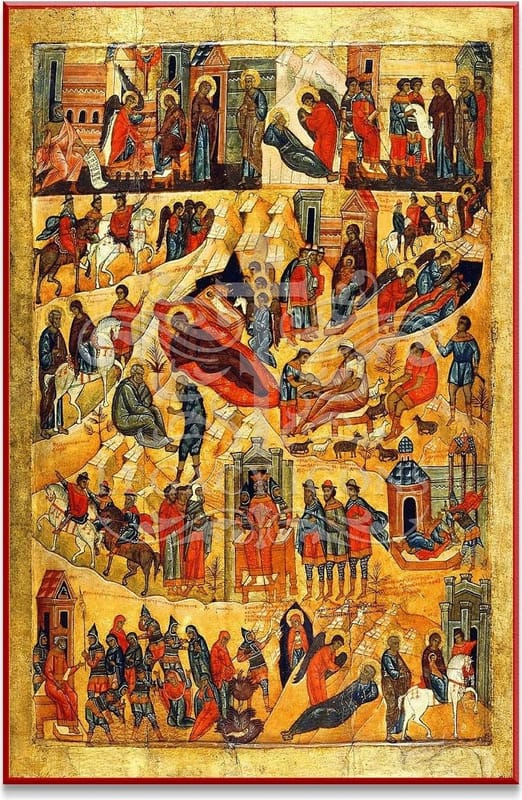
How the Church has written this feast — festal icons across the centuries.
Overview
The Nativity of Christ (Christmas) commemorates the birth of Jesus Christ in the flesh in Bethlehem of Judea, of the Virgin Mary, when God took on human nature for the salvation of the world. It is one of the Twelve Great Feasts of the Orthodox Church, kept on December 25, and is honored in the Church's tradition as the foundation of all the other feasts — sometimes called the "mother of all feasts."
The event is drawn from the accounts of the Evangelists Matthew and Luke: Mary and Joseph travel to Bethlehem for the census under Augustus, find no room, and the child is born in a cave used as a stable. Shepherds are the first to hear the angelic announcement, and Magi come afterward bearing gifts.
The feast crowns a forty-day preparatory fast (the Nativity Fast, or Advent) and stands within a longer festal season: a forefeast begins December 20, and the celebration continues through an afterfeast to its apodosis on December 31, leading toward Theophany.
Timeline
c. 170–236 — Hippolytus of Rome
Reckons the birth to December 25 by adding nine months to an Annunciation placed at the spring equinox.
354 — Chronography of 354
The Philocalian calendar gives the earliest surviving Roman witness to a December 25 Nativity celebration.
386 — Chrysostom at Antioch
John Chrysostom's sermon indicates the separate December 25 feast had been kept at Antioch for roughly ten years.
518 — Kontakion of Romanos
The Nativity kontakion of St. Romanos the Melodist is dated to this year.
567 — Council of Tours
Unites the days between Christmas and Epiphany into a single festal cycle.
History
In the first three centuries the Eastern churches largely kept the birth of Christ together with his Baptism as a single feast on January 6, while the Western church observed the Nativity separately on December 25. The earliest surviving reference to a December 25 celebration at Rome is the Chronography of 354 (the Philocalian calendar), and the date itself was defended early: Hippolytus of Rome (c. 170–236) reckoned it by assuming the Annunciation fell at the spring equinox and adding nine months, a computation echoed in an Orthodox reading that counts backward from the civil New Year.
The separate December 25 feast spread rapidly through the East in the later fourth century. John Chrysostom's sermon at Antioch in 386 indicates the feast had been kept there for about a decade, and by around 385 it was observed as distinct from the Baptism feast in Constantinople, Nyssa, and Amaseia. In the West, Pope Leo I preached the feast as the Mystery of the Incarnation and Pope Sixtus III is associated with the institution of the midnight service.
Imperial and conciliar acts fixed the feast in law and practice: the Church's tradition records decrees of universal celebration under the emperors Theodosius (438) and Justinian (535), the feast reaching Jerusalem in the sixth century, and the Council of Tours (567) uniting the days between Christmas and Epiphany into one festal cycle. The modern divergence by which some churches keep December 25 and others what corresponds to January 7 reflects the difference between the Julian and Gregorian calendars, not a dispute over the date of the birth.
Meaning
The feast proclaims the Incarnation: that the eternal Son and Word of God, without ceasing to be God, took a complete human nature and was born as a man. The Church's hymnography dwells on this paradox and on the divine condescension by which the infinite Word is contained in finite flesh and the Lord of all is laid in a manger.
The doctrine carried by the feast was worked out in the great christological controversies of the first centuries, which turned on the title Theotokos (God-bearer) for the Virgin and on how the one Christ holds together full divinity and full humanity — the hypostatic union confessed at the Council of Chalcedon in 451. The Nativity is thus not only a remembrance of a birth but a confession of who is born.
In the feast's theology Christ is the new Adam, and his birth is the beginning of the saving ministry that leads to the Cross and the empty tomb. Salvation is announced to shepherds and Magi alike — to Israel and to the nations — so that the humility of God entering the world as an infant is at the same time the opening of redemption to all.
Iconography
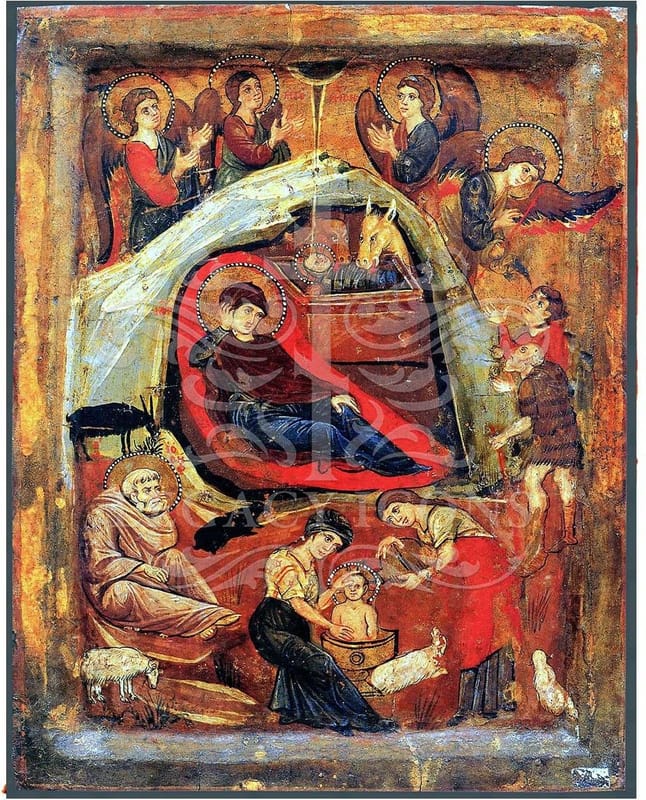
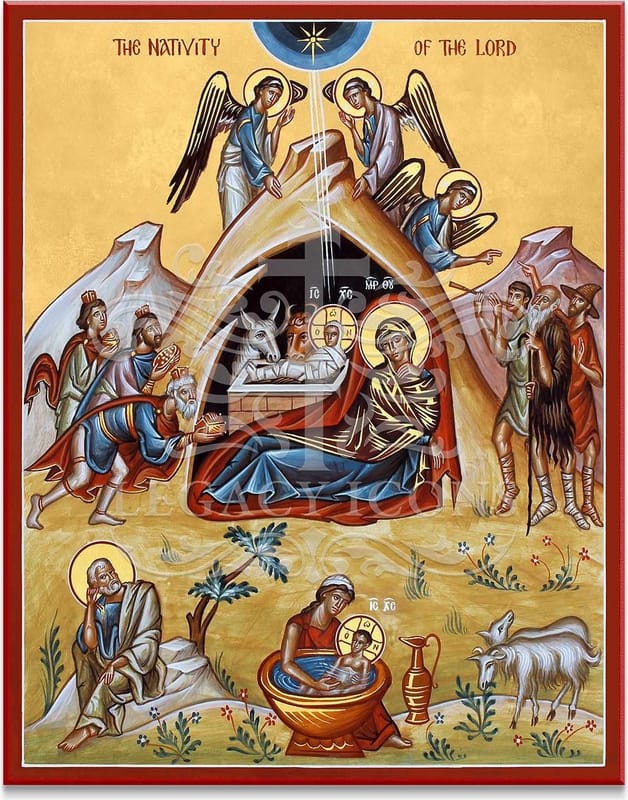
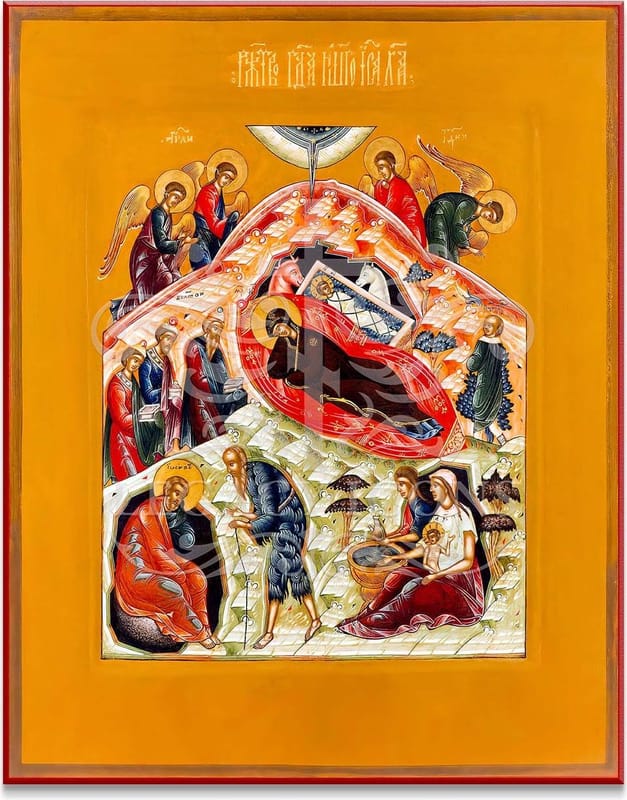
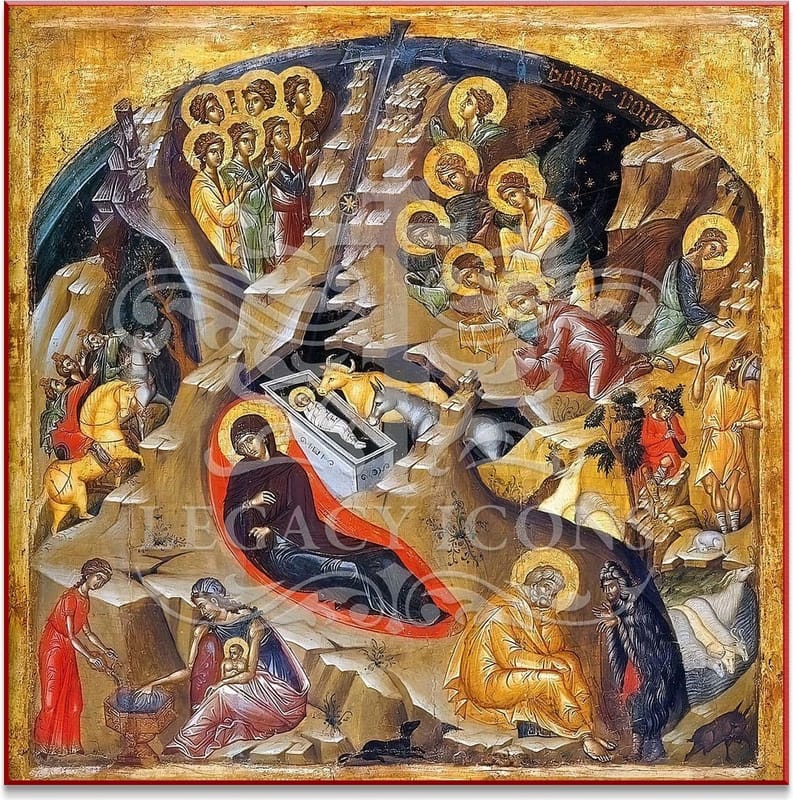
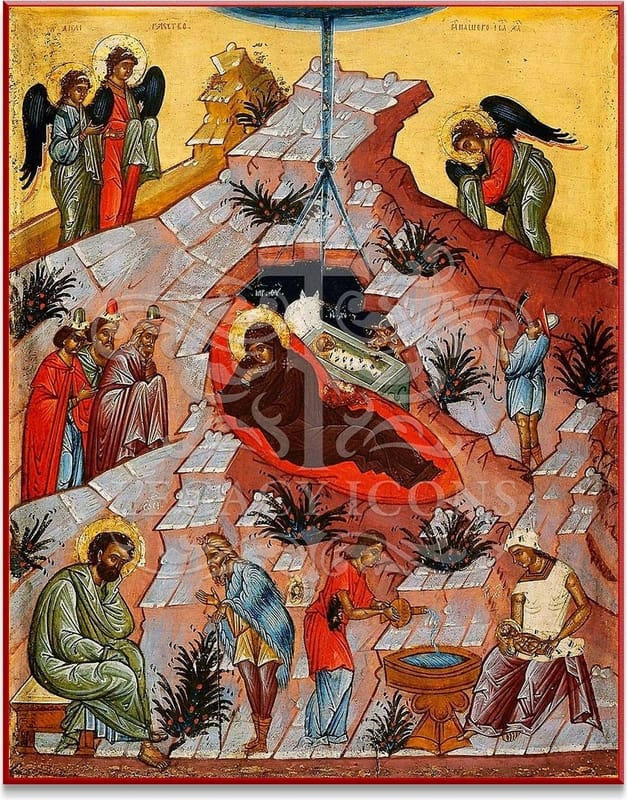
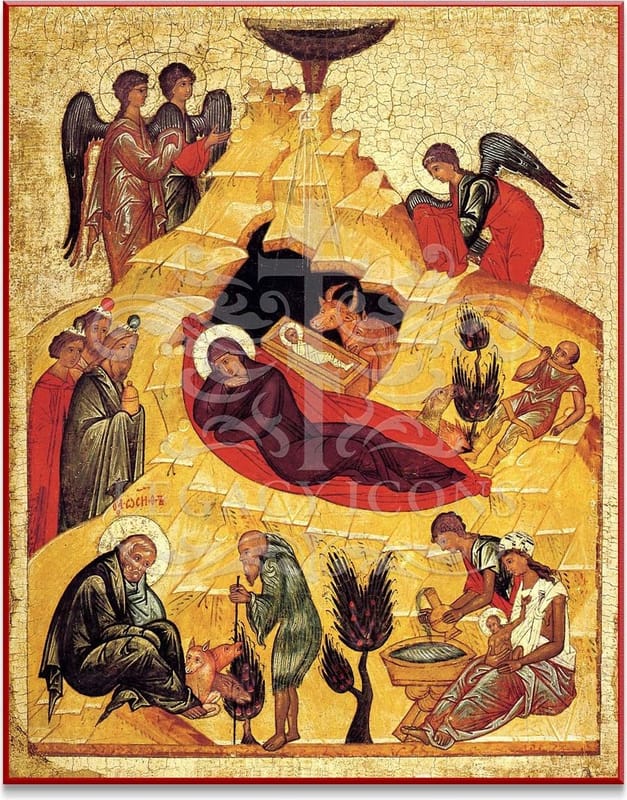
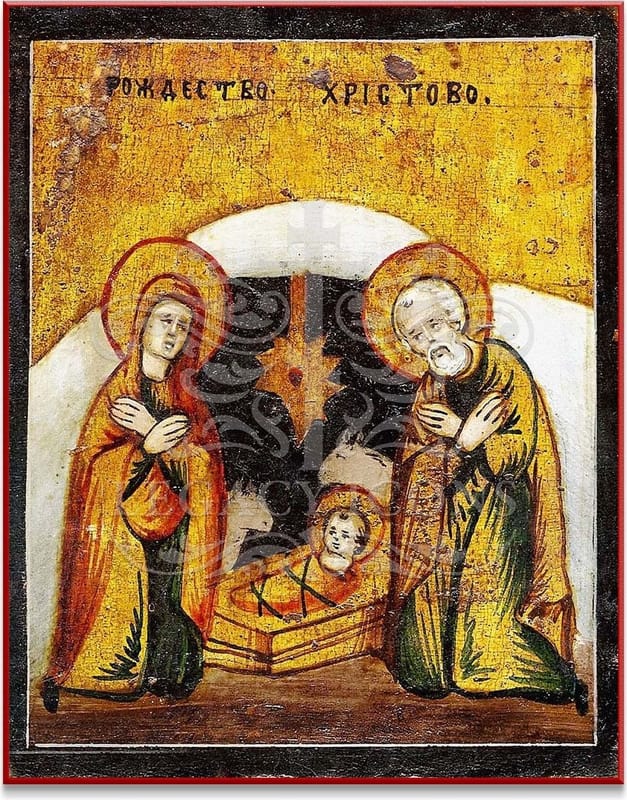
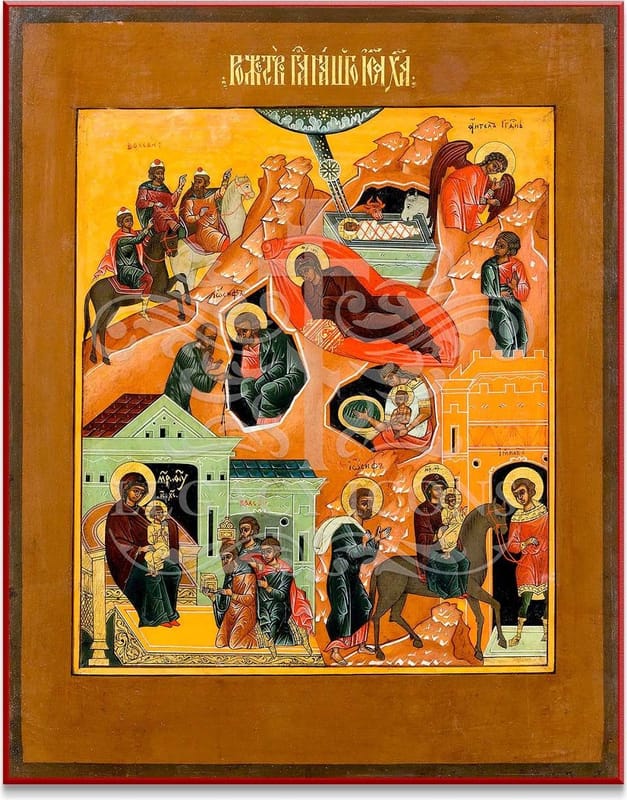
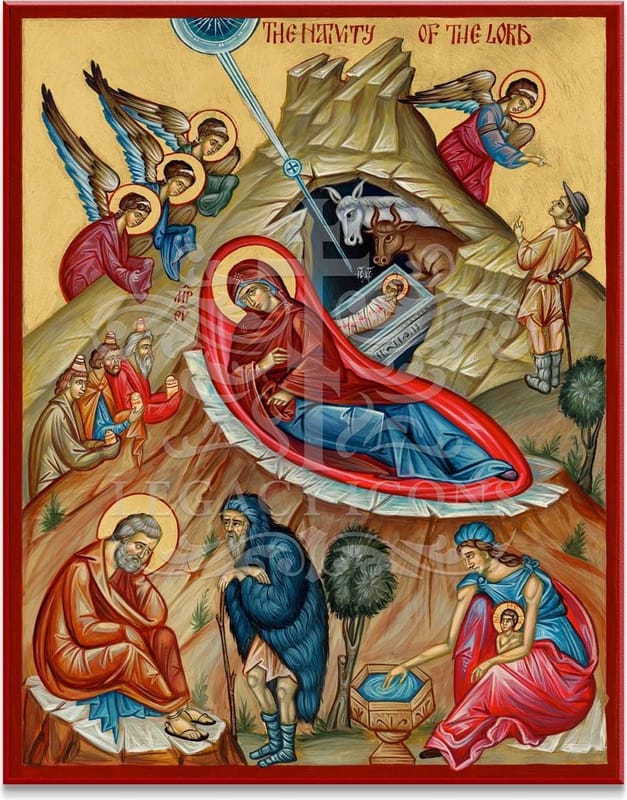
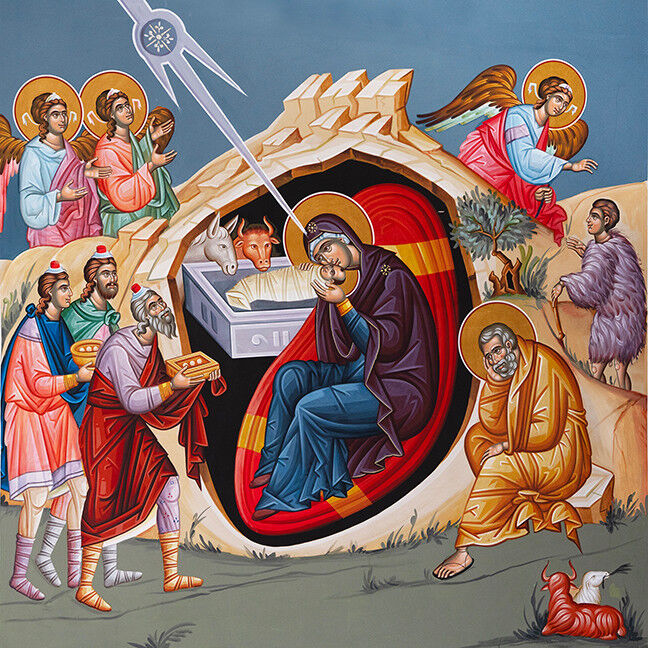
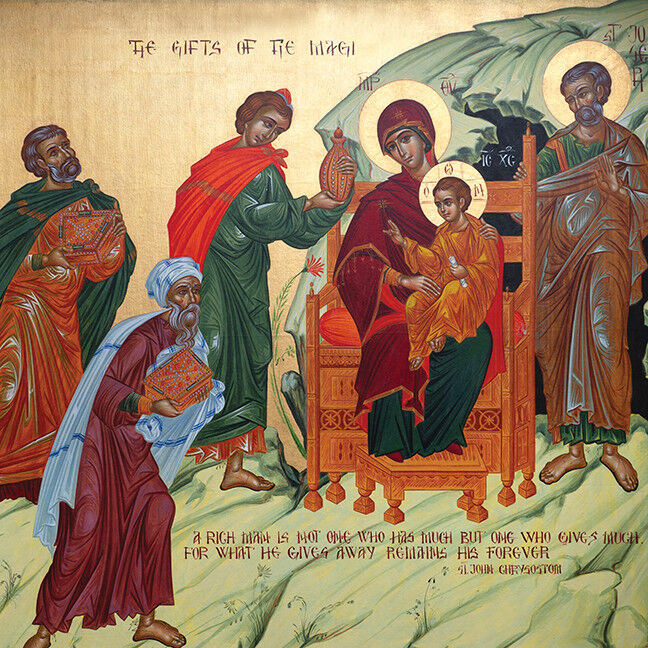
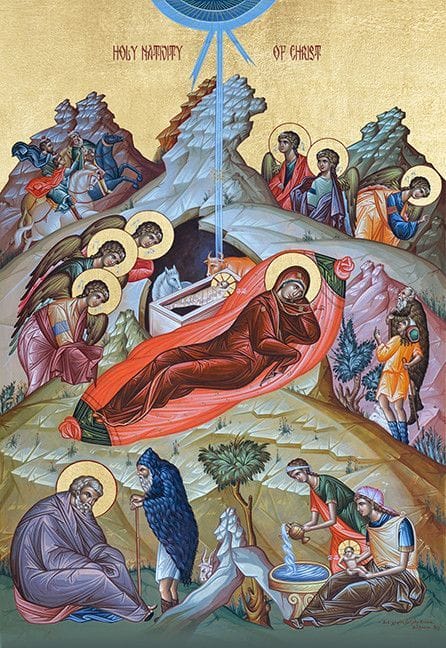
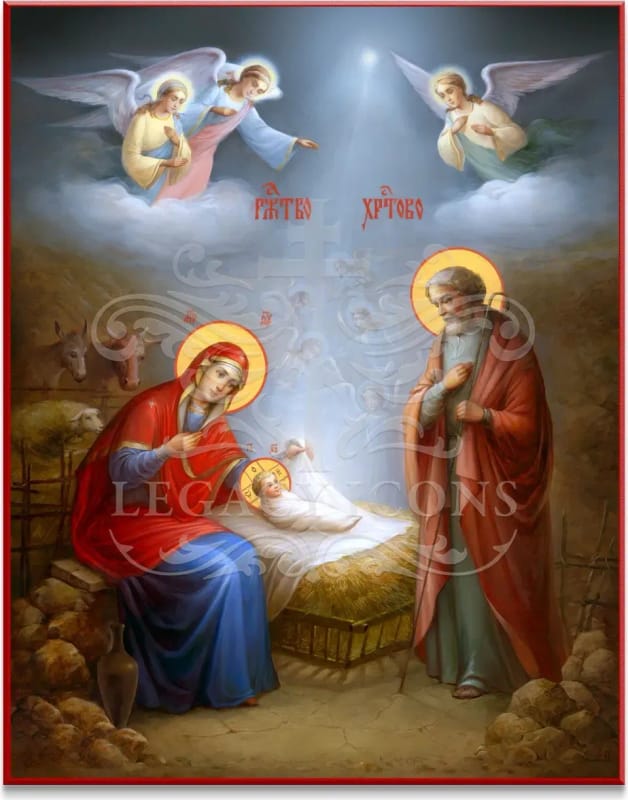
The festal icon gathers the elements of the Gospel narrative into a single composition: the Virgin Mary reclining beside the Christ Child, who lies wrapped in the manger of a dark cave; Joseph set apart to one side; the ox and ass at the manger; the shepherds receiving the angelic announcement; and the Magi approaching with gifts. The darkness of the cave and the swaddling of the infant set the humility of the birth against the divine identity of the one born, and the icon proclaims the reality of the virgin birth rather than a merely sentimental scene.
Hymnography
The services are unusually rich in hymnography built on the paradox of God made man. The Nativity kontakion of St. Romanos the Melodist, dated to 518, is among the most celebrated festal hymns; the feast's canons and the singing of the full Nativity canon at Matins carry the theme that Christ is born and creation is renewed. The hymns describe rather than merely narrate — they contemplate the Word contained in flesh, the manger holding the uncontainable, and the response of shepherds, Magi, and the whole created order.
Fasting in Practice
The feast is the goal of the forty-day Nativity Fast (Advent), which in the received practice begins in mid-November and intensifies toward its close; its Eve is kept as a strict fast, traditionally until the first star appears, and is marked by the Royal Hours. With the feast itself the fast is ended, and the Church's tradition keeps the days from the Nativity to the eve of Theophany as fast-free. Particular prescriptions vary by typikon and jurisdiction; the faithful are directed to their own priest for practice.
Customs & Traditions
A strict-fast Eve (Paramony) kept until the first star, with the Royal Hours and, in many traditions, a twelve-course Lenten Holy Supper.
The forty-day Nativity Fast as preparation, beginning in mid-November.
Festal carols and hymns sung through the afterfeast toward Theophany.
Ideas for Celebrating This Feast
Simple, joyful ways families keep the Nativity at home through the Twelve Days.
- Keep a visible 40-day Nativity Fast countdown — a numbered paper chain or a tally the children mark down each night toward Christmas.
- Build a Jesse Tree, hanging one ornament a day while reading the matching Scripture story, tracing Christ's lineage from creation to the manger.
- Keep a "kindness manger": children lay a piece of straw for each good deed, so the crib is soft and full for the Christ-child by Christmas.
- Fill an almsgiving basket through the fast — canned goods for a food bank, cookies for neighbors and the lonely elderly.
- Add the Nativity icon to the icon corner and let young children arrange a nativity set, moving the figures toward the cave as the days count down.
- Sing the troparion of the feast and beloved carols at supper, and read Orthodox Christmas picture books aloud (e.g. King Island Christmas, Goodnight Jesus). Sing the hymns of the feast rather than reading a copyrighted translation aloud.
- Bake a Christopsomo ("Christ's bread") on Christmas Eve, marking the round loaf with a cross, and cut it after the Liturgy.
Ideas gathered and adapted from Orthodox family resources — Charlotte Riggle, Orthodox Motherhood. These are optional, inviting ideas, not liturgical requirements.
Scripture
- Matthew 1:18–25 — The birth of Jesus and the naming by Joseph.
- Matthew 2:1–12 — The coming of the Magi to Bethlehem.
- Luke 2:1–20 — The census, the birth in the cave/manger, and the shepherds.
The services of the feast
On the Eve (December 24) the Royal Hours are read — the First, Third, Sixth, and Ninth Hours joined with the Typical Psalms into one service — followed by the Divine Liturgy of St. Basil the Great served together with Vespers, at which Old Testament prophecies of Christ's birth are chanted. In many places a strict-fast Holy Supper is kept until the first star.
The festal Vigil opens with Great Compline and includes the blessing of the five loaves with wheat, wine, and oil; at Matins the full canon is sung as the faithful venerate the Nativity icon. The forefeast from December 20 is deliberately shaped after the pattern of Holy Week, presenting the birth of the Son of God as the beginning of the way that leads to the Cross.
Fasting is described here at the season-summary level and differs by jurisdiction and person — please consult your parish priest about how to keep the fasts.