
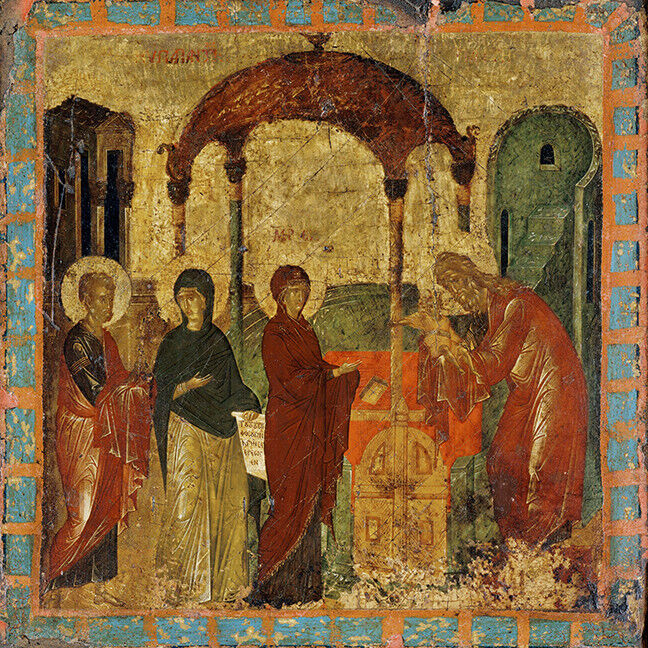
Meeting of the Lord in the Temple
Also known as: Presentation of the Lord, The Meeting, Candlemas, Hypapante
Feb 2· Fixed date
The presentation of the forty-day-old Christ in the Temple, where the aged Simeon received Him in his arms and Anna the prophetess proclaimed Him, forty days after the Nativity.
Depictions & Icons
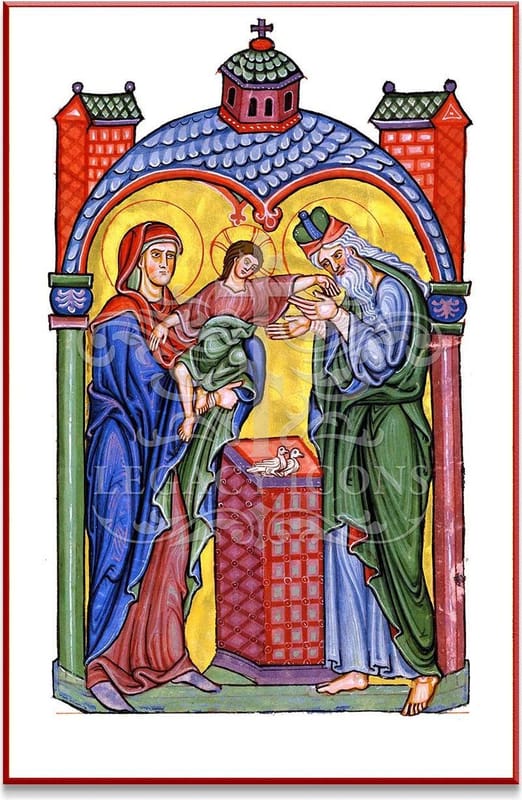
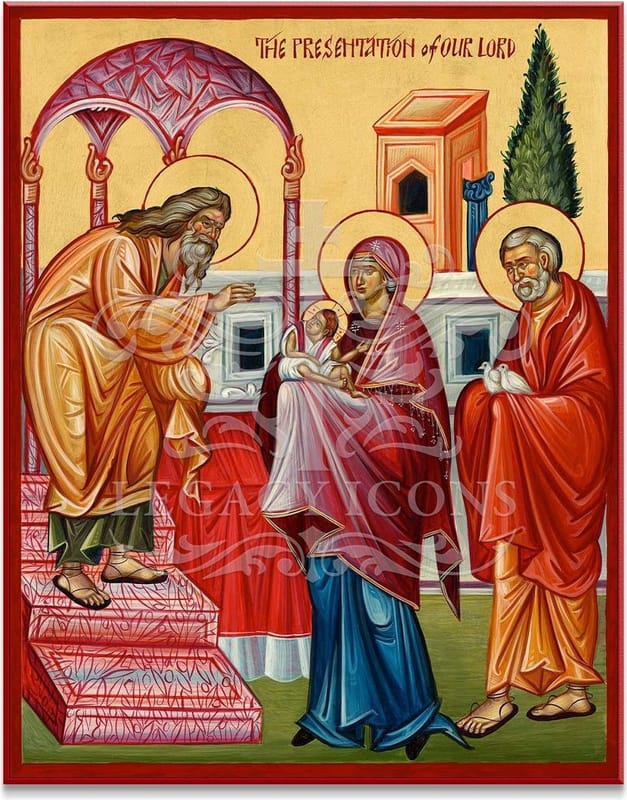
How the Church has written this feast — festal icons across the centuries.
Overview
The Meeting of the Lord in the Temple, called Hypapante (Greek for "meeting") in the Byzantine tradition, commemorates the presentation of the forty-day-old Christ in the Temple at Jerusalem, forty days after the Nativity. In the Orthodox calendar it is kept on February 2 (February 15 for churches following the Julian calendar), with a one-day forefeast on February 1 and an afterfeast whose apodosis, or leavetaking, is normally February 9. The feast concludes the cycle of celebrations that begins with the Nativity and Theophany.
The event is recorded in the Gospel of Luke (2:22–40). In accordance with the Mosaic Law, Mary and Joseph brought the infant Jesus to the Temple for the purification of the mother and the presentation of the firstborn son, offering a pair of turtledoves or two young pigeons—the offering permitted to the poor. There the aged and righteous Simeon, who had been promised he would not die before seeing the Messiah, received the Child in his arms, and the prophetess Anna proclaimed Him to those awaiting the redemption of Jerusalem.
The feast is counted among the Great Feasts, and in the Byzantine tradition it uniquely combines elements of both a Great Feast of the Lord and a Great Feast of the Theotokos. Because it can fall within the pre-Lenten and Lenten seasons, its afterfeast may be shortened; when the Triodion begins early, the leavetaking can fall as soon as the day after the feast itself.
Timeline
4th century — Observance in Jerusalem
Celebration of the Meeting is attested in Jerusalem from the fourth century; the pilgrim Egeria documented its observance there in the early 380s as a major procession to the Anastasis, kept "with the greatest honour."
c. 450 — Candles in the Liturgy
In Jerusalem the custom arose of holding lighted candles during the Divine Liturgy of the feast day.
541–542 — Elevation under Justinian I
During a devastating plague at Constantinople, Emperor Justinian I ordered processions and prayers on the feast day; when the plague ceased, the feast was raised to a more solemn celebration and established throughout the Eastern Empire.
8th–9th centuries — Hymnography composed
Saint Andrew of Crete, Saint John of Damascus, and Saint Joseph of Thessalonica composed hymns that enriched the feast's services.
History
Celebration of the Meeting is among the oldest feasts of the Church, dating from the fourth century in Jerusalem. The pilgrim Egeria, who journeyed to the Holy Land in the early 380s, documented its observance there as a major procession to the Anastasis (the Church of the Holy Sepulchre), recording that the day was "celebrated here with the greatest honour." Early church fathers—among them Methodius, Cyril of Jerusalem, Gregory the Theologian, and John Chrysostom—composed sermons on the observance in the early centuries.
Originally the feast was a comparatively minor celebration. Its elevation is traditionally connected to the plague that struck Constantinople in 541, during the reign of Emperor Justinian I. Sources relate that the emperor ordered solemn processions and prayers throughout the empire on this feast day, and that when the epidemic ceased—in 542 by these accounts—the feast was raised to a more solemn celebration and established throughout the Eastern Empire. From the East the observance gradually spread westward.
The feast's liturgical texts were enriched by later hymnographers, including Saint Andrew of Crete, Saint John of Damascus, and Saint Joseph of Thessalonica. In Constantinople, emperors traditionally kept the feast with vigils at the Church of Blachernae, a custom said to have continued until the fall of the Byzantine Empire. In the West the feast became known as Candlemas, from the custom of blessing candles; the practice of holding lighted candles during the Divine Liturgy of the day is traced in Jerusalem to about the year 450.
Meaning
The feast celebrates the meeting of Old Testament righteousness with the promised Messiah. Simeon and Anna are understood as the last of the righteous figures of the old covenant awaiting Christ's coming; in receiving and proclaiming the Child, they represent the Law and the prophets recognizing their fulfillment. Simeon's canticle—the Nunc Dimittis—forms the theological heart of the celebration, naming Christ "a light for revelation to the Gentiles, and for glory to your people Israel."
The presentation shows Christ fulfilling the requirements of the Mosaic Law, both the purification of the mother and the redemption of the firstborn son prescribed in Torah. Tradition holds that the Virgin Mary had no need of purification, since she had given birth to the Source of purity and sanctity, yet she submitted to the Law's requirements in humility. The offering of two birds rather than a lamb marks the poverty of the Holy Family.
Simeon's words to Mary—that a sword would pierce her own soul also—join the joy of the meeting to the foreshadowing of the Cross, so that the feast holds together Christ's coming as light and the suffering that His salvation would entail. The blessing and carrying of candles expresses the confession of Christ as the Light of the World, meeting and being received by His people.
Iconography
The festal icon centers on the moment of meeting between the righteous Simeon and the Holy Family within the Temple. In the Eastern tradition the Virgin is more likely still to hold the infant Jesus, in contrast to Western depictions where Simeon is often shown already holding the Child. Early Byzantine images concentrated on this encounter, establishing iconographic patterns that persist in Orthodox art.
Two related icon types develop Simeon's prophecy of the sword. The type known as "Simeon's Prophecy" depicts the Virgin without the Christ Child, pierced by seven swords—three from the left, three from the right, and one below—signifying her foretold suffering. A related variant, "The Softening of Evil Hearts," represents the same prophecy in a different arrangement.
Hymnography
The feast's liturgical hymns were composed and enriched by medieval hymnographers, among them Saint Andrew of Crete, Saint John of Damascus, and Saint Joseph of Thessalonica. Their texts draw out the themes of the meeting: the aged Simeon receiving the Author of life, the confession of Christ as the Light of revelation, and the foreshadowing of the Cross in the prophecy of the sword. Simeon's canticle, the Nunc Dimittis, occupies a central place in the services of the feast.
Fasting in Practice
The Meeting is a joyful Great Feast and is not a fast day. Because its date can fall within the pre-Lenten period governed by the Triodion, the length of its afterfeast varies: the leavetaking normally falls on February 9, but the afterfeast is shortened when the Triodion begins early, so that the apodosis can fall as soon as the day after the feast itself. Typikon prescriptions for such overlaps vary by tradition.
Customs & Traditions
In many traditions candles are blessed on this feast—the origin of the Western name "Candlemas"—and carried and lit as a sign of Christ the Light meeting His people.
In some traditions worshippers bring their own candles to be blessed; these are treasured and taken home to be lit in times of stress, sickness, storms, or at the bedside of the dying.
In contemporary Orthodox practice, infants are brought to the church on the fortieth day after birth, in remembrance of the Theotokos and Joseph bringing the infant Jesus to the Temple.
Ideas for Celebrating This Feast
Ways to keep the Meeting of the Lord — "Candlemas" — at home.
- Bring home candles blessed at the feast-day Liturgy and keep them in the icon corner to light for family prayers through the year.
- Roll your own beeswax candles together, tying the day's blessing of candles to the children's own hands.
- Eat an evening meal by candlelight and talk about Christ as the "Light to enlighten the nations."
- Teach St Simeon's canticle ("Lord, now lettest Thou Thy servant depart in peace") as a bedtime prayer, and learn the feast's troparion.
- Read Luke 2:22–35 aloud with a festal picture book about the Meeting.
- Show children photos of their own 40-day churching and connect it to Christ brought to the Temple on the 40th day.
- Since the feast honors the aged Simeon and Anna, have the children call or visit grandparents and talk about the wisdom of elders.
Ideas gathered and adapted from Orthodox family resources — Orthodox Motherhood, Ascetic Life of Motherhood. These are optional, inviting ideas, not liturgical requirements.
Scripture
- Luke 2:22–40 — The Gospel account of the presentation of Christ in the Temple, Simeon's reception of the Child, and Anna's proclamation.
- Leviticus 12 — The Mosaic law of purification following childbirth.
- Exodus 13:12–15 — The law concerning the redemption of the firstborn son.
Fasting is described here at the season-summary level and differs by jurisdiction and person — please consult your parish priest about how to keep the fasts.