
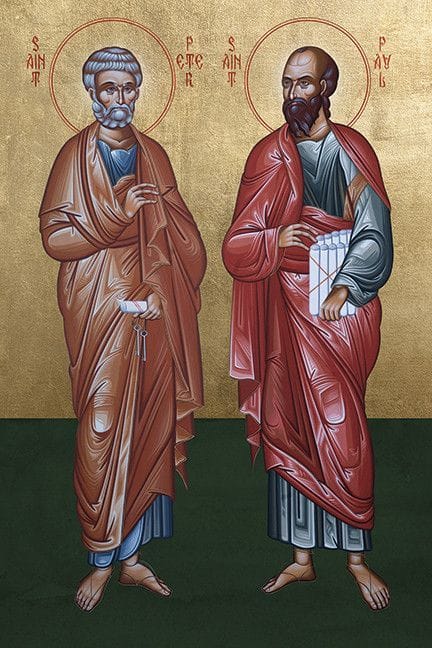
Apostles' Fast
Also known as: Fast of the Holy Apostles, Peter and Paul Fast, Apostles' Lent
P+57 → Jun 28· Movable · Paschal cycle
A fast in honor of the chief apostles Peter and Paul, following the descent of the Holy Spirit and preparing the faithful for their feast on June 29.
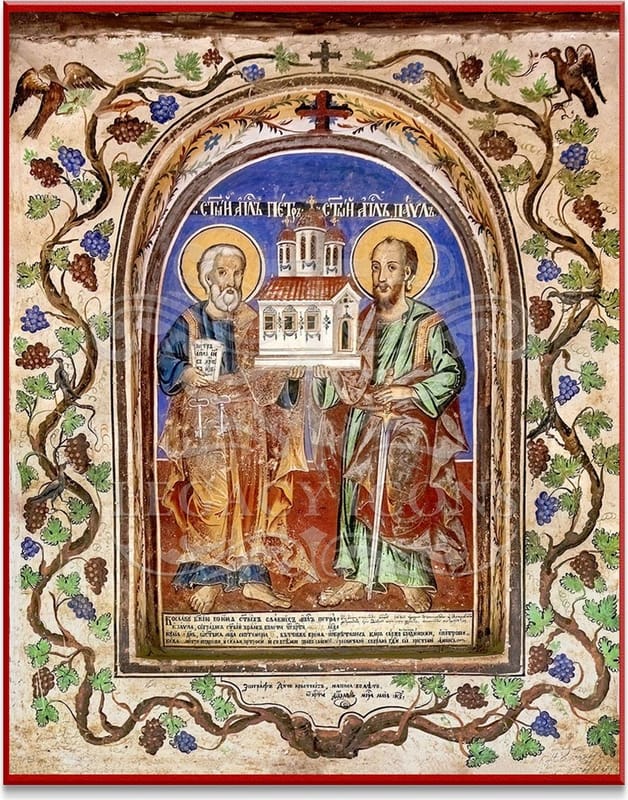
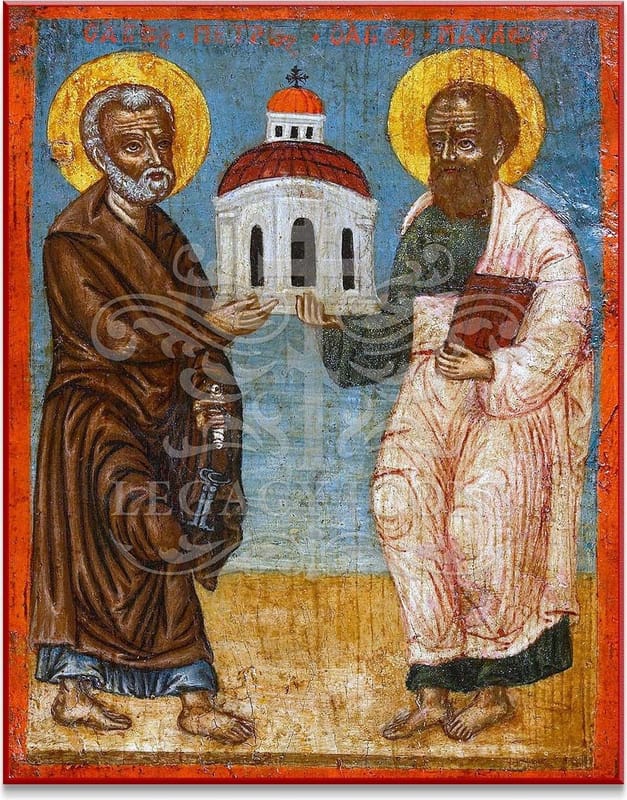
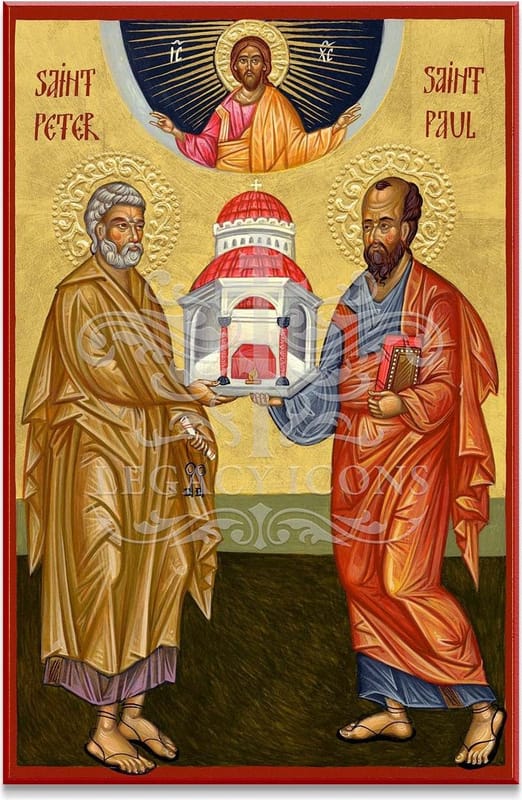
Depictions & Icons
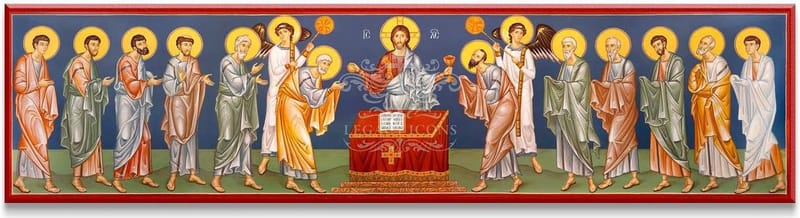
How the Church has written this feast — festal icons across the centuries.
Overview
The Apostles' Fast, also called the Fast of the Holy Apostles or the Peter and Paul Fast, is a fasting season of the Orthodox Church kept in honor of the chief apostles Peter and Paul. It follows the descent of the Holy Spirit at Pentecost and prepares the faithful for the feast of Saints Peter and Paul on June 29.
In the Byzantine tradition the fast begins on the Monday after the Sunday of All Saints — the second Monday after Pentecost — and continues until June 28, the eve of the June 29 feast. Because it begins on a movable date tied to Pascha but ends on a fixed date, its length varies considerably from year to year.
The fast is lighter than Great Lent. On most days fish, wine, and oil are permitted, with the usual abstention observed on Wednesdays and Fridays; particular observance varies with jurisdiction and pastoral counsel. In years when Pascha falls late, the fast is short, and on the New (Revised Julian) Calendar it can in some years shrink to nothing.
History
The Apostles' Fast emerged from the early Christian tradition of resuming fasting after the fifty-day celebration of the Resurrection. According to sacred tradition, once the paschal season had passed, the apostles prepared to leave Jerusalem for their missionary work by fasting and praying for strength. Its scriptural warrant was drawn from the Synoptic Gospels, where Christ speaks of a time when the bridegroom will be taken away, and then his followers will fast.
The oldest recorded testimony is attributed to St. Athanasius the Great (d. 373), who noted that during the week following Pentecost the people who observed the fast went out to the cemetery to pray. St. Ambrose of Milan (d. 397) grounded the practice in Scripture, teaching that fasting resumed in the days following Christ's ascension into heaven, drawing on the Gospel passage about the bridegroom's absence (Matthew 9:14–15). St. Leo the Great (d. 461) explained its purpose as a necessary fast after the long feast of Pentecost, to purify the faithful and render them worthy to receive the gifts of the Holy Spirit. The Apostolic Constitutions, of the fourth century or earlier, prescribed that after the feast of Pentecost the faithful should celebrate one week and then observe a fast, since justice demands rejoicing after receiving God's gifts and fasting after the body has been refreshed.
Early observance in Alexandria, Jerusalem, and Antioch connected the fast directly to Pentecost rather than to the June 29 feast of Saints Peter and Paul. Historical practice varied widely: some kept twelve days, others six, four, or a single day. What began as roughly a week gradually lengthened over the centuries, at one point extending across the whole month of July, from the day after All Saints through August 14, so that it could exceed Great Lent in length and reach up to eighty-nine days in years when Pascha fell early.
Monastic rules shaped the fast's character. St. Theodore the Studite's monastery prohibited fish, cheese, and eggs during the fast; monks ate once daily on Wednesdays and Fridays at the ninth hour, taking vegetable and legume dishes with wine. The rule of the Kiev Caves Monastery, approved between 1069 and 1072, prescribed dry bread and water on Wednesdays and Fridays while permitting fish, wine, and oil on other days, and added one hundred daily prostrations. In the medieval period Theodore Balsamon (d. 1204) mandated seven days and more of the fast for all the faithful, threatening excommunication for refusal. St. Symeon of Thessaloniki (d. 1429) summarized its rationale, holding that the fast honored the apostles as exemplars and teachers.
The introduction of the Revised Julian Calendar reduced the fast by thirteen days compared with the Old Calendar. Elder Epiphanios observed that the new calendar shortened the fast of the Holy Apostles by thirteen days and, when Pascha comes late, does away with it entirely; he argued that reducing fasts has precedent in Church tradition — citing the variations and reductions permitted by earlier fathers such as St. Theodore the Studite and Theodore Balsamon — and that such matters are properly addressed through the pastoral discernment of a spiritual father. Modern Orthodox practice, reckoned by the Julian Calendar, runs from the Monday after the Sunday of All Saints through June 29 and lasts between eight and forty-two days depending on the date of Pascha.
Meaning
The Apostles' Fast expresses the Church's thanksgiving for the witness and perseverance of the apostles through persecution, and honors Saints Peter and Paul, the chief apostles, together with all who carried the Gospel to the nations. It sets the memory of the apostolic mission at the center of the summer calendar.
The fast holds a deliberate place in the rhythm of the liturgical year. As the Apostolic Constitutions taught, rejoicing befits the reception of God's gifts and fasting befits the body that has been refreshed: after the joy of Pascha and the descent of the Holy Spirit at Pentecost, the Church returns to fasting so that the gifts received may be guarded and put to work. St. Leo the Great framed this fast as the means of purifying thought and making the faithful worthy of the Spirit's gifts.
In its theological pattern the fast mirrors the apostles themselves, who, strengthened by the Spirit, fasted and prayed before setting out to preach. St. Symeon of Thessaloniki taught that the fast honors the apostles as exemplars and teachers, holding them before the faithful as models of the ascetic labor that precedes and sustains mission. Its variable length — and its capacity, on the Revised Julian Calendar, to shrink to nothing — has itself become an occasion for teaching that fasting is a matter of pastoral discernment rather than rigid measure, entrusted to the guidance of spiritual fathers.
Fasting in Practice
The Apostles' Fast is kept less strictly than Great Lent. Its stricter observance calls for abstention from red meat, poultry and meat products, eggs, dairy, fish, oil, and wine; but the common practice in many Orthodox communities is to permit fish, wine, and oil on all days except Wednesdays and Fridays. Some jurisdictions keep a stricter discipline: the Antiochian tradition, for example, limits fish to particular weekends.
Historic monastic typika varied in their prescriptions. The rule of St. Theodore the Studite excluded fish, cheese, and eggs and prescribed a single daily meal at the ninth hour on Wednesdays and Fridays; the Kiev Caves rule prescribed dry bread and water on those days while permitting fish, wine, and oil otherwise. Because the fast's length and severity have differed across eras and jurisdictions, its keeping is understood as a matter of pastoral counsel; the faithful are directed to their own spiritual father.
Scripture
- Matthew 9:14-15 — Christ's words that when the bridegroom is taken away, then his followers will fast — cited by St. Ambrose and drawn from the Synoptic Gospels as the fast's scriptural basis.
Fasting is described here at the season-summary level and differs by jurisdiction and person — please consult your parish priest about how to keep the fasts.