
Dormition Fast
Also known as: Fast of the Theotokos, August Fast
Aug 1 → Aug 14· Fixed date
A two-week fast honoring the Most Holy Theotokos in preparation for the feast of her Dormition on August 15.
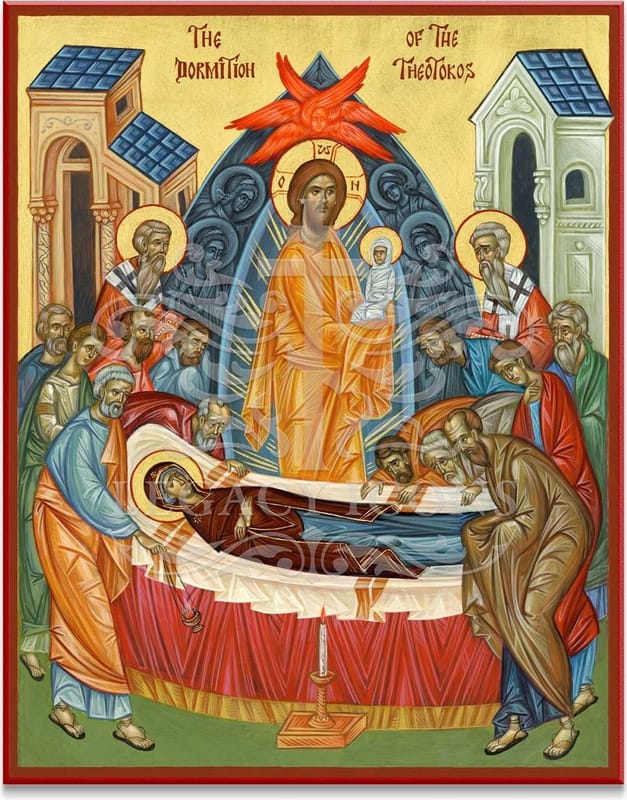
Depictions & Icons
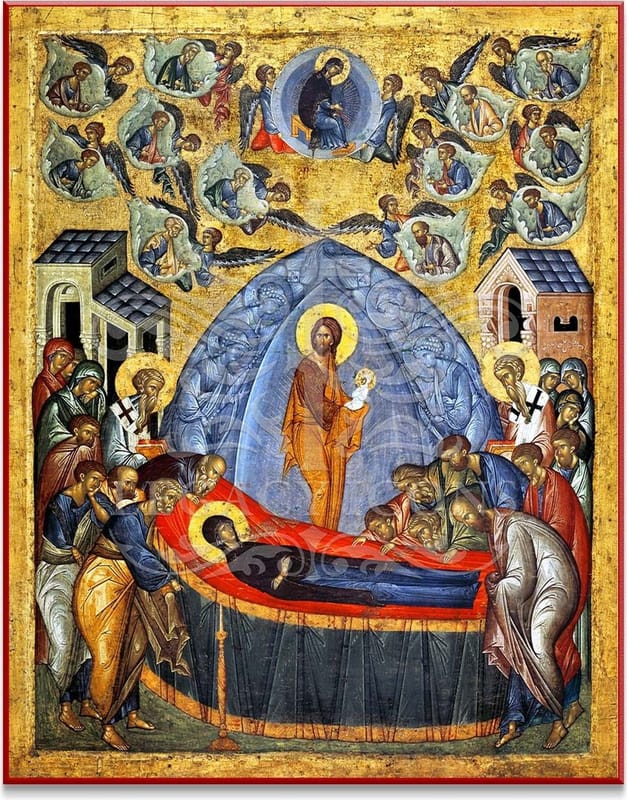
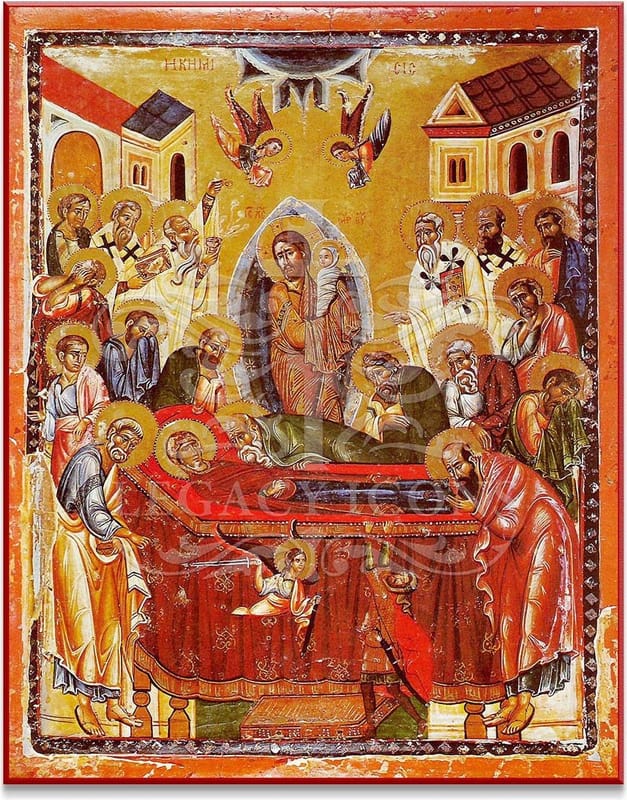
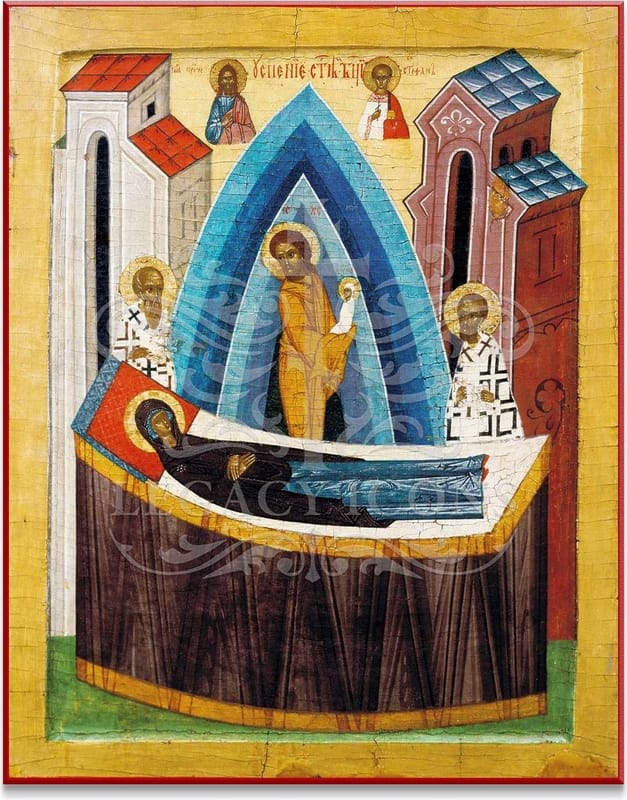
How the Church has written this feast — festal icons across the centuries.
Overview
The Dormition Fast is a two-week period of abstinence kept from August 1 to August 14 (August 14 to 28 on the Julian calendar), immediately preceding the feast of the Dormition of the Mother of God on August 15. It is one of the four principal fasts of the Orthodox liturgical year, alongside Great Lent, the Nativity Fast, and the Apostles' Fast, and is the shortest of them.
Though brief, the fast is comparatively strict, undertaken in honor of the Most Holy Theotokos in preparation for the celebration of her repose. It also embraces the feast of the Transfiguration of the Lord on August 6, which falls within the fast and marks a single relaxation of its discipline. The fast opens on August 1 with the Procession of the Honorable Wood of the Life-Giving Cross of the Lord.
The period is distinguished liturgically by the chanting of the Paraklesis, the supplicatory canon to the Theotokos, on the evenings of the fast, and by the blessing of grapes and first fruits associated with the Transfiguration.
Timeline
c. 450 — Described by Pope Leo the Great
Pope Leo the Great referred to what has been understood as this observance as 'the autumn fast, in the seventh month,' placing it among the annual fasts of the ancient Church.
582–602 — Feast date fixed by Emperor Maurice
An edict of the Emperor Maurice established August 15 as the date for the celebration of the Dormition, setting the liturgical framework for the preceding fast.
687–701 — Adopted at Rome under Pope Sergius I
Pope Sergius I established the feast at Rome as the Dormitio Beatae Virginis, borrowing from the observance kept at Constantinople.
History
Tradition holds that the observance of a fast before the Dormition belongs to the early centuries of the Church. Pope Leo the Great, writing around 450, described what has been understood as this observance as 'the autumn fast, in the seventh month,' listing it among the annual fasts known to the ancient Church.
The date of August 15 for the feast of the Dormition was fixed by an edict of the Emperor Maurice (582–602), which established the liturgical framework within which the preceding fast came to be observed. In Rome, Pope Sergius I (687–701) later established the feast as the Dormitio Beatae Virginis, drawing on the observance already kept at Constantinople.
St. Symeon of Thessalonica explained the purpose of the fast as an act of imitation, honoring the Mother of God who, in his account, 'ascetically labored and fasted for us.' In this way the two weeks came to be kept as a period of spiritual preparation for the two major August feasts it precedes, the Transfiguration on August 6 and the Dormition on August 15.
Regional practice shaped the character of the fast's services. In the Russian tradition the weekday services during the fast resemble those of Great Lent, while in Greek practice either the Great Paraklesis or the Small Paraklesis is celebrated each evening, except on Saturday evenings and the eves of the Transfiguration and the Dormition.
Meaning
The fast honors the Theotokos and prepares the faithful to celebrate her Dormition — her 'falling asleep,' or death, and her bodily assumption into heaven. Orthodox teaching holds that the Mother of God, having died like all humanity, has already undergone bodily resurrection and entered the glorified state that other righteous persons will attain only after the Last Judgment.
The tradition surrounding the Dormition relates that when the Apostle Thomas arrived after the others and her tomb was opened, her body was found to be absent. This is understood as a firstfruits of the resurrection of the faithful at Christ's Second Coming. The feast is thus received not as a tragedy but as a triumph — a foretaste of the general resurrection — and the fast prepares the faithful to celebrate it as such.
The feast is described as proclaiming the Mother of God's assumption into the heavenly kingdom of Christ in the fullness of her spiritual and bodily existence. The fast, in honoring her ascetic labor, joins the faithful to her preparation and to the hope of the resurrection she prefigures.
Iconography
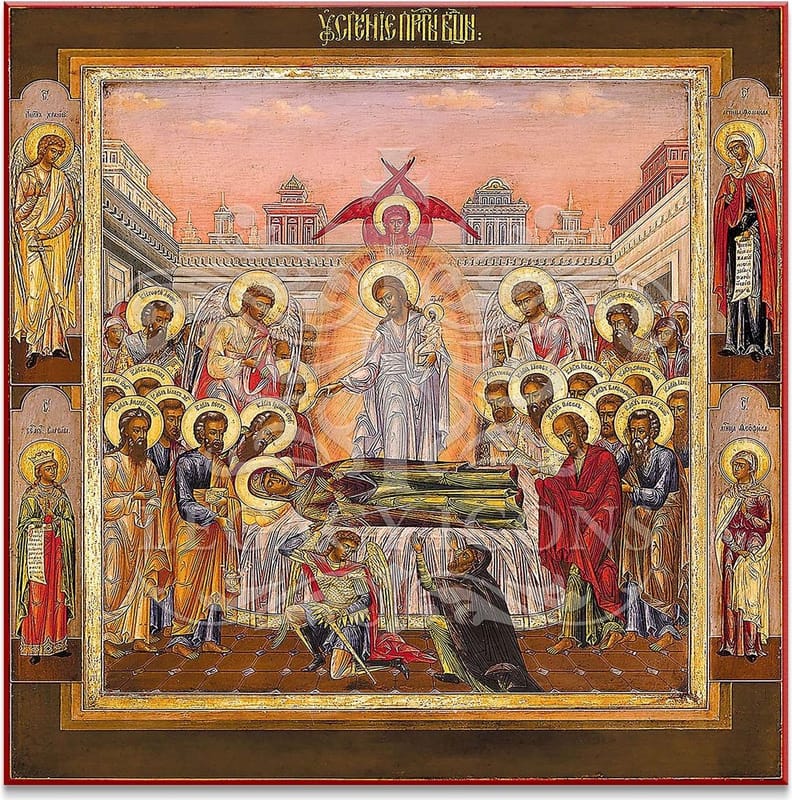
Byzantine iconography of the Dormition depicts the Mother of God lying on a bier surrounded by the Twelve Apostles, with Christ appearing in a mandorla and cradling her soul, shown as an infant or a seraph. The composition expresses the Church's teaching on her repose and her bodily assumption, the theme toward which the fast is directed.
Hymnography
The distinguishing liturgical feature of the fast is the chanting of the Paraklesis, the supplicatory canon to the Theotokos, on the evenings of the fast. In Greek practice either the Great Paraklesis or the Small Paraklesis is served each evening, except on Saturday evenings and the eves of the Transfiguration and the Dormition. In the Russian tradition the weekday services more broadly resemble those of Great Lent.
In some regions, particularly Jerusalem and Russia, a Burial of the Theotokos rite is observed during the All-Night Vigil of the feast: an embroidered cloth icon (Epitaphios) depicting the Theotokos in repose is processed on a bier while lamentation hymns are sung to Psalm 118, echoing the burial service of Holy Saturday.
Fasting in Practice
The Dormition Fast is a short but strict fast kept on the pattern of Great Lent, and is generally reckoned stricter than either the Nativity Fast or the Apostles' Fast. In its fullest form the season abstains from red meat, poultry and meat products, dairy, fish, oil, and wine, with wine and oil customary on weekends and fish permitted on the feast of the Transfiguration (August 6). Until the Transfiguration, when grapes and other first fruits are blessed in churches, some traditions also keep the faithful from eating those fruits.
The specifics of how strictly the fast is kept — and which relaxations apply on which days — vary between traditions and parishes, and the faithful are directed to their own parish and spiritual father rather than to any fixed table of rules.
Customs & Traditions
The Paraklesis (supplicatory canon) to the Theotokos is chanted on the evenings of the fast.
The blessing of grapes and first fruits accompanies the feast of the Transfiguration on August 6.
The fast opens on August 1 with the Procession of the Honorable Wood of the Life-Giving Cross, which includes outdoor processions and the Lesser Blessing of Water.
Some parishes bless flowers before the Divine Liturgy on August 15.
In Jerusalem and Russia, a Burial of the Theotokos rite with an Epitaphios icon is observed during the All-Night Vigil of the feast.
Ideas for Celebrating This Feast
Ways to keep the two-week Dormition Fast and honor the Theotokos.
- Add one flower a day to a vase or wall calendar through the fast, so children watch the feast "bloom" toward Aug 15.
- Pray the Paraklesis (Small Supplicatory Canon) to the Theotokos at church on the fast's evenings, or from a printed text at home.
- Keep a "14 bags for 14 days" almsgiving — each day fill one bag with things to give away.
- Bake edible-flower shortbread, the fragrance recalling the sweetness at the Theotokos's tomb (adapt to fasting days or save for the feast).
- Bring flowers to church to be blessed on the feast, then keep them in the icon corner.
- Fold in the Transfiguration (Aug 6) midway as a bright landmark, with blessed grapes and first-fruits shared.
Ideas gathered and adapted from Orthodox family resources — Ascetic Life of Motherhood. These are optional, inviting ideas, not liturgical requirements.
Scripture
- Philippians 2:5–11 — Epistle at the Divine Liturgy for the Dormition.
- Luke 10:38–42, 11:27–28 — Gospel at the Divine Liturgy for the Dormition.
- Luke 1:39–49, 56 — Read at Matins of the feast.
- Psalm 118 — Sung with lamentation hymns during the Burial of the Theotokos rite, echoing the burial service of Holy Saturday.
The August feasts
The fast frames a cluster of August celebrations. August 1 opens it as the Procession of the Honorable Wood of the Life-Giving Cross of the Lord — an observance that arose in Constantinople, where the precious relic was carried in procession through the city for its sanctification during the illnesses that occurred in the month of August. The same date commemorates the Seven Holy Maccabee Martyrs together with their mother Solomonia and their teacher Eleazar.
August 1 is counted the first of three 'Feasts of the Saviour' in August, the others being the Transfiguration on August 6 and the feast of the Icon Not Made by Hands on August 16. The feast of the Dormition itself has a one-day Forefeast and eight days of Afterfeast.
Fasting is described here at the season-summary level and differs by jurisdiction and person — please consult your parish priest about how to keep the fasts.