
Nativity Fast
Also known as: St Philip's Fast, Advent Fast, Winter Lent, Forty Days of Christmas
Nov 15 → Dec 24· Fixed date
A forty-day fast preparing the faithful for the Nativity of Christ, calling for repentance and almsgiving as the world awaits the Incarnation.
Depictions & Icons
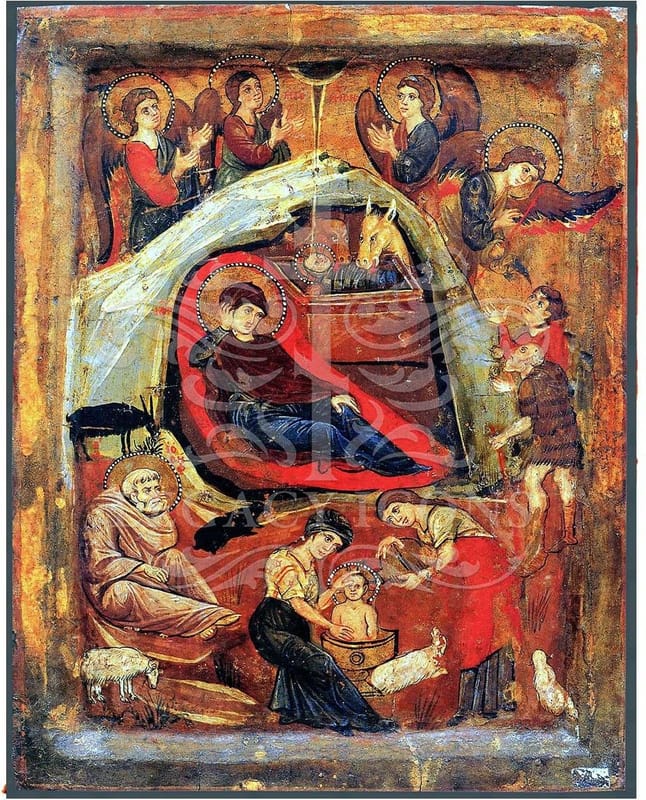
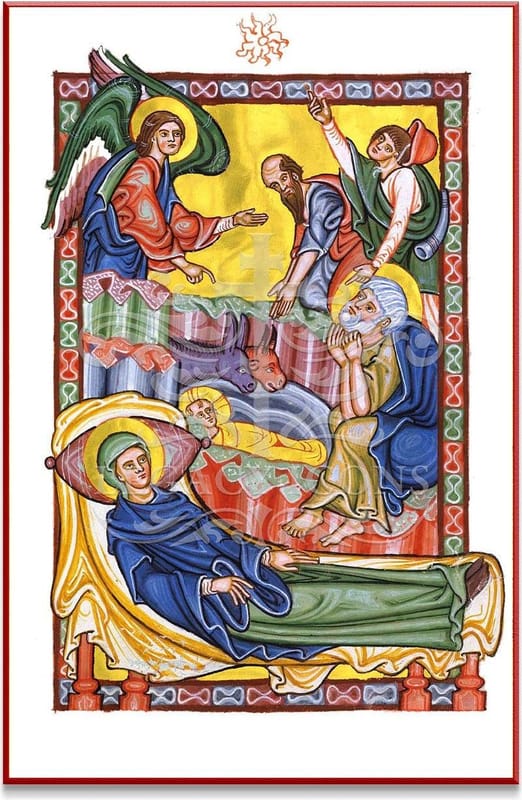
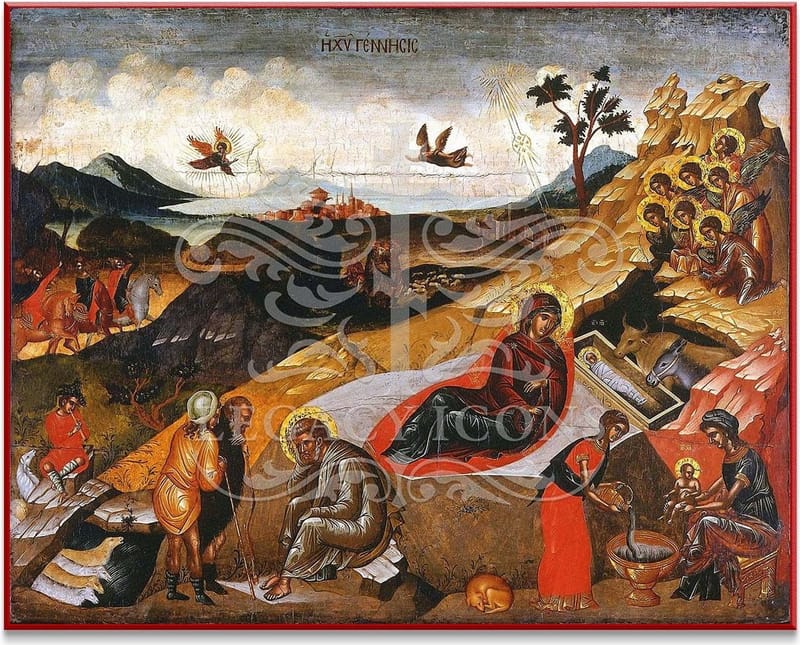
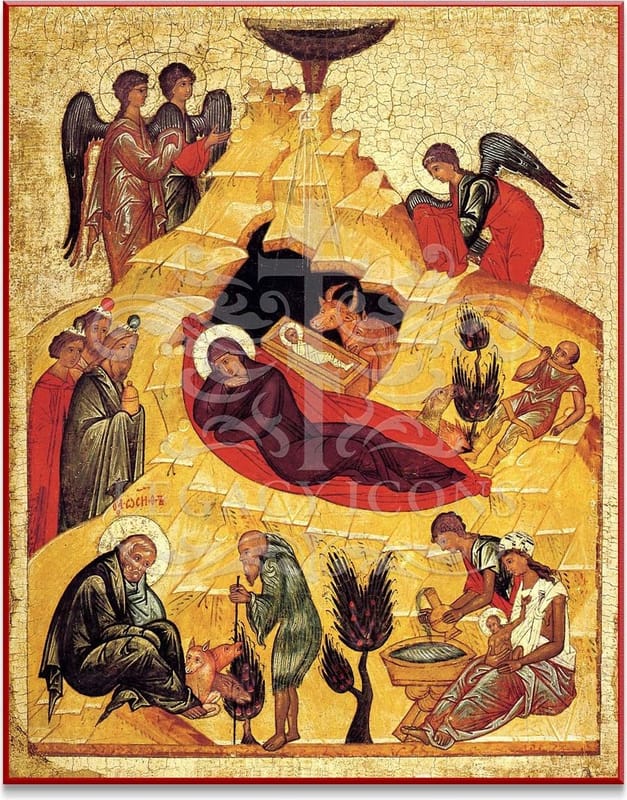
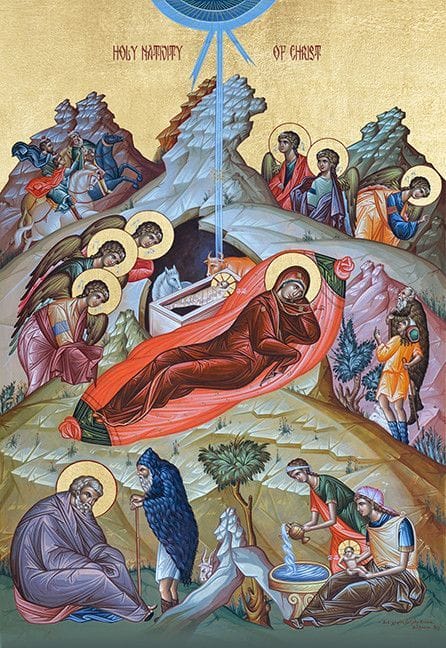
How the Church has written this feast — festal icons across the centuries.
Overview
The Nativity Fast is a forty-day period of abstinence and penance observed by the Eastern Orthodox Church in preparation for the feast of the Nativity of Christ on December 25. On the Revised Julian (New) calendar it runs from November 15 through December 24; churches that keep the Julian calendar begin on the same liturgical date, November 15, which corresponds to November 28 on the Gregorian reckoning.
It is also called Philip's Fast (or St Philip's Fast) because it begins the day after the feast of the Apostle Philip on November 14. The fast prepares the faithful spiritually for Christmas through prayer, fasting, and almsgiving, orienting the whole season toward the coming Incarnation of God.
Though it shares the forty-day length of Great Lent, the Nativity Fast is kept less severely, and its earlier weeks admit fish, wine, and oil on many days; the discipline tightens in the final stretch before the feast. As a fast season, it functions as a period of preparation rather than a liturgical celebration in its own right, and it overlaps a rich sequence of forefeast commemorations and readings that anticipate the Nativity.
Timeline
380 CE — Synod of Saragossa
An early Western attestation of pre-Christmas preparation: the synod mandated church attendance from December 17 through Epiphany.
581 CE — Synod of Mâcon
Ordered special fasting from November 11 on certain weekdays, an early Western pre-Christmas fasting rule.
d. 826 — St Theodore the Studite
In discussing Greek fasts and feasts he made no mention of a pre-Christmas fast season, evidence that the Eastern observance was not yet fixed.
1166 — Council of Constantinople
Established the present forty-day form of the Nativity Fast, standardizing its length.
1720 — Ruthenian council
Maintained the November 15 fasting rule, attesting the continuity of the fast's starting date.
History
A distinct pre-Christmas fast was not part of the earliest Church. In the West, preparation for the Nativity appears no earlier than the late fourth century: the Synod of Saragossa (380 CE) mandated church attendance from December 17 through Epiphany, and St Caesarius of Arles (502–542) referenced a pre-Christmas fasting period, though no universal observance yet existed. The Synod of Mâcon in 581 ordered special fasting from November 11 on certain weekdays.
In the Greek East, a documented pre-Christmas fast is likewise late. St Theodore the Studite (d. 826) made no mention of such a season when discussing Greek fasts and feasts, suggesting it was not yet a fixed observance in his time. When the Eastern fast did take hold it functioned as a fasting season extending from November 15 to Christmas, rather than as a liturgical cycle of celebration in the manner of the later Western Advent.
The fast was not fully standardized in its forty-day form until 1166, when the Council of Constantinople established the present forty-day format. Earlier practice varied: a twelfth-century Church canonist noted that lay people might reasonably observe just one week before Christmas, indicating that the length of the fast for the laity remained flexible. The November 15 starting rule proved durable — a 1720 council of Ruthenians maintained it.
St Symeon of Thessalonica (d. 1429) articulated the fast's rationale, teaching that in fasting for forty days the faithful reflect upon and receive from the Virgin the living Word. This theological framing set the Eastern fast apart from the Western Advent, whose tradition developed around a different set of themes.
Meaning
The Nativity Fast centers wholly on the Incarnation of God. Eastern Orthodox Nativity theology emphasizes the proclamation and glorification of the Word made flesh, a focus that distinguishes it from the Western Advent framework, which reflects on three comings of Christ — his Incarnation at the Nativity, his reception through grace and Holy Communion, and his Second Coming in judgment. The Eastern fast has no such tripartite scheme; its whole weight rests on the coming of God in the flesh.
The purpose of the fasting is spiritual reorientation. Theologically, the discipline aims to turn the faithful away from worldly needs and toward spiritual ones. Eastern Orthodox theology emphasizes the synthesis of body and soul, employing physical discipline to effect spiritual transformation and to develop Christ-likeness in the one who fasts.
The season is woven through with Old Testament anticipation of the Incarnation. Prophets who foretold the coming of Christ are commemorated during the fast, and the fast's readings and commemorations draw the righteous of the old covenant into the preparation for the Nativity, presenting the whole history of salvation as leading toward the birth of the Savior. St Symeon of Thessalonica gave voice to this expectant reception: through forty days of fasting the faithful reflect upon and receive from the Virgin the living Word.
Hymnography
During the Forefeast of the Nativity (December 20–24), daily Nativity hymns are chanted as the services turn fully toward the coming feast. In the Russian tradition, church hangings are changed to festive white for this period. Following the conclusion of the Entry of the Theotokos into the Temple (November 21), a Great Feast that falls within the fast, Nativity hymns resume on Sundays and high-ranking feast days.
The Paramony service on Christmas Eve combines the Royal Hours in the morning with a Vesperal Divine Liturgy of St Basil the Great and includes the exultant chanting of the refrain 'God is with us,' interspersed with passages from the prophet Isaiah (8:9–18 and 9:2–7) that proclaim the presence of God among his people.
Fasting in Practice
The Nativity Fast is not kept as severely as Great Lent or the Dormition Fast. Throughout the season the traditional practice abstains from red meat, poultry and meat products, eggs, and dairy, while fish, wine, and oil are permitted on many days — commonly Saturdays and Sundays and most Tuesdays and Thursdays. Additional allowances are traditionally granted on high feast days within the season, such as the feast of St Barbara (December 4) and the feast of St Nicholas (December 6).
In one common reckoning, stricter fasting applies chiefly to Mondays, Wednesdays, and Fridays, with fish permitted on Sundays. The strictest period runs December 20–24, during which fish is no longer permitted. On the Paramony (December 24), tradition holds that no solid food is taken until the evening star is seen or until after the Vesperal Divine Liturgy.
The December 25 through January 4 period is fast-free; strict fasting resumes on the eve of Theophany, January 5. As with all fasting, the practice is descriptive and pastoral rather than a rigid rule: the ill, the very young, the elderly, and nursing mothers are exempt from the full discipline, and consultation with a confessor is encouraged.
Customs & Traditions
Called St Philip's Fast because it begins on November 15, the day after the feast of the Apostle Philip.
Allowances of fish, wine, and oil are traditionally kept on the feasts of St Barbara (December 4) and St Nicholas (December 6) within the fast.
In the Russian tradition, church hangings are changed to festive white during the Forefeast (December 20–24) as Nativity hymns are chanted daily.
Ideas for Celebrating This Feast
Ways to keep the Nativity Fast (Advent) as a family.
- Make a 40-day countdown to the Nativity — a paper chain, countdown cards, or a fabric Advent calendar.
- Keep a Jesse Tree: read a short passage each evening from creation to the manger and hang a small ornament for each, walking through salvation history.
- Celebrate the "little feasts" within the fast — the Entry of the Theotokos (Nov 21), St Nicholas (Dec 6), and St Lucy (Dec 13) — to keep the season joyful.
- Take on a family almsgiving project: collect coats or food for a shelter, adopt a giving-tree family, or do secret acts of kindness like St Nicholas.
- Set out a wooden Nativity set the children can handle, adding figures as the season progresses.
- Gather daily for prayer, a hymn, and a Nativity storybook from a small stack of Christmas saint books.
Ideas gathered and adapted from Orthodox family resources — Ascetic Life of Motherhood, Charlotte Riggle. These are optional, inviting ideas, not liturgical requirements.
Scripture
- Hebrews 11:9–40 — Epistle for the Sunday of the Holy Fathers, the Sunday immediately before the Nativity, recalling the faith of the righteous of old.
- Matthew 1:1–25 — Gospel for the Sunday of the Holy Fathers, the genealogy and the birth of Christ.
- Isaiah 8:9–18 — Chanted at the Paramony (Christmas Eve) service, interspersed with the exultant refrain 'God is with us.'
- Isaiah 9:2–7 — Chanted at the Paramony service, the prophecy of the child born to us and the Prince of Peace.
Commemorations within the Fast
The season carries a sequence of commemorations that draw the Old Testament toward the Nativity. Old Testament prophets who prophesied the Incarnation are remembered during the fast: Obadiah (November 19), Nahum (December 1), Habakkuk (December 2), Zephaniah (December 3), Haggai (December 16), and Daniel together with the Three Holy Youths (December 17). The three youths in the fiery furnace are interpreted as a type of the Virgin Mary, who conceived God the Word in her womb without being consumed.
Two Sundays gather the righteous of old. The Sunday of the Holy Forefathers, two Sundays before the Nativity (falling December 11–17), commemorates Old Testament righteous figures from Adam through the patriarchs, emphasizing their perseverance and their symbolic connection to the Incarnation. The Sunday of the Holy Fathers, the Sunday immediately before the Nativity, remembers all the righteous from creation through St Joseph and features three Old Testament readings with the Epistle of Hebrews 11:9–40 and the Gospel of Matthew 1:1–25.
The Great Feast of the Entry of the Theotokos into the Temple (November 21) falls within the fast; after its conclusion, Nativity hymns resume on Sundays and high-ranking feast days. The Paramony service on December 24 combines the Royal Hours with a Vesperal Divine Liturgy of St Basil the Great, whose eight Old Testament readings prefigure or prophesy the Incarnation of Christ.
Fasting is described here at the season-summary level and differs by jurisdiction and person — please consult your parish priest about how to keep the fasts.