
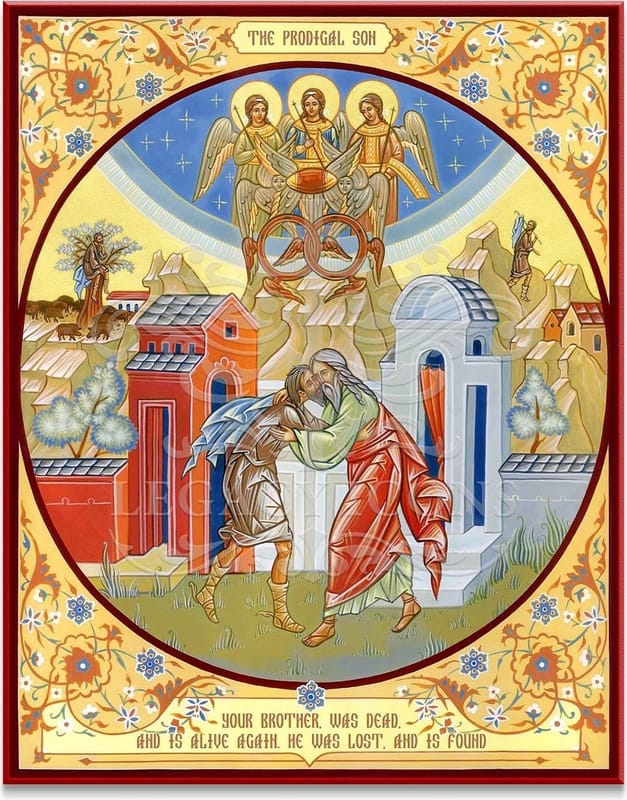
Sunday of the Prodigal Son
Also known as: Prodigal Son
P−63· Movable · Paschal cycle
The second Sunday of the Triodion, whose Gospel (Luke 15:11-32) tells the parable of the prodigal son and the Father's merciful embrace of the returning sinner.
Depictions & Icons
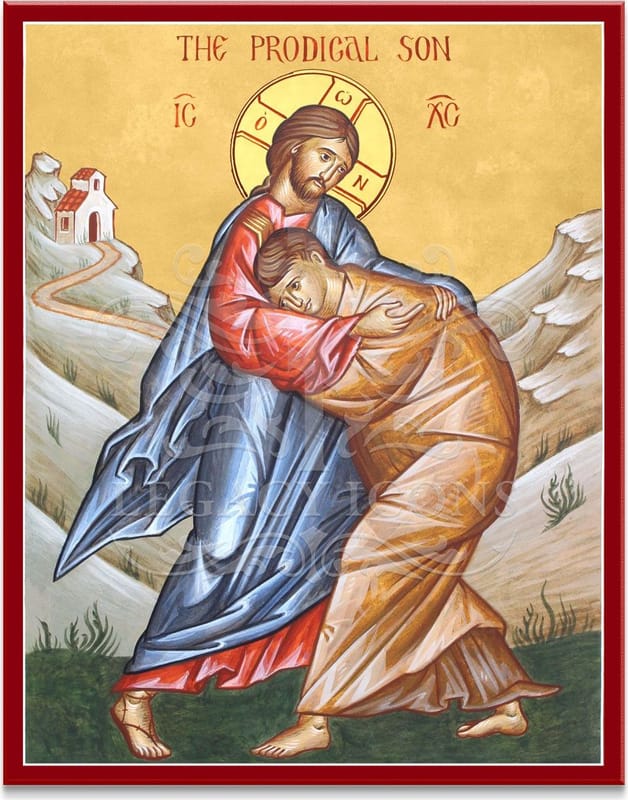
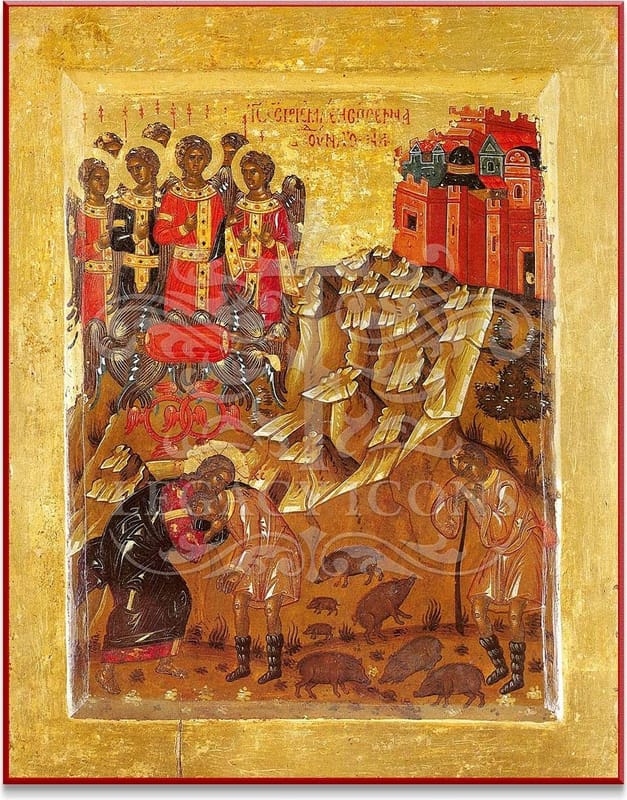
How the Church has written this feast — festal icons across the centuries.
Overview
The Sunday of the Prodigal Son is the second Sunday of the Triodion, the pre-Lenten period of preparation preceding Great Lent in the Eastern Orthodox Church. Its Gospel reading is the parable of the prodigal son (Luke 15:11–32), in which a younger son squanders his inheritance in a distant country, returns home in repentance, and is met by his father's merciful embrace.
It falls on the New (Revised Julian) calendar reckoning as a movable observance sixty-three days before Pascha, standing between the Sunday of the Publican and the Pharisee, which precedes it, and Meatfare Sunday, which follows. Through its Gospel and hymnography, the day sets before the faithful the pattern of falling into sin, coming to self-knowledge, turning back to God, and being received into reconciliation — the spiritual trajectory the Church commends for the whole Lenten season ahead.
The week that follows this Sunday is the only week of the Triodion on which normal fasting is kept, with the customary abstinence observed on Wednesday and Friday. This distinguishes it from the fast-free week that follows the Publican and the Pharisee and marks a gradual movement toward the stricter disciplines of the Great Forty Days.
History
The Sunday of the Prodigal Son belongs to the structure of the Triodion, the liturgical book governing the pre-Lenten and Lenten weeks. It occupies the second of the preparatory Sundays before Great Lent, positioned deliberately to lead the faithful from the self-examination of the Publican and the Pharisee toward the renunciation of Meatfare and Cheesefare and the beginning of the fast itself.
The placement created a structured spiritual progression across the pre-Lenten weeks. Each Sunday carries its own distinct theme, expressed in the Gospel appointed for the Divine Liturgy, so that the successive readings serve to exercise the mind and prepare the will. The week following the Sunday of the Prodigal Son restores the normal Wednesday and Friday fasts — in contrast to the fast-free week that follows the Publican and the Pharisee — forming a bridge between the less-restrictive early observances and the increasingly intense fasting that characterizes the Great Forty Days.
A distinctive liturgical practice attached to the day is the addition of Psalm 136 (137), "By the rivers of Babylon," at Matins. Tradition adds this psalm on the Sunday of the Prodigal Son and on the two Sundays that follow, reinforcing the season's theme of exile and the longing to return home.
Meaning
The parable read on this Sunday illustrates the whole movement of repentance: the process of falling into sin, the realization of one's own sinfulness, the road of return, and finally reconciliation with the Father. The faithful are encouraged to see themselves as dwelling in a foreign country far from the Father's house and to make the movement of return to God, where they truly belong, with the assurance that the Father will receive them with joy and gladness on their journey through Great Lent — their journey home.
In the Orthodox tradition the parable occupies a central place in the understanding of God's nature and human redemption. It has been described as encompassing a multitude of themes: the contrast between God's chosen people and the pagans, the nature of sin itself, and the process and blessings of repentance. Saint Theophan the Recluse offered a psychological reading, comparing the sinner to one in deep sleep and identifying three moments that correspond to the parable's events — the awakening from sin's sleep, the ripening resolve to forsake sin and dedicate oneself to God, and the investing of the sinner with divine power through the Mysteries of Repentance and Communion.
The father's forgiving embrace is understood to symbolize God's joy in receiving the repentant sinner who returns with humility and remorse. The parable is read as an allegory of the Church itself: the gifts the father bestows on his restored son — the robe, the ring, the sandals, and the feast — are seen as figures of the sacramental life, of baptism and the Eucharist. It stands as the third of a trilogy of redemption parables, following the Lost Sheep and the Lost Coin, and its extended narrative — embracing not only the wayward son but the resentful elder brother and the merciful father — furnishes rich material for spiritual contemplation.
Hymnography
The principal hymn of the day is the Kontakion in Tone 3, in which the returning son laments that he has recklessly forgotten the Father's glory and scattered among sinners the riches given to him, and cries out as the prodigal to be received in penitence and made as one of the Father's hired servants. The hymn voices the movement from squandered inheritance to humble return that the whole observance sets before the faithful.
Fasting in Practice
The week following the Sunday of the Prodigal Son is the only week of the Triodion on which the Church keeps normal fasting, with the customary abstinence observed on Wednesday and Friday. This sets it apart from the fast-free week that follows the Sunday of the Publican and the Pharisee, and it serves as a gradual reintroduction of the disciplines that intensify as Great Lent approaches. As always, the particulars of observance are shaped by local typikon and pastoral direction.
Customs & Traditions
Psalm 136 (137), "By the rivers of Babylon," is added at Matins on this Sunday and on the two Sundays that follow.
Scripture
- Luke 15:11–32 — The parable of the prodigal son — the Gospel appointed for the Divine Liturgy, from which the Sunday takes its name.
- Psalm 136 (137) — "By the rivers of Babylon" — added at Matins on this Sunday and the two that follow, sounding the theme of exile and return.
Fasting is described here at the season-summary level and differs by jurisdiction and person — please consult your parish priest about how to keep the fasts.