
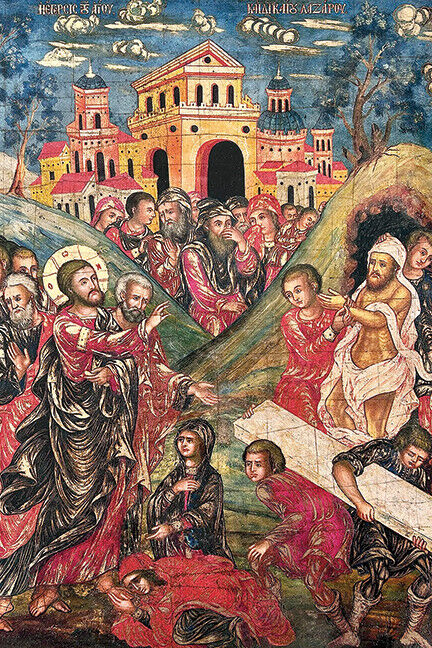
Lazarus Saturday
Also known as: Saturday of the Righteous Lazarus, Saturday of Lazarus
P−8· Movable · Paschal cycle
The day the Church commemorates Christ raising his friend Lazarus from the tomb after four days, a foreshadowing of the general resurrection and the Lord's own rising. It falls the day before Palm Sunday and marks the close of Great Lent proper before Holy Week begins.
Depictions & Icons
How the Church has written this feast — festal icons across the centuries.
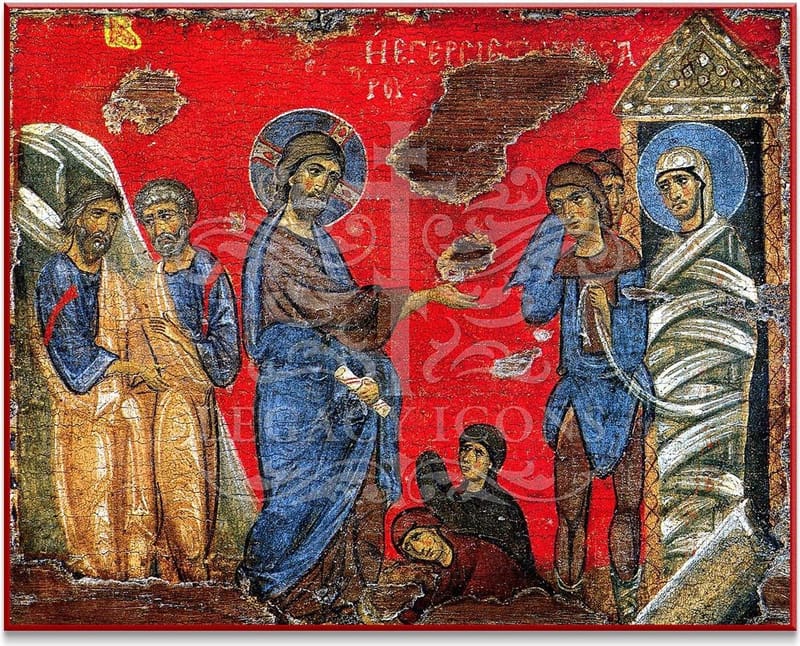
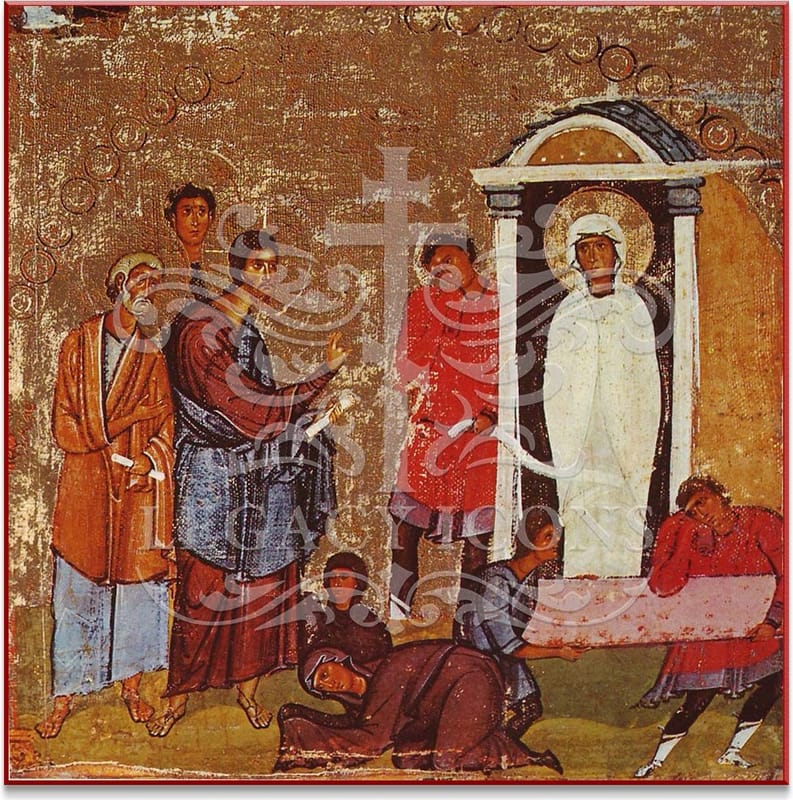
Overview
Lazarus Saturday is the Orthodox observance commemorating Christ's raising of his friend Lazarus of Bethany from the tomb four days after his death, as recorded in the eleventh chapter of the Gospel of John. It falls on the day before Palm Sunday and marks the close of Great Lent proper before Holy Week begins, occupying a unique position as a day of joy and triumph interposed between the penitence of the fast and the mourning of the Passion.
A moveable feast tied to the Paschal cycle, it stands eight days before Pascha. The raising of Lazarus is understood by the Church as a foreshadowing of the general resurrection of all people and of the Lord's own rising from the dead. Immediately after the miracle, crowds recognized Jesus as the anticipated Messiah, setting the stage for his triumphal entry into Jerusalem the following day.
The observance is distinct from the individual feast of St. Lazarus the Four-Days-Dead, kept on October 17, which commemorates the same saint and the translation of his relics from Cyprus to Constantinople in 898. Lazarus Saturday is closely associated with the Greek tradition, though it is kept throughout the Orthodox world.
Timeline
1st century — The raising of Lazarus
According to the Gospel of John, Jesus travels to Bethany and raises Lazarus, who had been dead four days, six days before the Passover; the miracle precedes his triumphal entry into Jerusalem.
4th-5th centuries — Early homiletic witness
Homilies on the raising of Lazarus attributed to Saint John Chrysostom (349-407) and Saint Augustine of Hippo (354-430) attest to the antiquity of the commemoration.
7th-8th centuries — Composition of the hymnography
Saint Andrew of Crete, Saint Cosmas of Maiuma, and Saint John Damascene compose canons and hymns for the day, including a full nine-canticle canon still sung at Compline.
898 — Translation of the relics
The relics of Lazarus are translated from Cyprus to Constantinople, commemorated separately on October 17.
History
The observance is of considerable antiquity. Its early presence in the Church's life is attested by homilies on the raising of Lazarus attributed to Saint John Chrysostom (349-407) and Saint Augustine of Hippo (354-430), indicating that the event was already a fixed point of commemoration in both the Eastern and Western traditions by late antiquity.
The proper hymnography for the day took shape in the seventh and eighth centuries. Canons and hymns were composed by Saint Andrew of Crete, Saint Cosmas of Maiuma, and Saint John Damascene, and these texts continue to be sung. The full nine-canticle Canon on the Raising of Lazarus by Saint Andrew of Crete, a rare complete canon, is sung at Compline on Friday night.
In the historical shape of the calendar, Lazarus Saturday served as a major day for baptism. This is preserved liturgically in the substitution, at the Divine Liturgy, of the baptismal hymn drawn from Galatians 3:27 ('As many as have been baptized into Christ have put on Christ') in place of the Trisagion, a vestige of the ancient baptismal practice attached to the day.
The week preceding the feast, known as the 'Week of Palms' or 'Flowery Week,' tracks the illness and death of Lazarus and Christ's journey to Bethany through the propers of the Lenten Triodion. Although the forty days of Great Lent conclude on the preceding Friday, Lazarus Saturday retains its own distinct observance as a hinge between the fast and Holy Week. By ancient custom, hermits would leave their wilderness retreats on this day to return to their monasteries for the Holy Week services.
Meaning
The Church's liturgical texts interpret the raising of Lazarus as a prefiguring of both Christ's own Resurrection and the general resurrection of all the dead. Lazarus, restored to life before Christ's Passion, becomes the confirmation and pledge of the universal Resurrection. This gives the day its paradoxical character: a celebration of resurrection standing immediately before the days of the Lord's suffering.
The event is read as a revelation of Christ's dual nature. His humanity is shown when he asks, 'Where have ye laid him?' and weeps, while his divinity is shown when he commands the four-days-dead man to come forth from the tomb. In Martha's presence Christ proclaims himself 'the Resurrection and the Life,' and the hymnody of the day gathers around this title.
The hymns draw a symbolic connection between the burial bonds of Lazarus and the bondage of the individual soul in sin, so that the loosing of Lazarus from his grave-clothes becomes an image of redemption and the loosing of humanity from death. The resurrectional themes of the day point toward the ultimate restoration promised in Christ.
Lazarus Saturday is liturgically unique as the only occasion in the Church year on which the resurrectional service otherwise proper to Sunday is celebrated on another day. Consistent with this festal, resurrectional character, there is no kneeling during the consecration of the Holy Gifts.
Hymnography
The hymns of Lazarus Saturday were largely composed in the seventh and eighth centuries by Saint Andrew of Crete, Saint Cosmas of Maiuma, and Saint John Damascene. At Compline on Friday night a full nine-canticle canon on the raising of Lazarus by Saint Andrew of Crete is sung, a rare instance of a complete canon in the services.
The Troparion and Kontakion of the day center on Christ as 'the Resurrection and the Life,' presenting the raising of Lazarus as the common assurance of the resurrection given before the Passion, and drawing out the themes of divine forgiveness and the resurrection to come.
At the Divine Liturgy the baptismal hymn drawn from Galatians 3:27 replaces the Trisagion, a hymnographic marker of the day's historical role as a principal occasion for baptism.
Fasting in Practice
Although the forty days of Great Lent conclude on the Friday before, Lazarus Saturday retains a modified observance. The Church's practice on this day maintains abstinence from meat and dairy while introducing a note of anticipation of Pascha: caviar (fish roe) is traditionally permitted. The allowance is understood symbolically, the eggs signifying the coming Resurrection which the raising of Lazarus foreshadows. Typikon prescriptions vary; the faithful should consult their priest.
Customs & Traditions
In the Greek and Cypriot tradition, mildly sweet spiced Lenten breads called 'lazarakia' are baked, shaped to represent Lazarus bound in his grave-clothes; the custom is traditionally said to originate in Cyprus, where St. Lazarus is remembered as the island's first bishop.
In the Greek tradition children sing carols recalling the raising of Lazarus.
In the Russian Church, green vestments are used on this day and on Palm Sunday, signifying the renewal of life.
In Serbia and Bulgaria, blessed willow twigs are distributed in place of palms, sometimes with small bells tied to the Serbian branches.
Ideas for Celebrating This Feast
Ways to keep Lazarus Saturday, on the threshold of Holy Week.
- Bake lazarakia — spiced sweet-bread figures shaped like Lazarus in his burial shroud, with clove eyes and crossed arms — a hands-on project the day before Palm Sunday.
- Talk through the raising of Lazarus as you shape the dough — Christ weeping, then calling His friend from the tomb — the "first Pascha" and pledge of our own resurrection.
- Prepare palm crosses for the next day, folding simple crosses from palm strips (or pussy-willow branches by local custom).
- Gather greens and set the icon corner for the feast, ready for Palm Sunday morning.
- Sing the feast's troparion as a family.
- Let children deliver a few lazarakia to a neighbor or the elderly, tying the baking to a small act of love.
Ideas gathered and adapted from Orthodox family resources — Ascetic Life of Motherhood. These are optional, inviting ideas, not liturgical requirements.
Scripture
- John 11:1-45 — The raising of Lazarus of Bethany, brother of Mary and Martha, four days dead.
- John 11:25 — Christ's proclamation to Martha: 'I am the resurrection, and the life.'
- Zechariah 9:9 — The prophecy fulfilled in the triumphal entry that follows the miracle.
- Galatians 3:27 — The baptismal verse sung in place of the Trisagion, preserving the day's ancient baptismal character.
Fasting is described here at the season-summary level and differs by jurisdiction and person — please consult your parish priest about how to keep the fasts.