
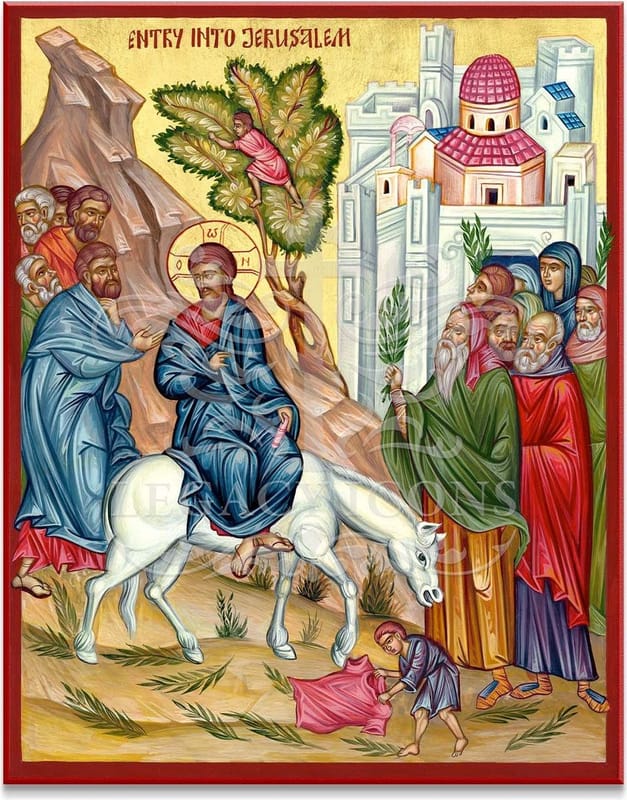
Entry of the Lord into Jerusalem
Also known as: Palm Sunday, Entry into Jerusalem, Willow Sunday
P−7· Movable · Paschal cycle
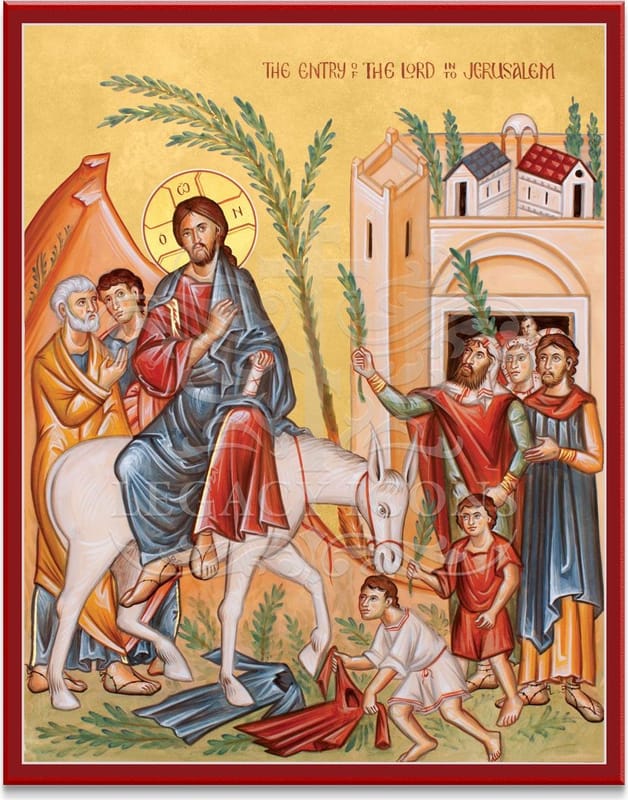
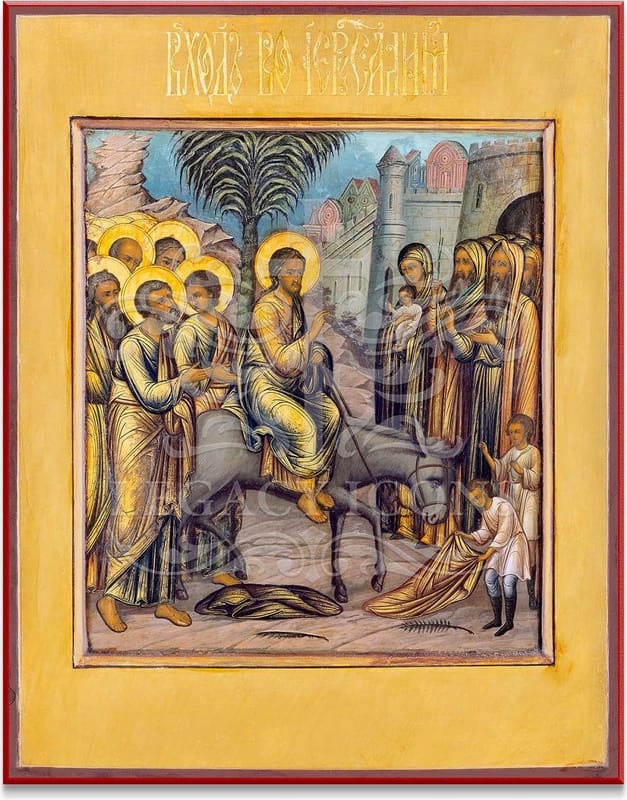
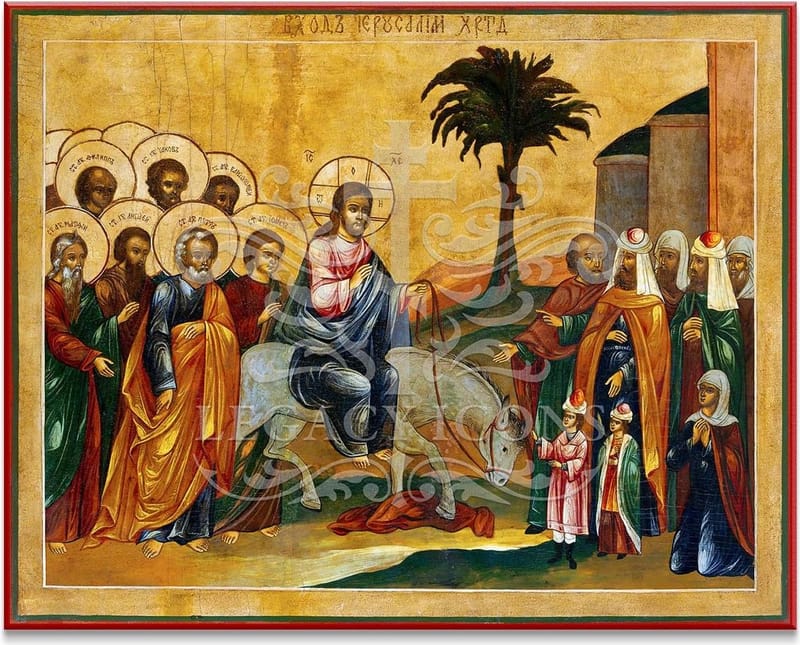
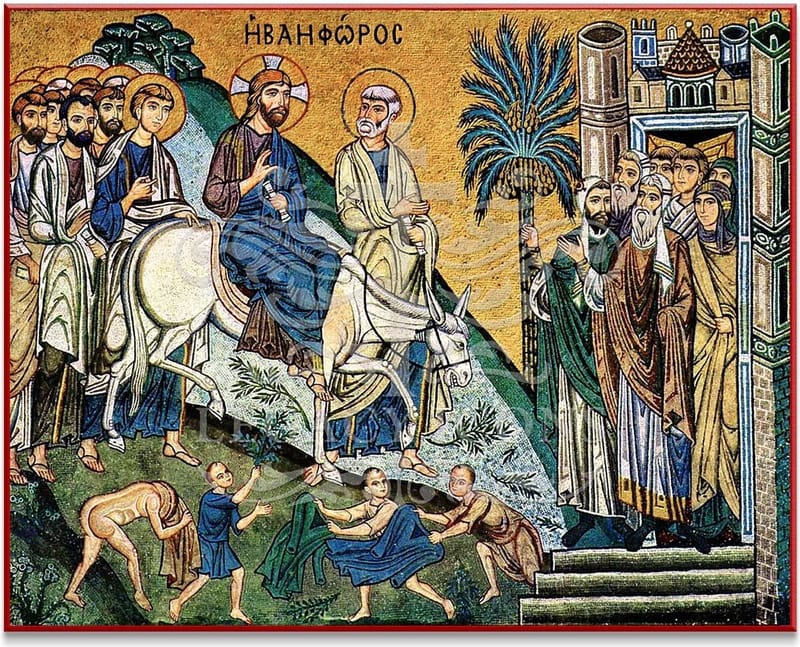
Christ's triumphal entry into Jerusalem riding on a donkey, greeted by crowds spreading their garments and palm branches and crying "Hosanna," days before His Passion.
Depictions & Icons
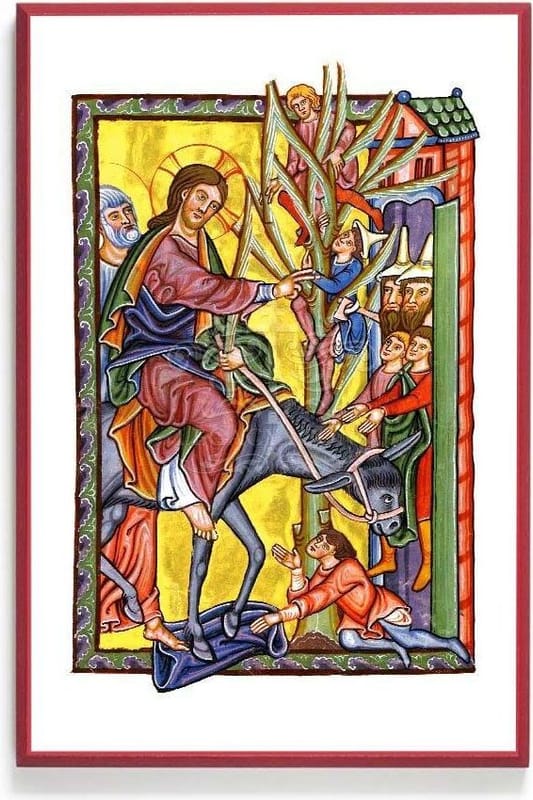
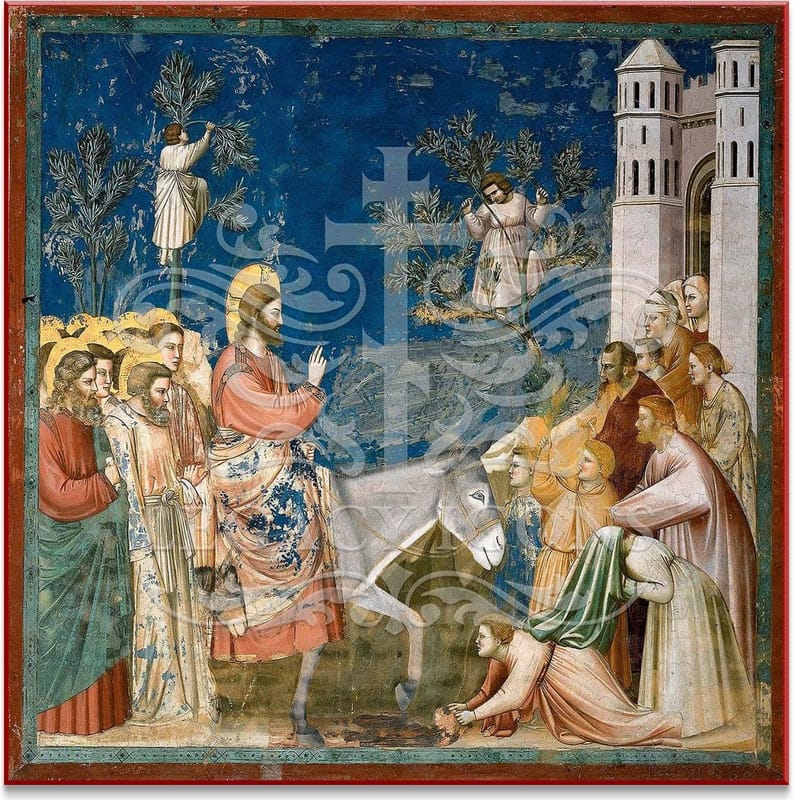
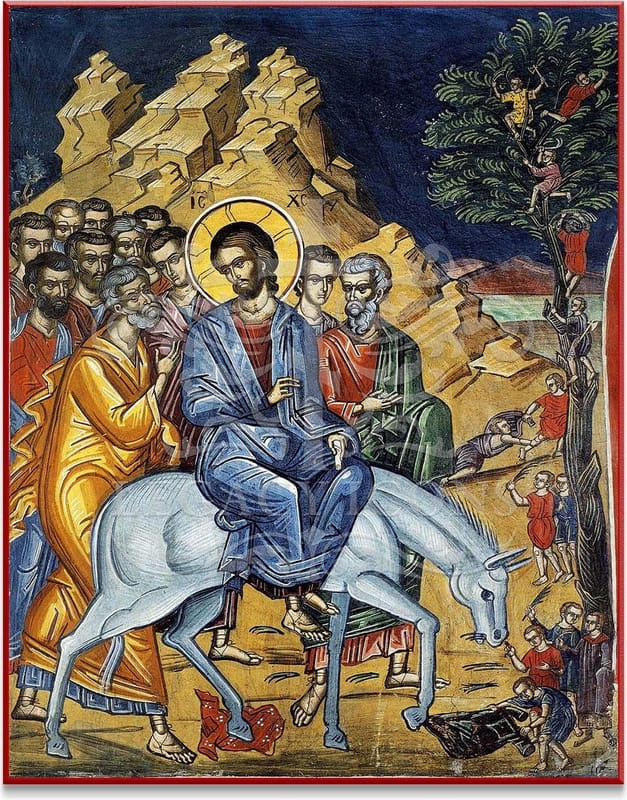
How the Church has written this feast — festal icons across the centuries.
Overview
The Entry of the Lord into Jerusalem, popularly called Palm Sunday, is one of the Twelve Great Feasts of the Orthodox liturgical year. It commemorates Christ's triumphal entry into Jerusalem, riding on a donkey, in the days before the Jewish Passover, when crowds greeted Him by spreading their garments and palm branches before Him and crying "Hosanna."
The feast falls on the Sunday before Pascha, immediately following Lazarus Saturday and standing at the threshold of Holy Week. Unlike most Great Feasts, it has no forefeast or apodosis (afterfeast): it stands alone between the raising of Lazarus and the beginning of Christ's Passion.
Though the day is a Great Feast, it falls within Great Lent. Because of its triumphant character the fast is relaxed and fish is permitted, but the strict fast resumes for the Holy Week that immediately follows.
Timeline
1558–1693 — The Moscow "donkey walk"
In Moscow the feast was marked by a distinctive procession in which the Patriarch rode a horse draped in white cloth while the Tsar humbly led it on foot.
1720s — Abolition of the donkey walk
Peter I terminated the Moscow donkey-walk custom, though it has occasionally been recreated in recent times.
History
The event the feast commemorates is recorded in all four canonical Gospels (Matthew 21:1–11, Mark 11:1–11, Luke 19:28–44, John 12:12–19). According to these accounts Jesus came to Jerusalem to celebrate the Passover, entering the city seated on a donkey. The Gospel of John places the entry six days before the Passover, and it was preceded by the raising of Lazarus at Bethany, which had drawn great crowds to meet Jesus.
The Gospel accounts differ in detail: Matthew mentions two animals, a donkey and a colt, while Mark and Luke reference a single colt, and John situates the initial gathering at Bethany. The journey passed through Bethphage, the place from which, in tradition, the paschal lamb was brought and led to the Temple Mount — a connection that joins Jesus's entry to the sacrificial imagery of Passover. Matthew's account notes that the manner of the entry fulfilled the prophecy of Zechariah 9:9.
In Eastern Christianity the day came to rank among the Twelve Great Feasts of the liturgical year, observed on the Sunday before Pascha. Over the centuries local customs developed around it, especially in northern lands where palm branches were not available (see below). One notable historical custom was the Moscow "donkey walk" procession, held from 1558 to 1693, in which the Patriarch rode a horse draped in white cloth while the Tsar humbly led it on foot; Peter I ended this custom in the 1720s, though it has occasionally been recreated in recent times.
Meaning
The manner of Christ's entry carries profound symbolic meaning. By entering Jerusalem on a donkey rather than on a warhorse, Jesus made a royal claim while presenting Himself as one who comes in peace — the Prince of Peace rather than a military conqueror. The action, in the words of scholars, spoke more powerfully than words could of that royal claim.
The cry of the crowds, "Hosanna," is drawn from Psalm 118:25–26 and derives from a Hebrew word meaning "save us"; it was joined to the acclamation "Blessed is he who comes in the name of the Lord." The palm branches the crowds waved carried layers of meaning, symbolizing triumph and victory in the surrounding Greco-Roman culture.
The feast holds a dual spiritual character. It celebrates Christ's triumphal entry even as it maintains awareness of the Passion soon to come: Luke records that Jesus wept over Jerusalem as He approached, foreshadowing the city's future suffering. This tension — acclamation on the threshold of the Cross — defines the feast's place in the year.
The feast is bound closely to Lazarus Saturday, which immediately precedes it. The hymnography of the feast teaches that by raising Lazarus from the dead before His Passion, Christ confirmed the universal resurrection. The raising of Lazarus is also theologically central to the feast's position, for that miracle, by alarming the religious authorities, helped set the Passion in motion.
Hymnography
The hymnography of the feast emphasizes the bond between the raising of Lazarus and Christ's own coming Passion and Resurrection, teaching that by raising Lazarus from the dead before His Passion, Christ confirmed the universal resurrection. The hymns hold together the feast's triumphant acclamation and the awareness that the events of the Passion are soon to come.
Fasting in Practice
Although the feast falls within Great Lent, its fast is relaxed in view of the day's triumphant nature, and fish is permitted. The strict fast then resumes for Holy Week, which begins immediately after the feast. Fasting practice varies; the faithful should consult their priest.
Customs & Traditions
The blessing and distribution of branches held by the faithful with lit candles at the festal service; the blessed branches and candles are given out either during the All-Night Vigil on Saturday evening or before the Divine Liturgy on Sunday morning, and during the Great Entrance of the Divine Liturgy everyone stands holding their branches and lit candles.
The faithful take the blessed branches home as a blessing to keep in their icon corners; on Lazarus Saturday believers often prepare palm fronds by knotting them into crosses, and some churches distribute small crosses made of palms for parishioners to keep in the home icon corner.
In Slavic and northern lands — including Russia, Ukraine, Poland, Bavaria, and Austria — pussy-willow and other twigs such as box tree are used in place of palm fronds, since palms are not readily available that far north; consequently the Russian Church calls the day "Pussy Willow Sunday" (also "Willow Sunday"). There is no canonical requirement as to the kind of branches used, and some Orthodox believers use olive branches.
Church hangings and vestments are changed to festive green for the celebration.
Ideas for Celebrating This Feast
Ways to keep Palm Sunday, the Entry of the Lord into Jerusalem, at home.
- Fold palm crosses together from the blessed palms brought home from Liturgy (or from paper strips), following a simple tutorial.
- Hold a small procession through the house, each child carrying a palm or cross, reenacting the crowd welcoming Christ.
- Tuck the blessed palms — or the pussy-willow branches used in colder Orthodox lands ("Willow Sunday") — into the icon corner to stay up through the year.
- Read the Entry-into-Jerusalem account together and talk about why the people waved branches.
- On the eve of Lazarus Saturday, bake lazarakia (little spiced sweet-bread figures) and read the raising of Lazarus, which the Church pairs with the feast.
- Sing the feast's troparion while holding the palms at evening prayers.
Ideas gathered and adapted from Orthodox family resources — Orthodox Motherhood, Charlotte Riggle. These are optional, inviting ideas, not liturgical requirements.
Scripture
- Matthew 21:1–11 — The entry into Jerusalem; Matthew notes the fulfillment of Zechariah 9:9 and mentions both a donkey and a colt.
- Mark 11:1–11 — The entry, referencing a single colt.
- Luke 19:28–44 — The entry; Luke records Jesus weeping over Jerusalem (19:41).
- John 12:12–19 — The entry, placed six days before the Passover, following the raising of Lazarus.
- Psalm 118:25–26 — The source of the crowd's cry, "Hosanna" and "Blessed is he who comes in the name of the Lord."
- Zechariah 9:9 — The prophecy of the king coming to Zion on a donkey, fulfilled in the entry.
Fasting is described here at the season-summary level and differs by jurisdiction and person — please consult your parish priest about how to keep the fasts.