
Pentecost
Also known as: Holy Pentecost, Descent of the Holy Spirit, Trinity Sunday
P+49· Movable · Paschal cycle
Fifty days after Pascha, the descent of the Holy Spirit upon the Apostles in tongues of fire, the birth of the Church and the completion of the Paschal season. The following day honors the Holy Spirit.
Depictions & Icons
How the Church has written this feast — festal icons across the centuries.
Overview
Pentecost is celebrated fifty days after Pascha and commemorates the descent of the Holy Spirit upon the apostles gathered in Jerusalem, as recounted in the second chapter of the Acts of the Apostles. In the Eastern Orthodox Church it is reckoned among the Great Feasts of the Lord and is regarded as second in rank only to Pascha itself, bringing the Paschal season to its completion.
The feast falls on a Sunday, also called Trinity Sunday, and inaugurates a cycle of three days: Trinity Sunday, the Monday of the Holy Spirit, and a third day. Its afterfeast continues for a week, and during that week fasting is not kept, even on the Wednesday and Friday that are ordinarily fast days.
The name comes from the Greek word for 'fiftieth,' marking the fifty-day interval from Pascha, just as the Jewish feast from which it derives fell fifty days after Passover. After the feast the Church begins to count her Sundays 'after Pentecost' through the rest of the year until the next Great Lent.
Timeline
Apostolic era — The descent of the Holy Spirit
According to Acts 2, the apostles gathered in Jerusalem during the Jewish feast are filled with the Holy Spirit, which appears as tongues of fire amid the sound of a rushing wind, and they begin to speak in languages they had not learned.
4th century — The kneeling prayers
The three long prayers of the Kneeling Vespers of Pentecost are attributed by tradition to Saint Basil the Great.
History
The Christian feast grows directly out of the Jewish festival during which the events of Acts 2 took place. That festival, Shavuot or the Feast of Weeks, was celebrated seven weeks and one day after the first day of Passover and was also known as the Feast of Harvest; in later tradition it was associated with the giving of the Law to Moses at Mount Sinai. It was for this pilgrimage feast that Jews of the diaspora had gathered in Jerusalem, and it was in their many native tongues that they heard the apostles proclaiming the works of God.
The apostolic event itself became the ground of the Christian observance: the descent of the Spirit is remembered as the moment the Church went forth to preach, and the day has traditionally been recognized as the birthday of the Church. As the celebration developed, Pentecost came to be counted among the chief feasts of the liturgical year, with its own Great Vespers on the eve, festal hymns, and an afterfeast.
A distinctive part of the celebration is the service of Kneeling Vespers held on the evening of the feast, whose three long poetical prayers are attributed to Saint Basil the Great. This service is the point at which kneeling and prostration, which had been set aside since the day of Pascha, are taken up again — a discipline of the paschal fifty days that the feast brings to a close.
Meaning
Through Pentecost the Church confesses the sending of the Holy Spirit as the fulfillment of Christ's promise and the completion of his saving work. The Orthodox tradition understands the day as the final fulfillment of the mission of Jesus Christ and the beginning of the messianic age of the Kingdom of God, when the Spirit is poured out upon all creation.
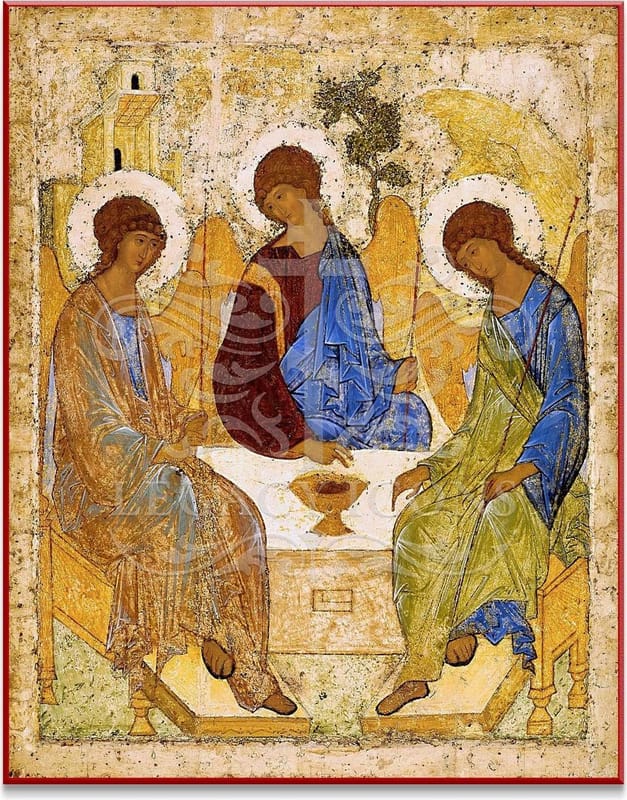
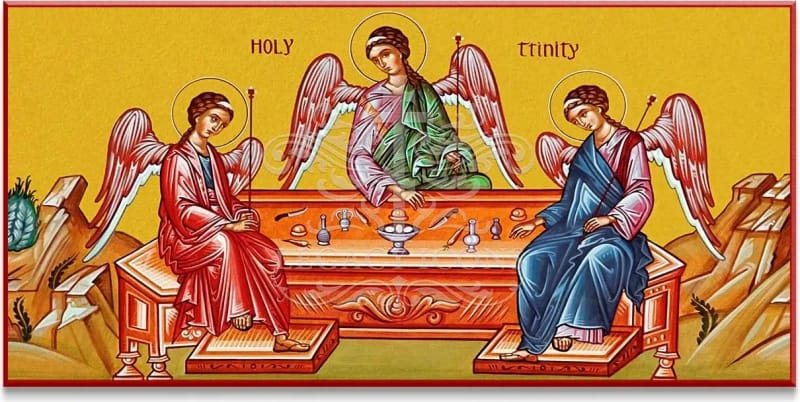
The feast is also the celebration of the full revelation of the Holy Trinity — Father, Son, and Holy Spirit — which is why Pentecost Sunday is likewise called Trinity Day. The manifestation of the Godhead through the descent of the Spirit is received as God's ultimate self-disclosure and self-giving to the world.
The number fifty carries theological weight in this reckoning: understood as seven times seven plus one, it signifies an eternal and heavenly fullness beyond the measure of the world, so that the day is read as apocalyptic and eschatological, the inauguration of the 'last days.' The gift given to the whole Church at Pentecost is understood to continue in the life of each believer, who receives the seal of the gift of the Holy Spirit in chrismation and so becomes a temple of the Spirit.
Iconography
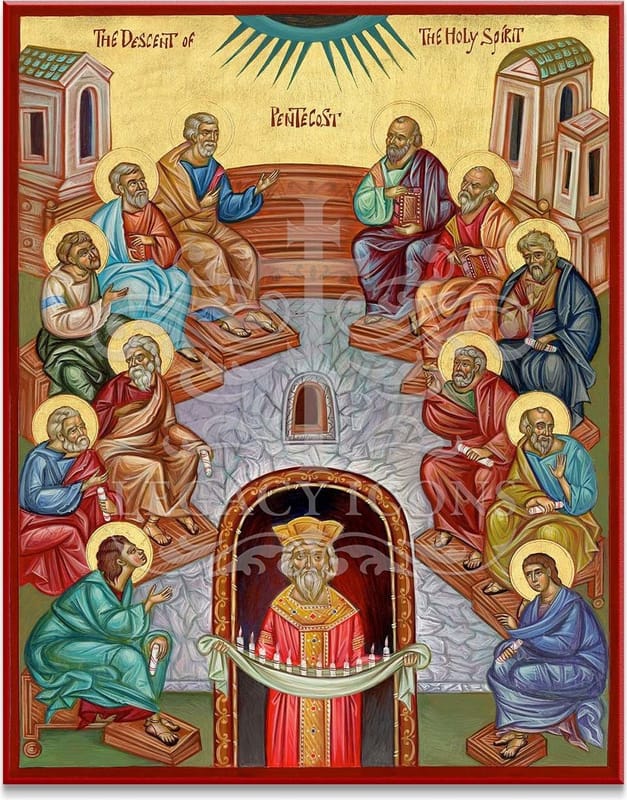
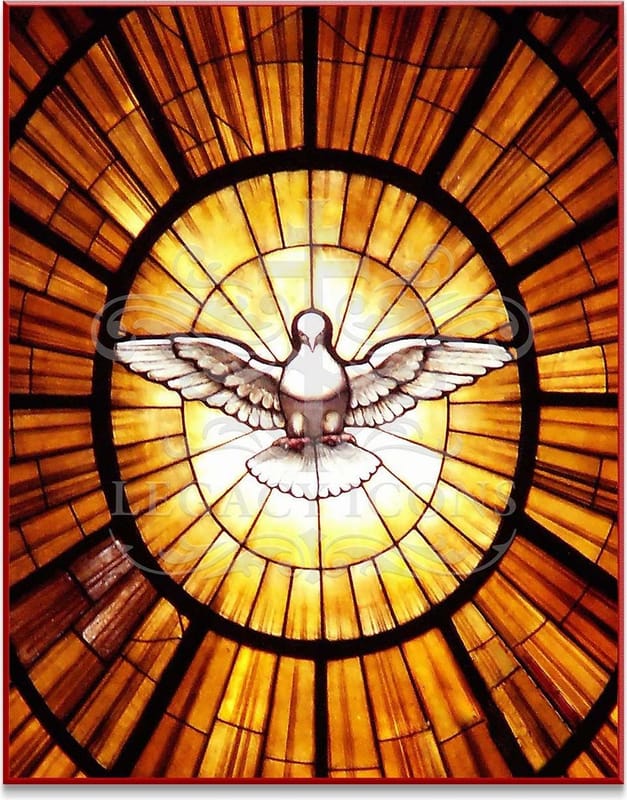
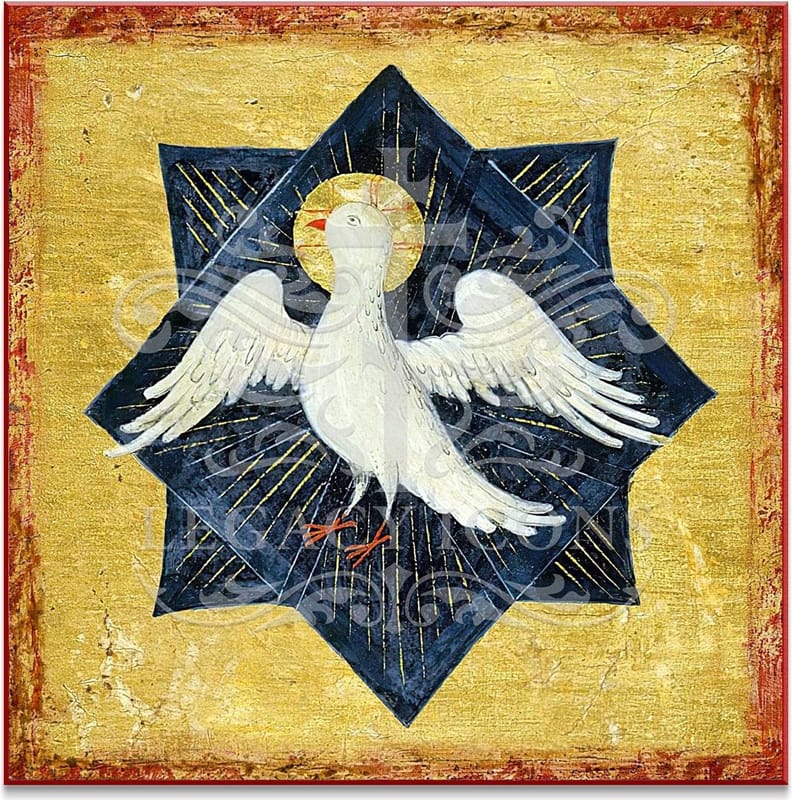
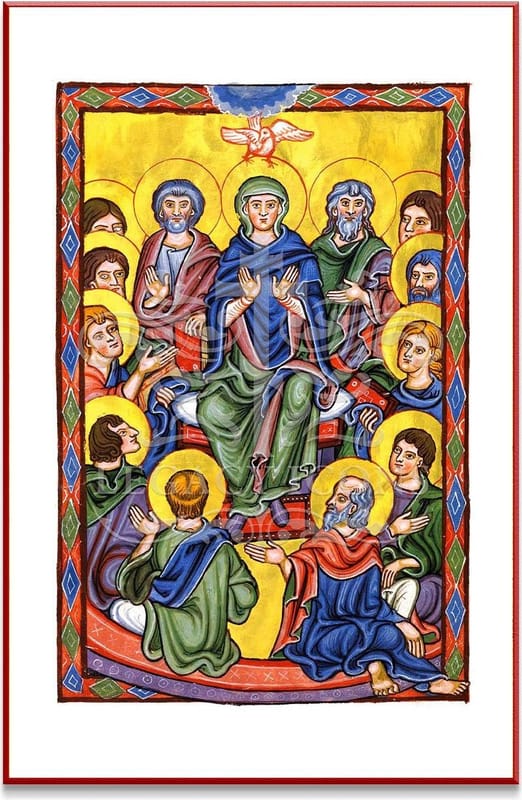
The festal icon shows the Twelve Apostles seated in a semicircle, and in some versions the Theotokos is placed in their midst. Above them the Holy Spirit descends in the form of tongues of fire, resting upon each. At the base of the icon an allegorical figure labeled 'Kosmos' represents the world; he holds a towel bearing twelve scrolls, signifying the teaching of the twelve apostles carried out into all creation.
Hymnography
The services of the feast include festal hymns that celebrate the descent of the Spirit together with the revelation of the Trinity, several of which are sung for the first time since Pascha. The three poetical prayers of the Kneeling Vespers, attributed to Saint Basil the Great, structure the evening service: tradition understands the first as an appeal for the forgiveness of sins, the second as a petition for the help of the Holy Spirit in prayer and in following the true path, and the third as a remembrance of the departed who are united with the living in the eternal God of love.
Fasting in Practice
Pentecost falls within the paschal season and is itself a feast without fasting. The Church's practice is that the entire week following Pentecost is kept fast-free, so that the customary abstinence of Wednesday and Friday is set aside during those days. The wider fasting cycle resumes afterward: the Apostles' Fast begins on the second Monday after Pentecost and continues until the feast of Saints Peter and Paul on June 29.
Customs & Traditions
Churches and homes are adorned with flowers and the green branches and foliage of summer, signifying the renewal of all creation by the breath of God; green is the liturgical color of the feast, and clergy and faithful may carry flowers and greenery during the services.
The Monday after Pentecost is kept as the Day of the Holy Spirit, and the Sunday following the feast is the Sunday of All Saints.
Ideas for Celebrating This Feast
Ways to keep Pentecost, the descent of the Holy Spirit, at home.
- Attend the Pentecost Liturgy and, if your parish serves them, the Kneeling Prayers (Vespers of Pentecost) — the first kneeling since Pascha — and explain why the Church kneels again.
- Dress in green, the feast's color, and bring greenery into the home — potted herbs, bouquets, and fresh branches near the festal icon.
- Light many candles around the home to recall the tongues of fire that rested on the apostles.
- Read or tell the Pentecost story (Acts 2) together.
- Teach children to say "hello" in several languages, tied to the apostles being understood by every nation.
- Sing the feast's troparion and the prayer "O Heavenly King," which returns to use after Pascha.
Ideas gathered and adapted from Orthodox family resources — Orthodox Motherhood, John Sanidopoulos. These are optional, inviting ideas, not liturgical requirements.
Scripture
- Acts 2:1-4 — The descent of the Holy Spirit upon the apostles, read as the feast's scriptural foundation.
Fasting is described here at the season-summary level and differs by jurisdiction and person — please consult your parish priest about how to keep the fasts.