
Great and Holy Friday
Also known as: Holy Friday, Great Friday, Good Friday, Holy and Great Friday
P−2· Movable · Paschal cycle
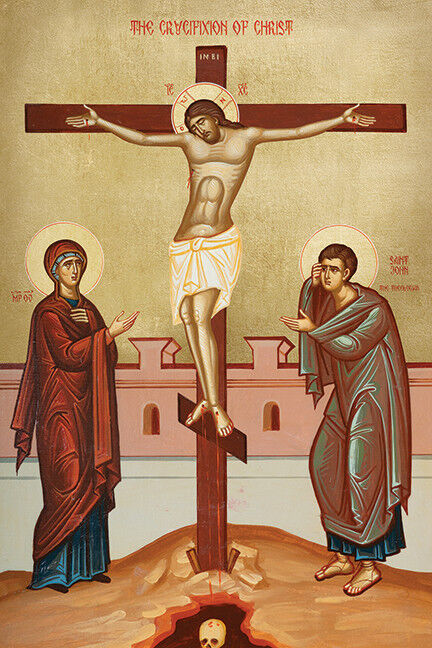
The Church keeps the Passion of Christ — His trial, crucifixion, death, and burial. No Divine Liturgy is served on this most solemn day of the year.
Depictions & Icons
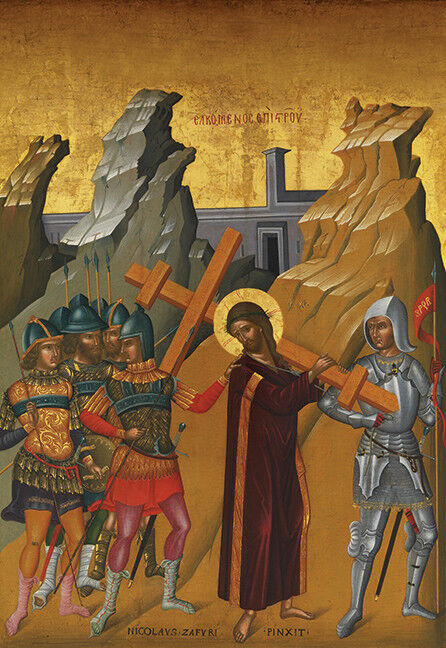
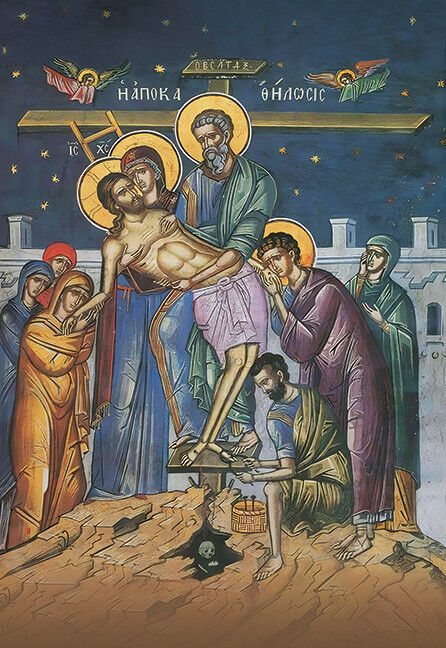
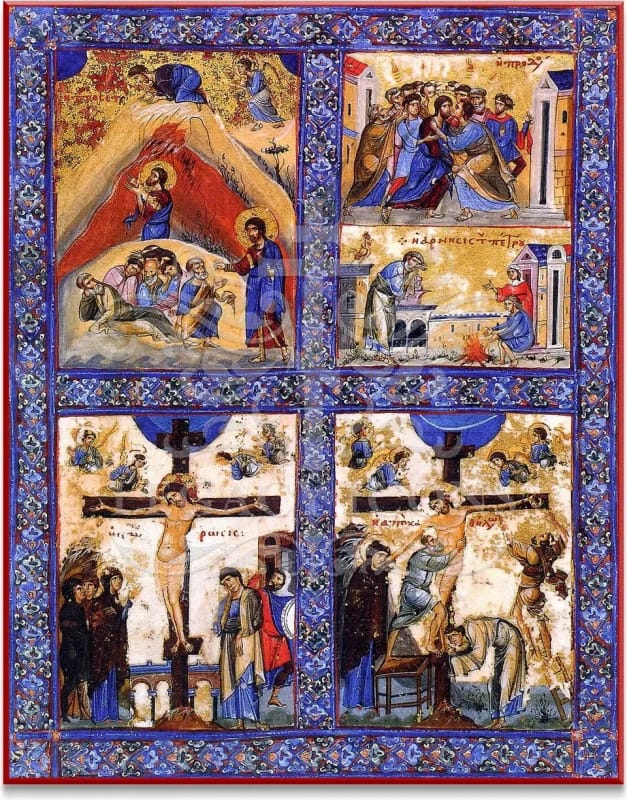
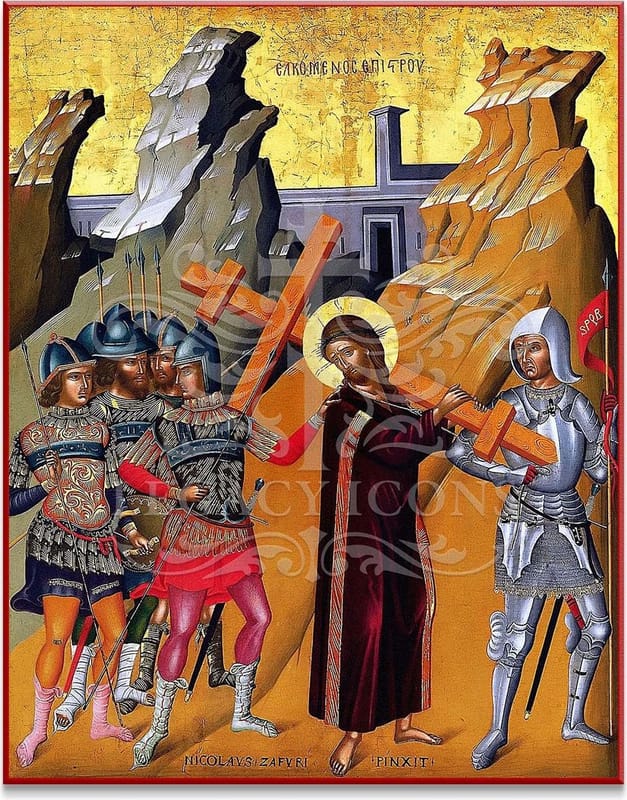
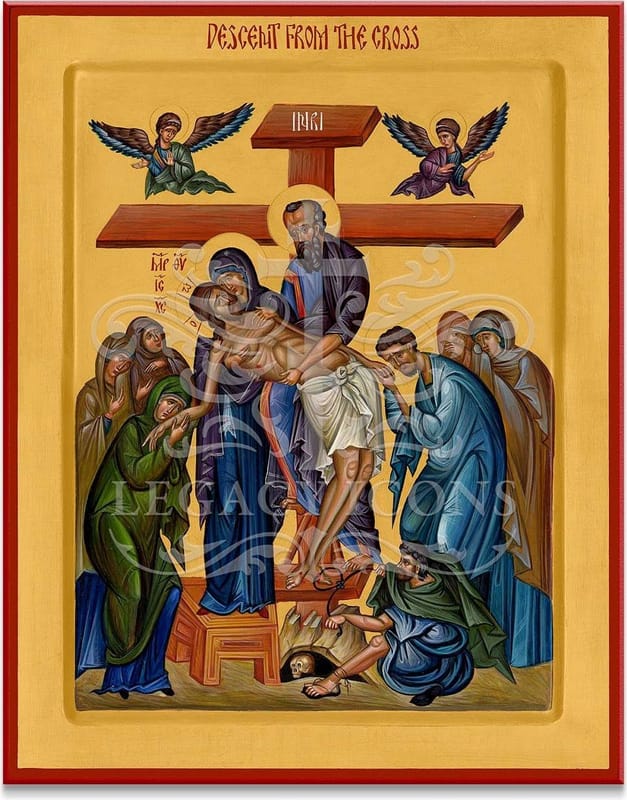
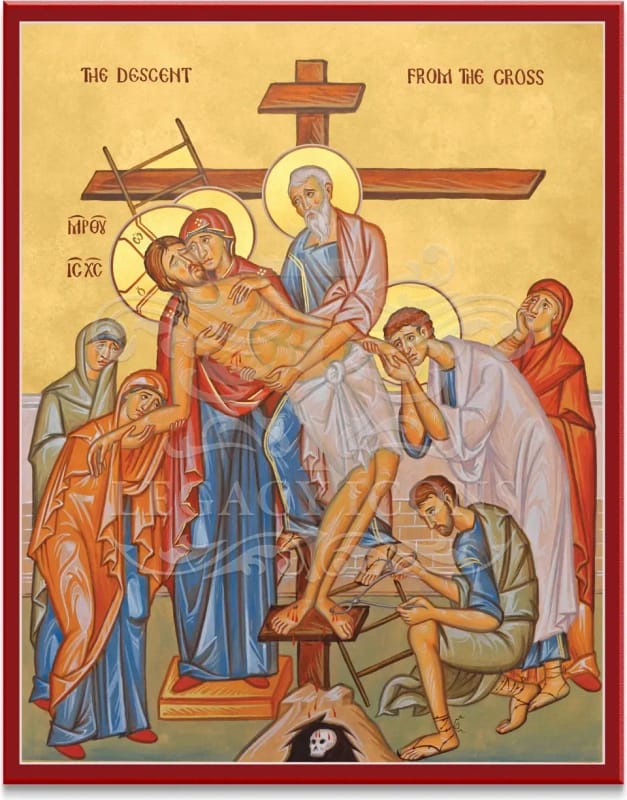
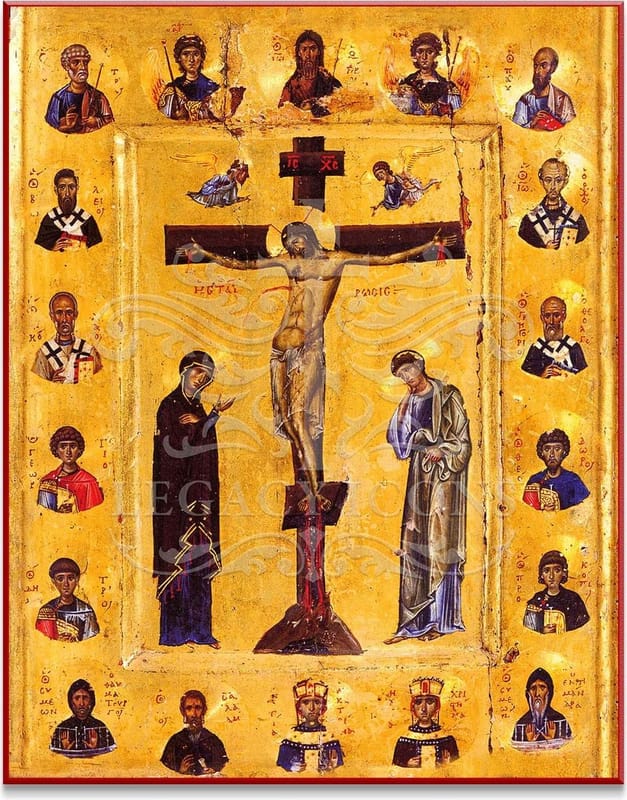
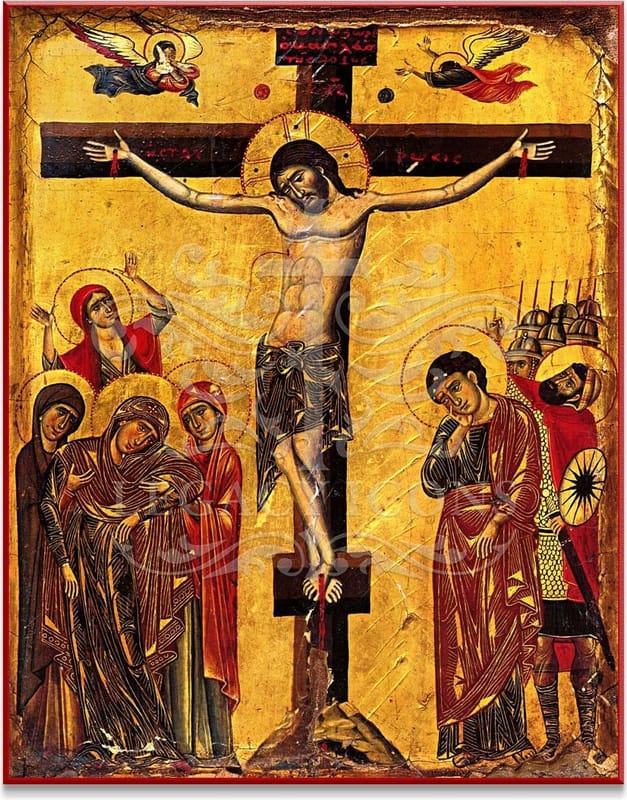
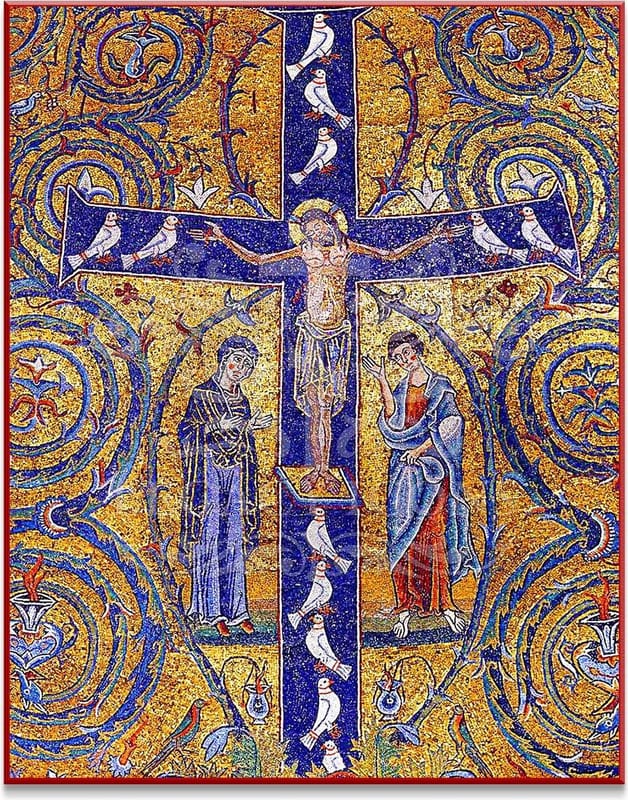
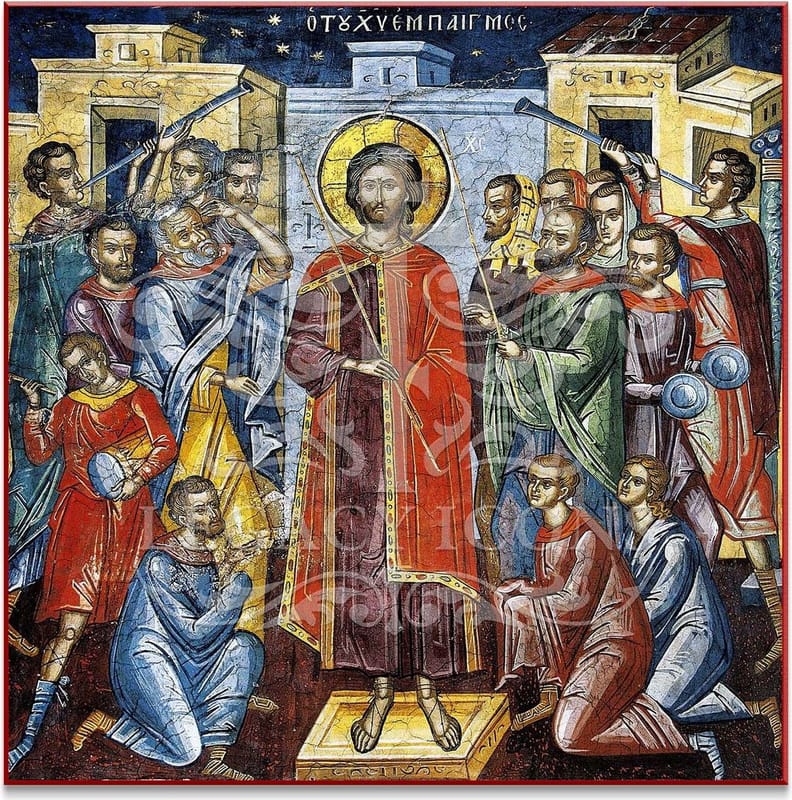
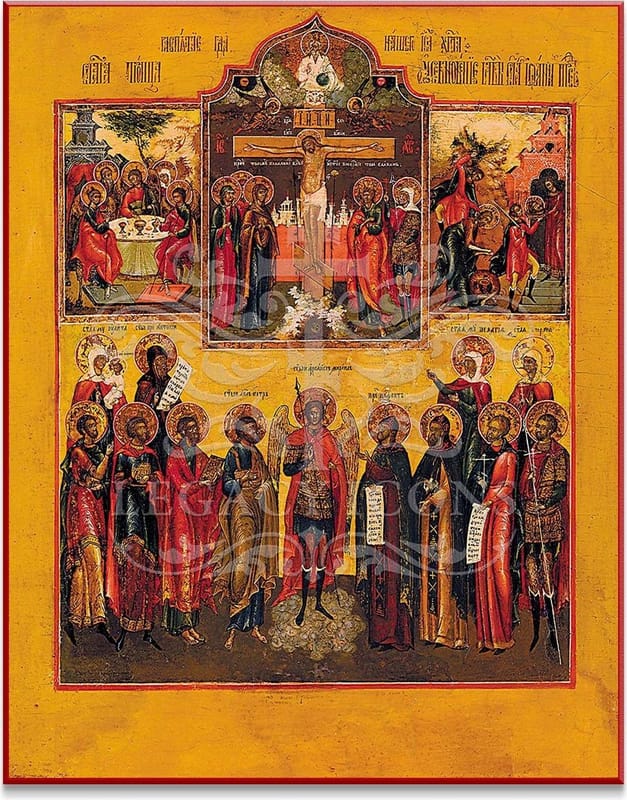
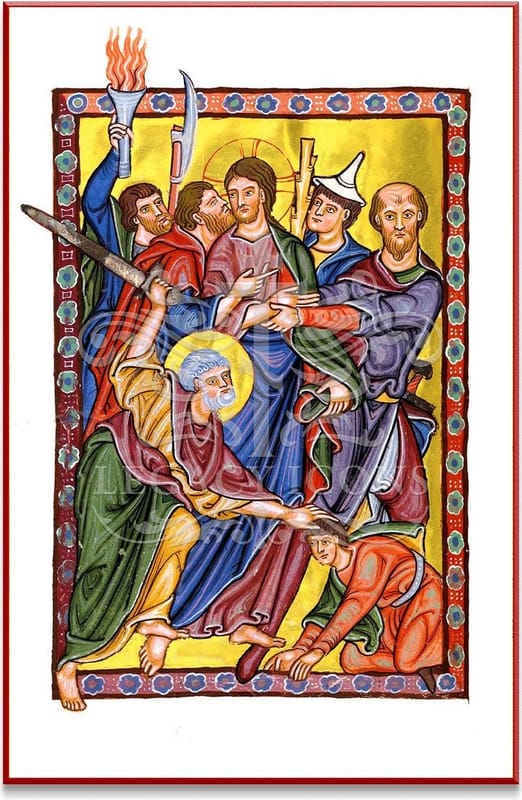
How the Church has written this feast — festal icons across the centuries.
Overview
Great and Holy Friday is the most solemn observance of the Orthodox liturgical year, keeping the Passion of Christ — His trial, crucifixion, death, and burial. It falls on the Friday of Holy Week, two days before Pascha, and is dedicated to the Lord. On this day the Church remembers the culmination of the events that have been its theme throughout Holy Week: the removal of the Body of Christ from the Cross and His placement in the tomb.
No Divine Liturgy is served on Great and Holy Friday — the only day of the year, together with certain other aliturgical days of the year, when the Eucharist is not celebrated (the sole exception is when the day coincides with the Annunciation on March 25). Clergy vest in black, and the hangings of the church are changed to black, remaining so until the Divine Liturgy of Great Saturday.
The day is framed by a sequence of services: the Matins of the Twelve Passion Gospels, served on Thursday evening; the Royal Hours on Friday morning; the Vespers of the Taking-Down from the Cross in the afternoon; and, on Friday night, the Lamentation at the Tomb (also called Jerusalem Matins). Its central object is the Epitaphios, the burial shroud of Christ, brought out and venerated by the faithful.
Timeline
c. 329–331 — Athanasius attests the pre-Paschal days
Saint Athanasius of Alexandria refers to the significance of the holy days before Easter, indicating that structured observances of fasting and prayer were already widespread.
c. 388 — Egeria describes the Jerusalem observance
The pilgrim Egeria records well-established Good Friday services in Jerusalem — veneration of relics and a three-hour afternoon commemoration during which the lamentations of the people, she wrote, exceeded all description.
c. 6th century — The Enkomia composed
The high Attic literary style of the Lamentations (Enkomia) suggests a date around the sixth century, possibly before the time of Saint Romanos the Melodist.
History
The observance of Great and Holy Friday is among the oldest in the Christian calendar. The fourth-century pilgrim Egeria, writing of her journey to Jerusalem around 388, described Good Friday observances that were already well-established, including the veneration of relics and a lengthy afternoon commemoration lasting three hours, during which, she recorded, the sobs and lamentations of the people exceeded all description. Saint Athanasius of Alexandria, writing around 329–331, referred to the significance of the holy days preceding Easter, indicating that structured observances of fasting and prayer were already widespread. By the close of the fourth century the keeping of the day had become nearly universal among Christians, and the Jerusalem observances Egeria witnessed were broadly similar to those still kept today.
The services of the day took shape over the centuries into their present sequence. The Matins of the Twelve Passion Gospels, served on Thursday night, gathers twelve readings from all four Gospels recounting events from the Last Supper through the Crucifixion and burial; the first of these is the longest Gospel reading of the liturgical year. Before the sixth Gospel, which describes the crucifixion, a large cross is carried into the nave with incense and candles for the faithful to venerate. Some churches mark the readings with a candelabrum of twelve candles, extinguishing one after each.
The Royal Hours, prayed on Friday morning, consolidate the Little Hours — the First, Third, Sixth, and Ninth, together with the Typical Psalms — into a single service, expanded with special psalms, hymns, and Old Testament, Epistle, and Gospel readings on the Crucifixion. The service is served only on a few high days of the year — the eves of the Nativity and Theophany, and Holy Friday. Its name derives both from its solemnity and from the historical custom of the Byzantine emperor and his court attending the entire service.
The Lamentation at the Tomb, served Friday night, centers on the Enkomia, or Lamentations — 185 short antiphons arranged in three parts of seventy-five, sixty-two, and forty-eight tercet stanzas, interspersed with verses of Psalm 118. The three sections are known by their opening antiphons: 'Life in a grave,' 'Worthy it is,' and 'All the generations.' The high, Attic literary style of the Enkomia has led scholars to date them to around the sixth century, possibly before the time of Saint Romanos the Melodist.
Meaning
Great and Holy Friday commemorates Christ's crucifixion and death, and in particular the taking-down of His Body from the Cross and its preparation for burial — the culmination of the Passion that has been the central theme of Holy Week. The day observes, in the words of the Western tradition, Christ's absence from the Church: no Eucharist is offered, and the whole assembly is drawn into mourning for the crucified Lord, the church itself vested in black.
In the Orthodox understanding, the events of Holy Week are not merely an annual remembrance of things past. The faithful actually participate in the death and resurrection of Jesus. The services enact salvation history rather than only recalling it: the Epitaphios procession, in which the faithful carry lighted candles, symbolically represents Christ's descent into Hades, transforming the liturgical space into a participatory reenactment that holds together both Christ's humiliation in death and the hope of redemption.
The Vespers of the afternoon commemorate the Deposition from the Cross. Its Gospel is composite — drawn from Matthew, Luke, and John — presenting the crucifixion together with the account of the Good Thief and the blood that flowed from Christ's side. During the service the Body of Christ is ritually removed from the cross, wrapped in linen, and taken to the altar, after which the Epitaphios is carried in procession to a bier in the nave representing the tomb. The Lamentations that follow give voice to the mourning of the whole Church, reaching their climax in the lament of the Virgin over her child.
Iconography
The icon proper to the day is the Epitaphios — most often a large cloth, embroidered and richly adorned, though it also exists in painted or mosaic form on church walls and panels. The name comes from the Greek epitaphios; in Slavonic it is the plashchanitsa, and in Arabic the naash. It depicts the Body of Christ after His removal from the Cross, lying supine as it is prepared for burial, drawing on the account of John 19:38–42.
The composition typically shows mourning figures gathered around the dead Christ — the Theotokos, John the Beloved, Joseph of Arimathea, Mary Magdalene, Nicodemus, and angels. A troparion concerning Joseph of Arimathea wrapping the Body is often embroidered around the edges of the cloth.
On Great and Holy Friday the Epitaphios is placed on the Holy Table, then carried in procession to the center of the church and laid on a decorated bier (the kouvouklion), which represents Christ's tomb and is often adorned abundantly with flowers. The faithful venerate it through the afternoon and evening. At the Paschal Vigil the priest raises it from the bier and returns it to the Holy Table, signifying the burial cloth left in the empty tomb; it remains there through Easter Week, and for forty days afterward, as a sign of the empty tomb and of Christ's post-resurrection appearances before His Ascension.
Hymnography
The hymnography of the day unfolds across its services. The Matins of the Twelve Passion Gospels interleaves twelve Gospel readings with hymns on the Crucifixion. The Royal Hours add special psalms and hymns to the consolidated Little Hours.
The night service of the Lamentation at the Tomb centers on the Enkomia, the Lamentations or Praises: 185 short antiphons in three parts — seventy-five, sixty-two, and forty-eight tercet stanzas — sung interspersed with verses of Psalm 118, and known by their opening lines, 'Life in a grave,' 'Worthy it is,' and 'All the generations.' Their climax is a lamentation in the voice of the Virgin, mourning her child whose beauty has been laid in the tomb. Young parish girls place flowers on the Epitaphios while the priest sprinkles it with rose-water. The Attic style of the Enkomia points to a dating around the sixth century, possibly before Saint Romanos the Melodist.
Fasting in Practice
Great and Holy Friday is kept as the strictest fast of the year. Traditional guidance holds that on this day of the Crucifixion neither a meal is offered nor is food eaten; adult faithful are expected to abstain from all food and drink through the day so far as their health permits, and many keep total abstinence in mourning for the crucified Lord. The site's fasting notes are descriptive and summary-level; practice should be kept in consultation with one's priest.
Customs & Traditions
The Royal Hours are served on Friday morning; the Vespers of the Taking-Down from the Cross in the afternoon.
The Epitaphios, the burial shroud of Christ, is brought out and carried in procession; the faithful venerate it and, in many parishes, pass beneath it.
During the afternoon Vespers the Body of Christ is removed from the cross, wrapped in white linen, and carried into the altar.
At the Lamentations, young parish girls place flowers on the Epitaphios and the priest sprinkles it with rose-water; the faithful hold lighted candles during the procession.
Scripture
- John 19:38–42 — The burial of Christ by Joseph of Arimathea and Nicodemus — the scene depicted on the Epitaphios.
Fasting is described here at the season-summary level and differs by jurisdiction and person — please consult your parish priest about how to keep the fasts.